









Somatic Coping Cards — 48 Body-First Techniques, Mapped to Your Nervous System State
$24.00$39.00
✨ INSTANT DIGITAL DOWNLOAD: A link will be sent to your email immediately. Safe to open on your phone now or save to your computer for later.
🚀 Lifetime Access + Free Future Updates: Buy once, own it forever. You’ll receive all future versions, new content, and updated resources for free, delivered straight to your inbox.
When your nervous system is in shutdown, breathing exercises don't reach you. When you're in fight-or-flight, slow grounding feels like a cage. The technique that works depends entirely on the state you're in — and most coping skill decks ignore this.
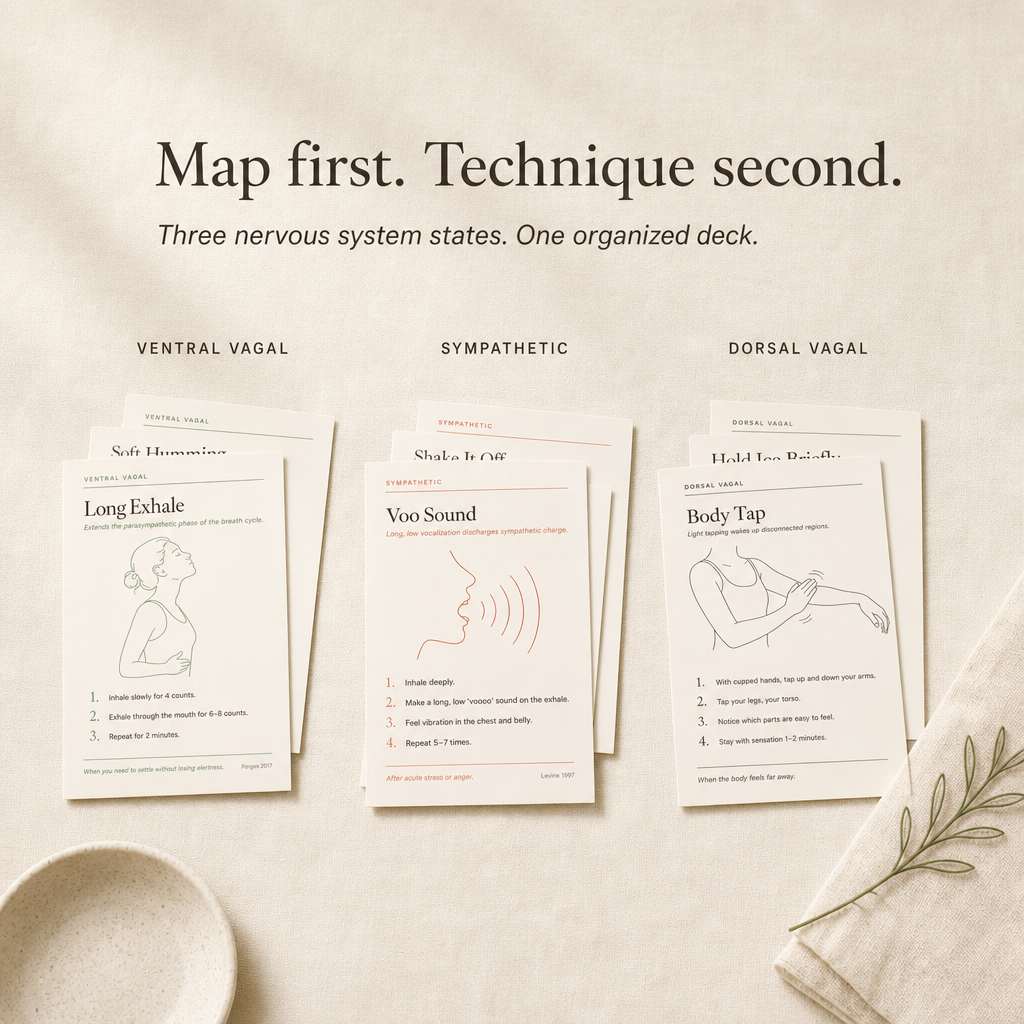
These 48 cards are organized differently. Each one is mapped to one of the three autonomic states described by Stephen Porges (2011, 2017) and Deb Dana (2018): ventral vagal (safety and connection), sympathetic (mobilization, fight-or-flight), and dorsal vagal (shutdown, freeze, dissociation). You locate your state first. Then you choose a card that meets you there.
This is the difference between a coping library and a regulation map.
What's inside
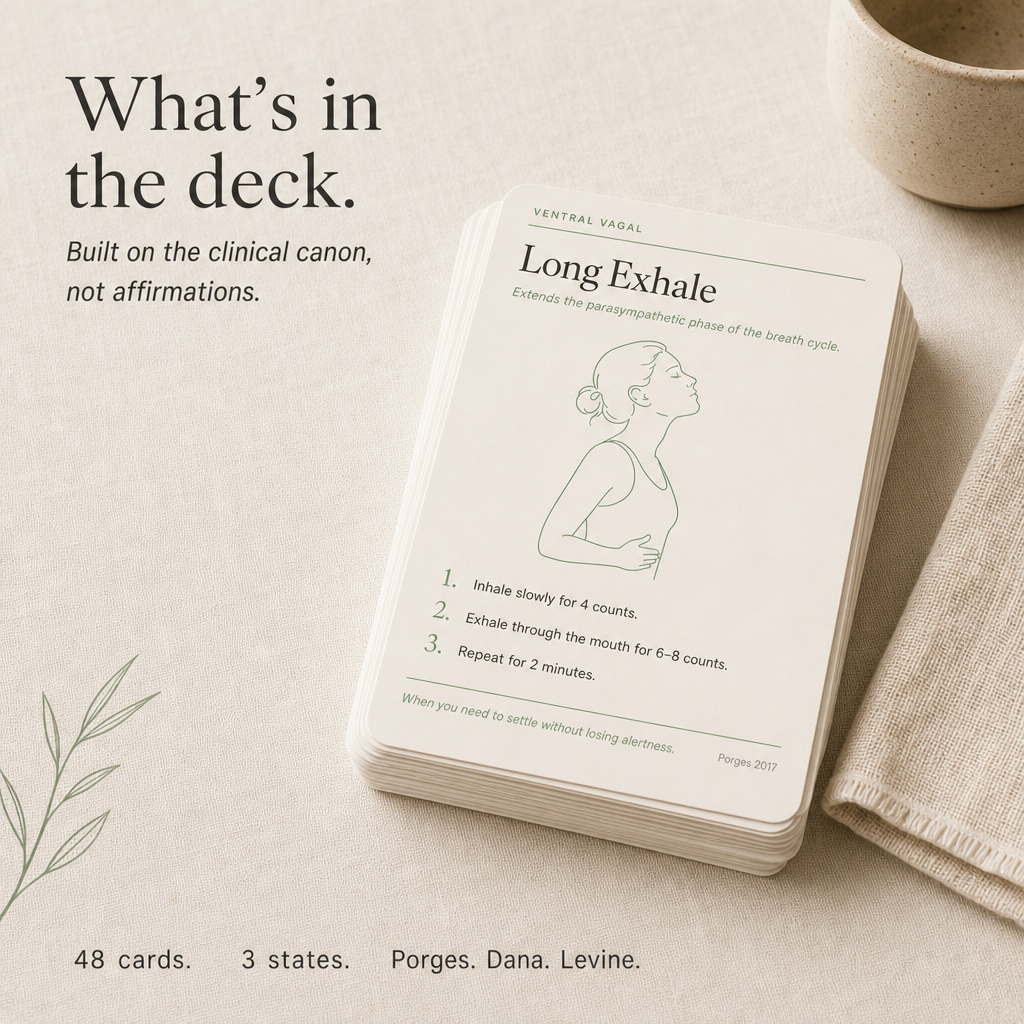
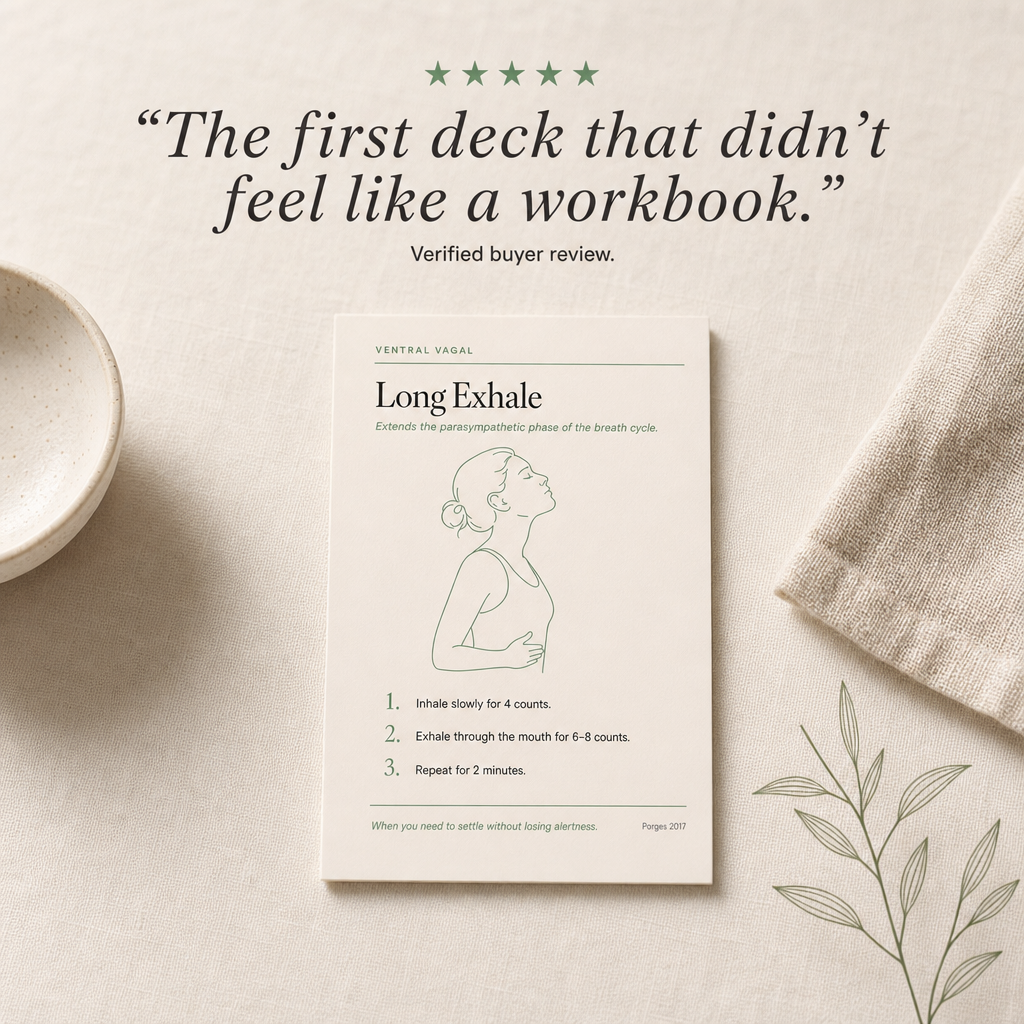
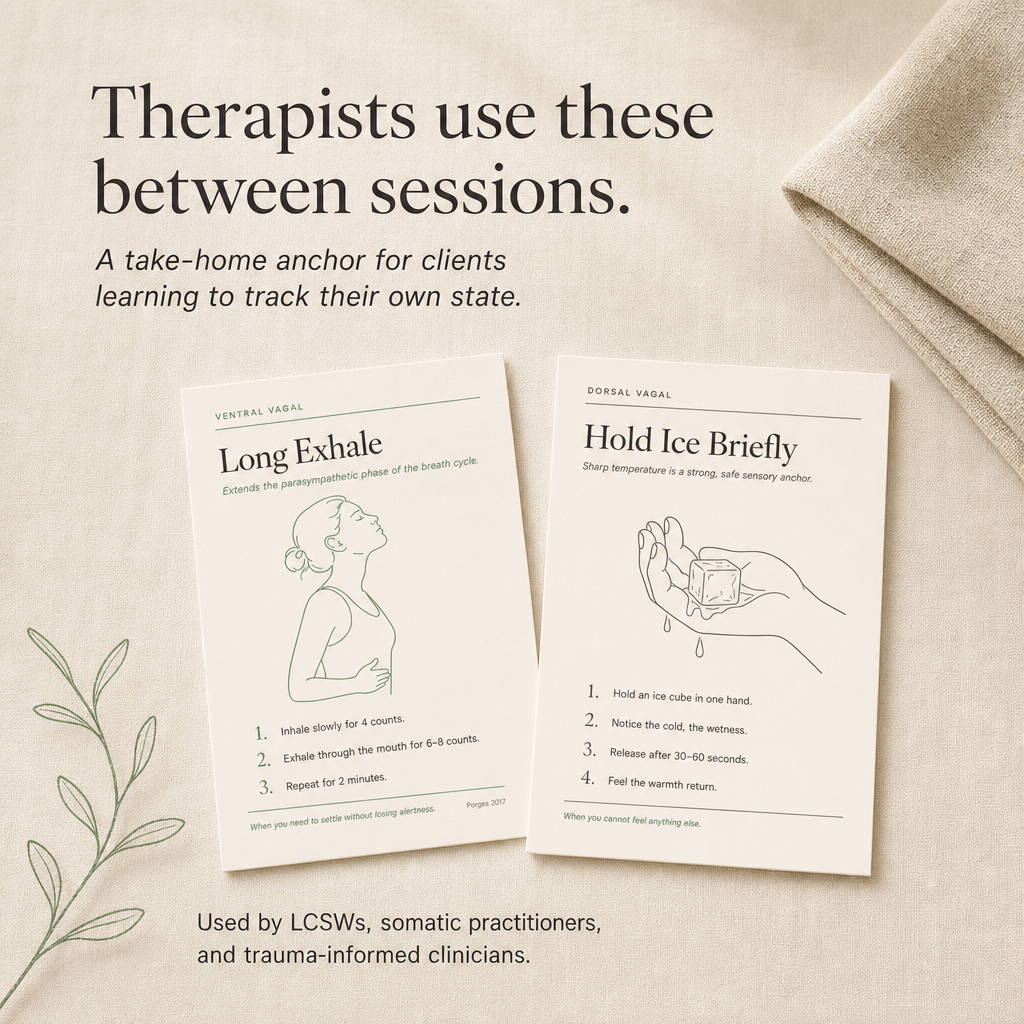
— 16 ventral vagal cards for extending and stabilizing regulated states: long exhale, soft humming, co-regulation, voice listening, jaw release, orient upward, side-lying rest.
— 16 sympathetic cards for discharging activation when the body is mobilized: voo sound, wall push, shake it off, cold splash, lion's breath, chop wood, kick the air, butterfly hug.
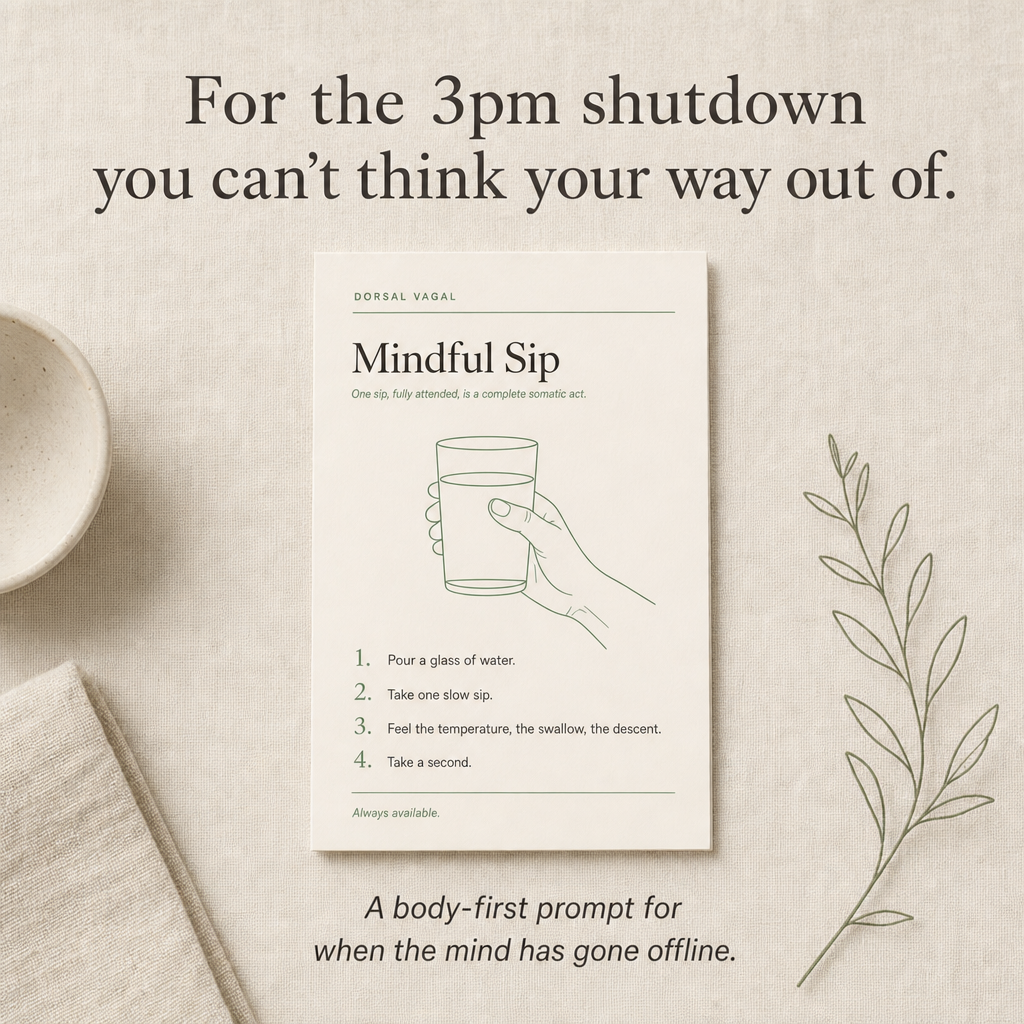
— 16 dorsal vagal cards for re-engaging from shutdown, numbness, and dissociation: press feet down, hold ice briefly, name five, count backward, body tap, warm cup, hand orienting.
Every card includes
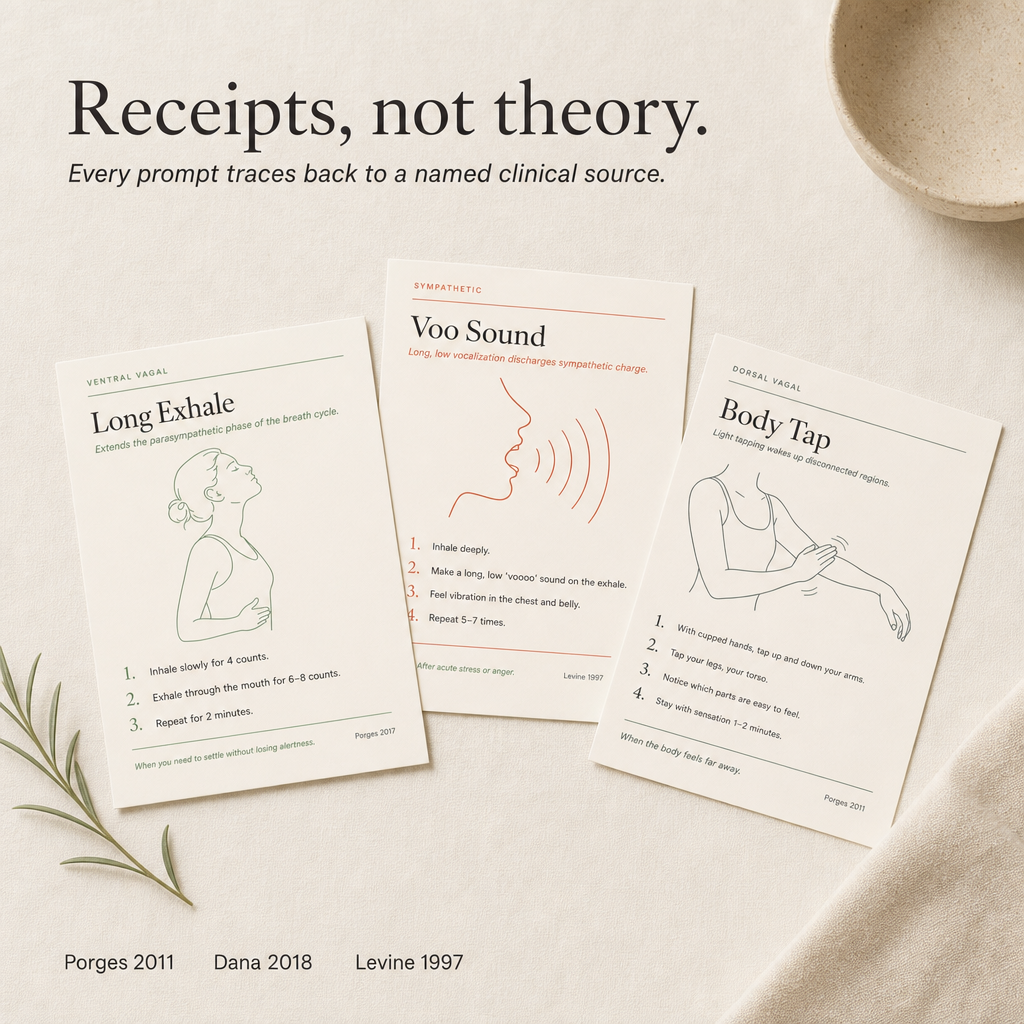
— The autonomic state it's designed for, named at the top — The specific mechanism — what the technique does in the body and why — Numbered instructions you can follow when your thinking has narrowed — A "when to use" prompt that names the actual symptom ("when you cannot feel anything else," "when fight energy is rising," "after acute stress") — Source citation where applicable (Porges, Dana, Levine)
Designed for use, not display
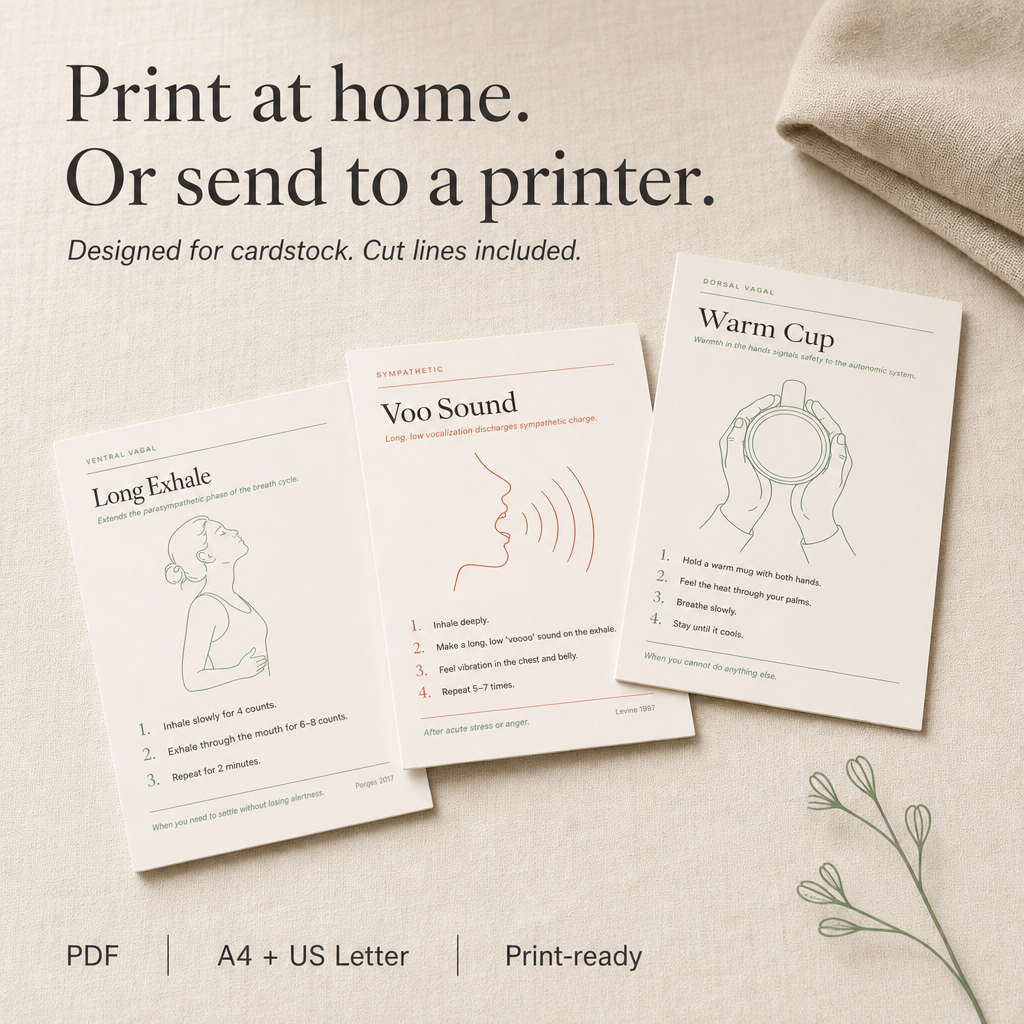
Print-ready PDF with crop marks. Print at home on cardstock for a durable deck, or standard paper for a working set. Keep them where you need them — on a desk, in a bag, by the bed, in the therapy room.
For
Adults navigating chronic stress, functional freeze, panic, shutdown, or dissociation. Therapists and clinicians who want vetted, citation-grounded handouts for session work and homework. Anyone who has been told to "regulate" without ever being shown how to read the state they're in.
Instant digital download. Compatible with home printing and print shops.