












Three Friends Coping Cards — 32 Regulation Cards for Kids 4–11
$24.49$34.00
✨ INSTANT DIGITAL DOWNLOAD: A link will be sent to your email immediately. Safe to open on your phone now or save to your computer for later.
🚀 Lifetime Access + Free Future Updates: Buy once, own it forever. You’ll receive all future versions, new content, and updated resources for free, delivered straight to your inbox.
“Take a deep breath.” “Use your words.” “Look at me.”
None of it lands — because the part of them that follows instructions has already gone offline.
When a child is in a meltdown you do not have time to read a book. You need one card. One thing the body can do. Right now.
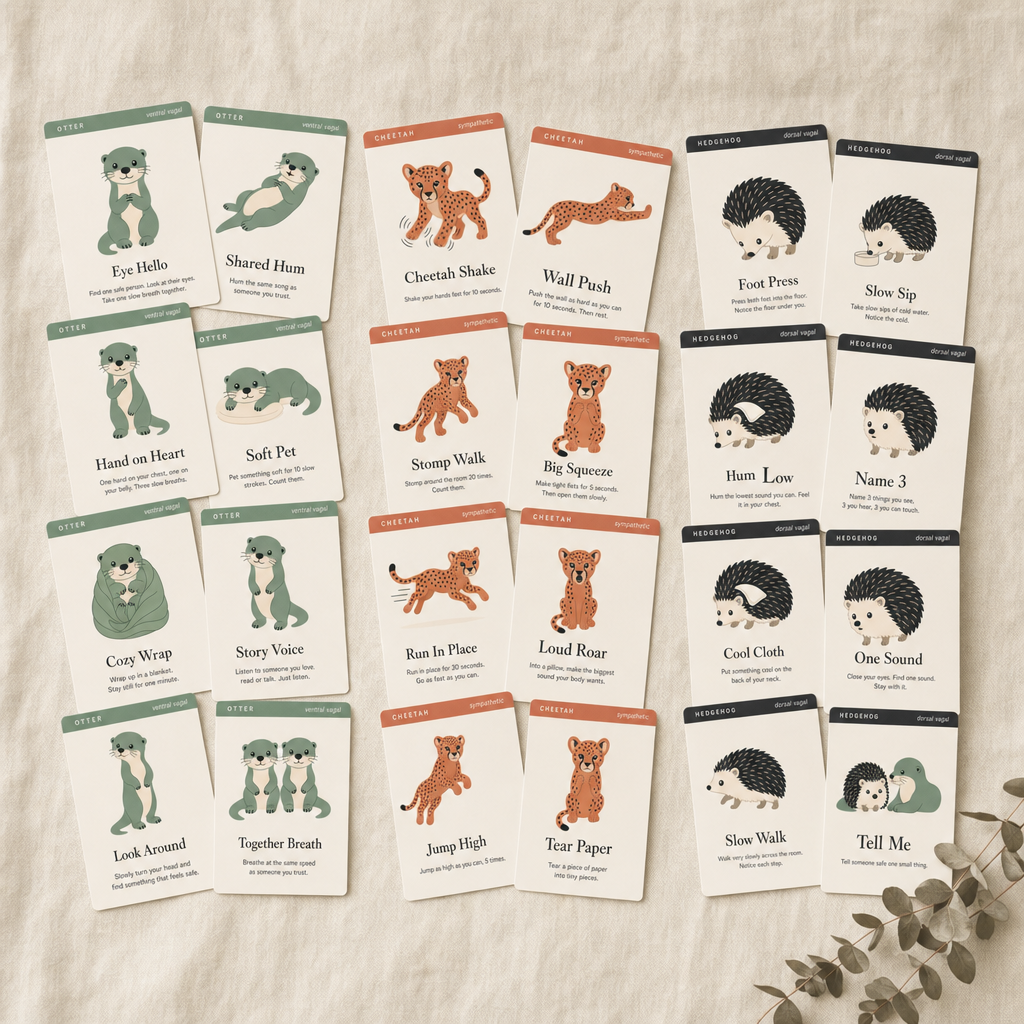
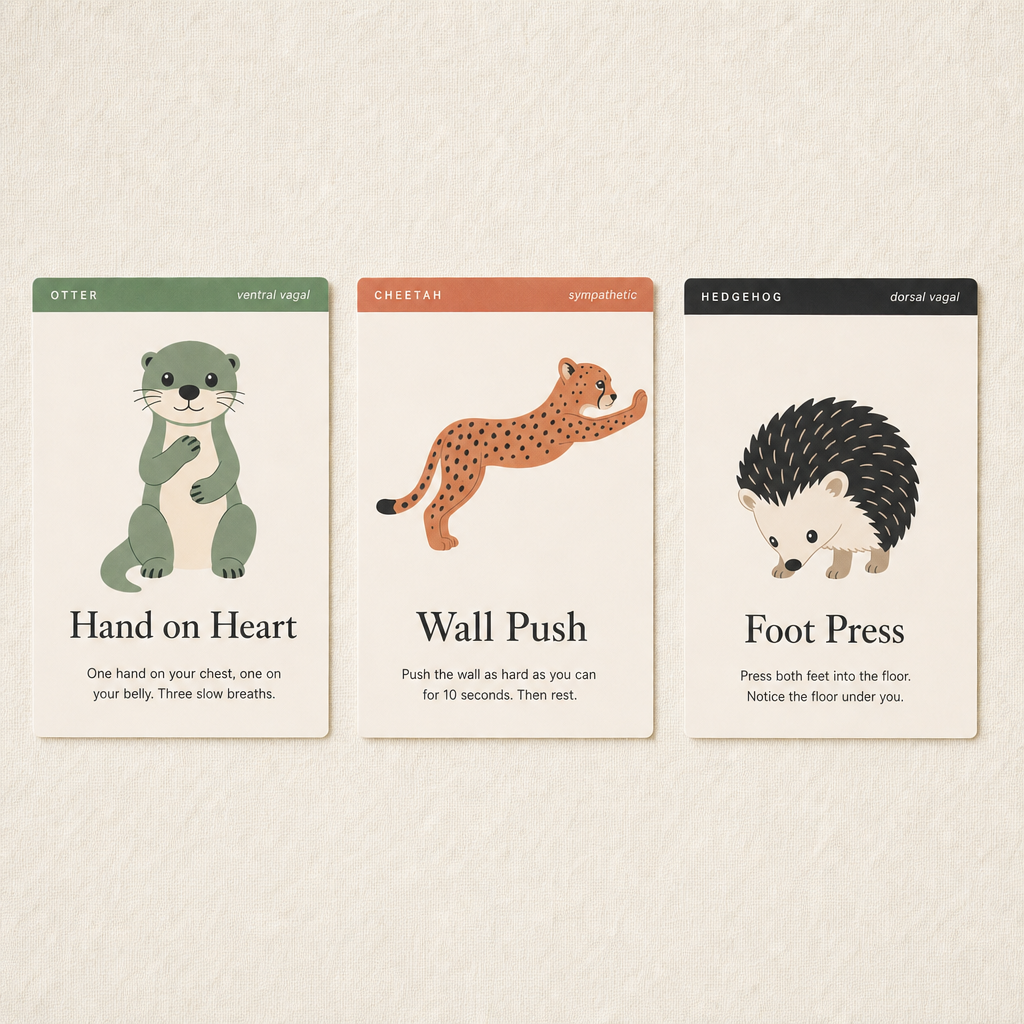
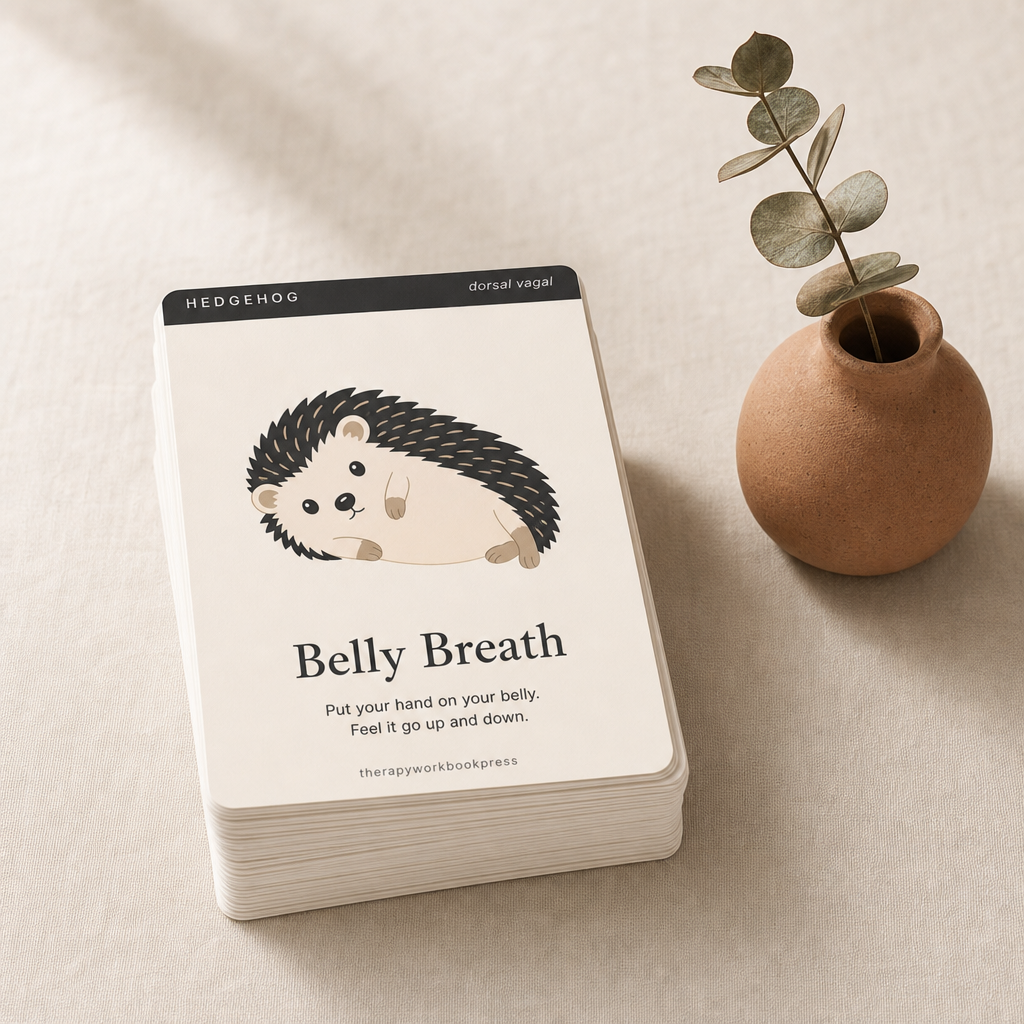
Three Friends Coping Cards is a 32-card printable deck. One picture, one instruction, small enough to hand over without saying anything.
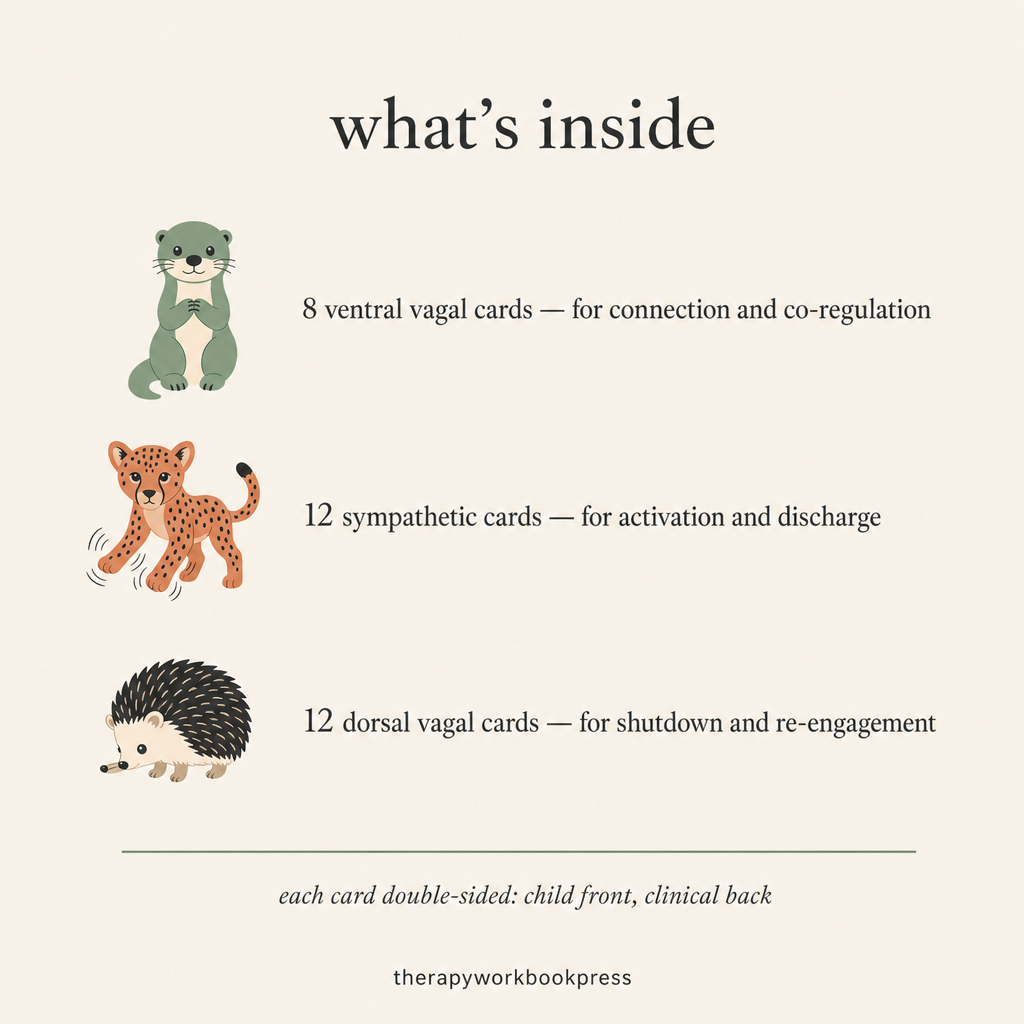
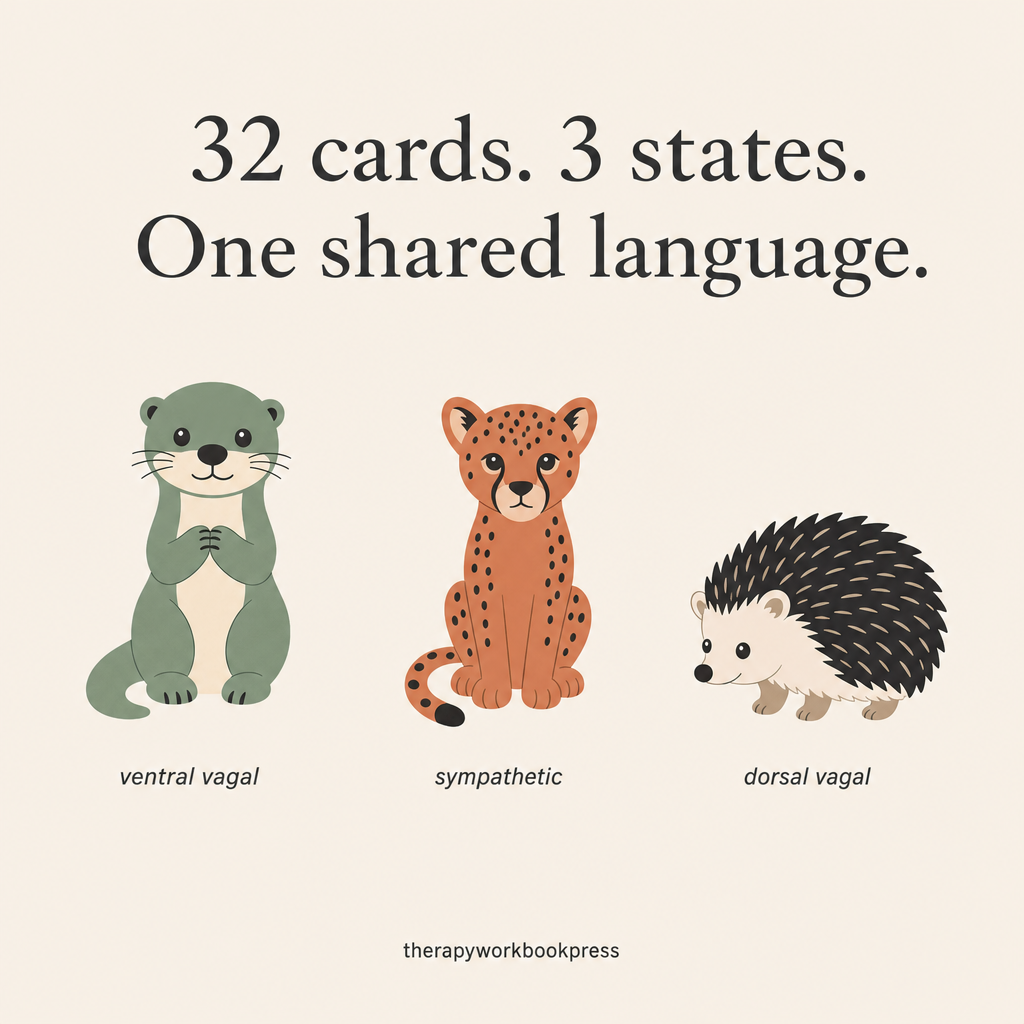
The cards are sorted by three characters, so a child learns to choose the card that matches what their body is already doing:
- Otter — my body feels safe. Eye Hello. Shared Hum. Hand on Heart. Cozy Wrap. Story Voice. Together Breath.
- Cheetah — my body needs to move. Cheetah Shake. Wall Push. Stomp Walk. Big Squeeze. Loud Roar. Tear Paper.
- Hedgehog — my body has gone quiet. Foot Press. Slow Sip. Hum Low. Name 3. Cool Cloth. Slow Walk.
Why the map comes before the technique
Most coping tools for children go straight to “try deep breathing.” It rarely works in the moment, because the child does not know what state they are in or what the breath is supposed to do.
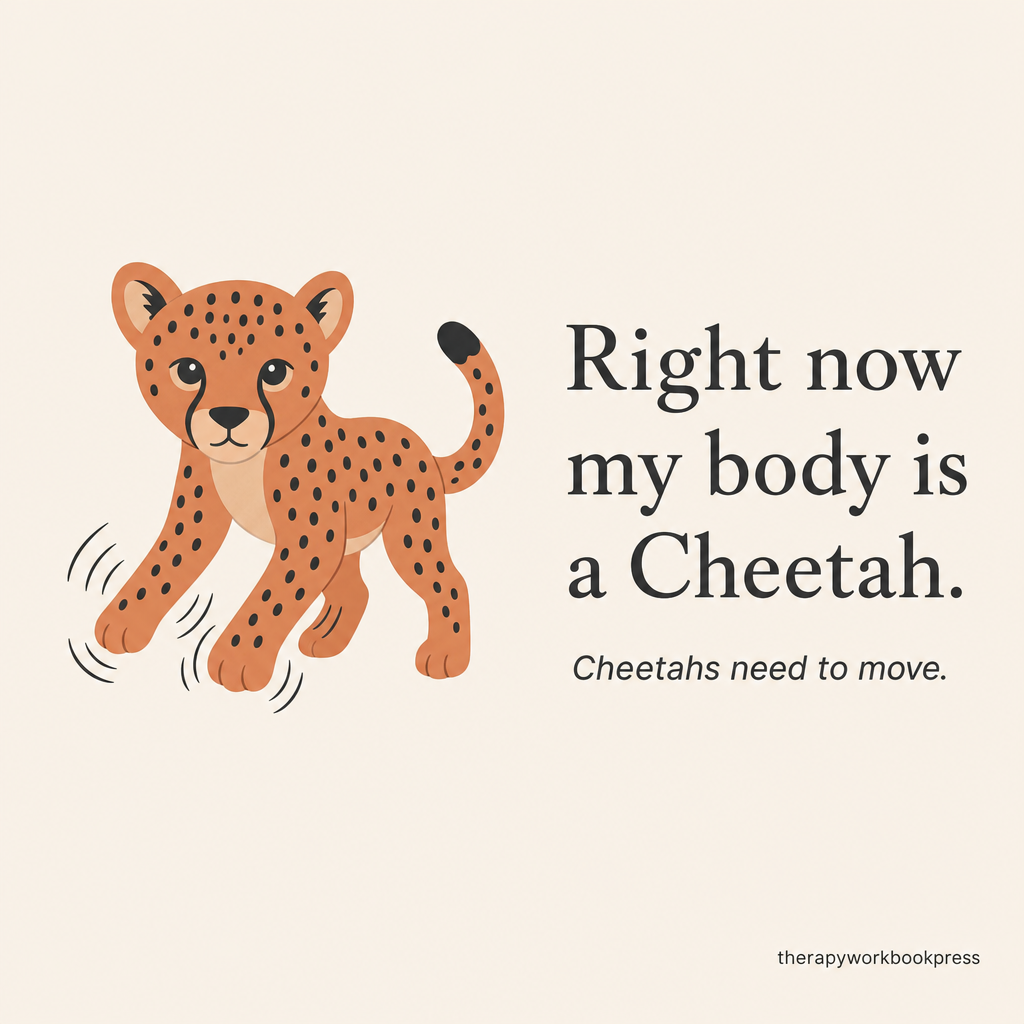
These cards teach the noticing first: right now my body is a Cheetah. Cheetahs need to move. This is what Cheetahs do. The card is the doorway. The noticing is the work.
Children remember animals, and animals do not shame.
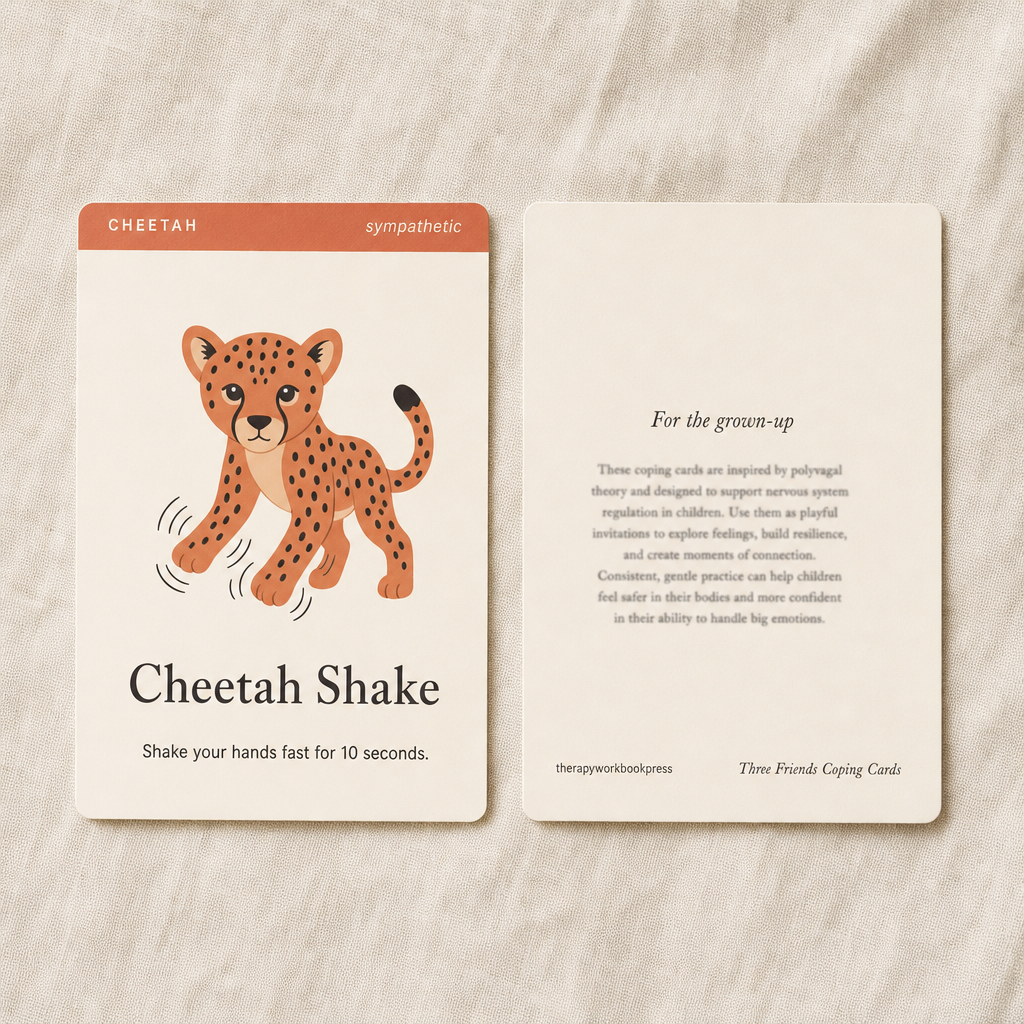
Every card has two sides
- The child side — one illustration and one instruction, in a sentence a young child can act on. No paragraphs. No reading age required. “Shake your hands fast for 10 seconds.”
- The grown-up side — a short note for you on what the card is doing and why, so you are not guessing while you are already stretched.
Format — please read this before you buy
- Instant digital download. The link is emailed to you immediately. No physical deck is shipped.
- 32 cards, A4 landscape, four cards to a sheet. Print at home on paper or card, cut, and laminate them if you want them to survive a school bag.
- Print as many sets as you like — one for the kitchen, one for the bag, one for the grandparents.
- Lifetime access and free future updates.
What this is not
This is not an affirmation deck and it is not a reward chart. It will not end a meltdown on demand, and a deck that claims it will is selling you something. What it does is put one concrete, doable thing in your child’s hand at the moment words have stopped working — and give you something to offer besides calm down.
Who it is for
Parents of children roughly 4–11 who melt down, shut down, or go quiet and cannot say why. The cards need no reading ability, so they work younger than the workbook does.
Therapists, play therapists, school counsellors, OTs and LCSWs who want a printable deck to send home with a family — using it with your own clients is included at no extra cost.
Foster, adoptive and kinship families, and classrooms building a calm corner.
Pairs with Three Friends Inside, the 37-page workbook that teaches the same three characters in depth. The workbook builds the map; the cards are what you reach for when there is no time to build anything.
60 days. No shift, full refund. You keep the files.
Informed by the work of Stephen W. Porges, PhD (Porges, S. W., 2011, The Polyvagal Theory, W. W. Norton) and Deb Dana, LCSW (Dana, D., 2018, The Polyvagal Theory in Therapy, W. W. Norton). The three characters are a child-facing translation of polyvagal-informed language, not a clinical assessment or a diagnosis. These cards are a parenting and clinician tool intended to support, not replace, therapy, psychiatric care or school-based services.