


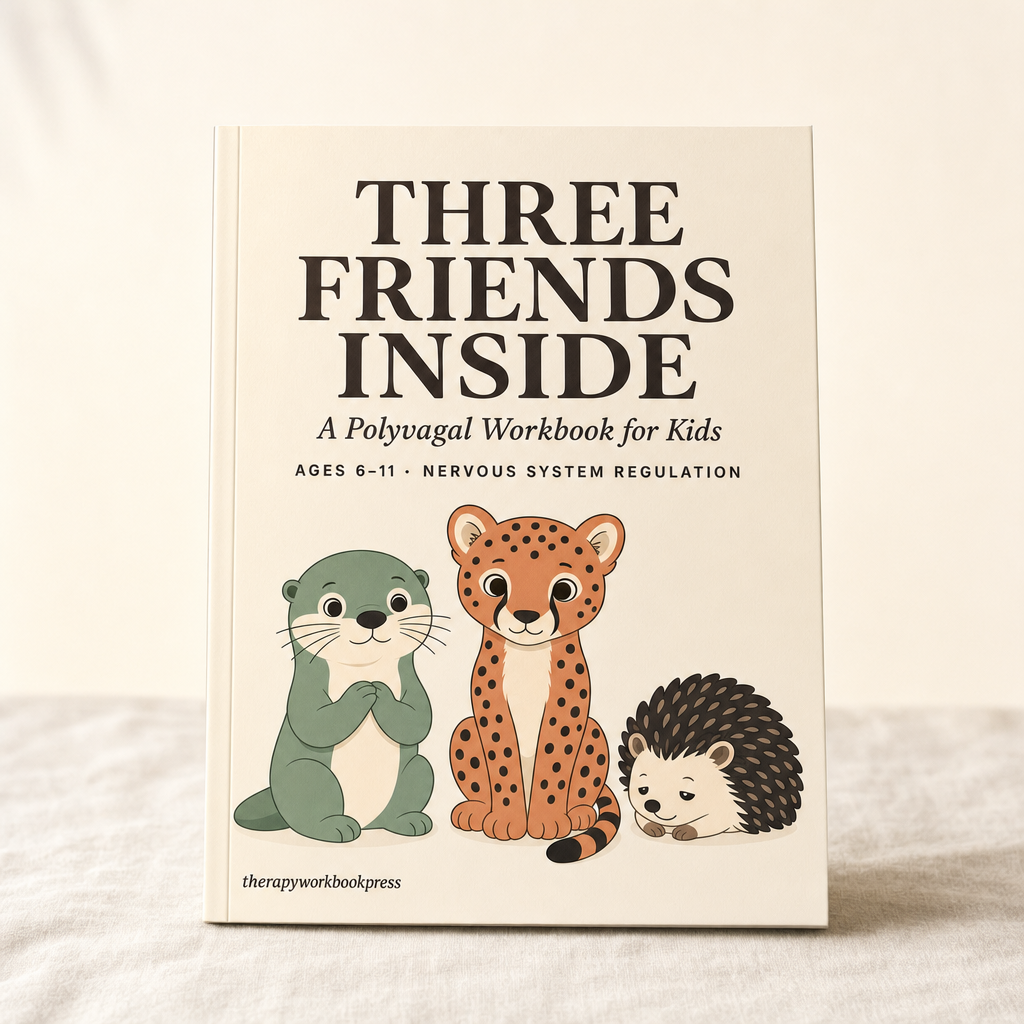













Three Friends Inside — A Polyvagal Workbook for Kids Ages 6–11
$29.49$48.00
✨ INSTANT DIGITAL DOWNLOAD: A link will be sent to your email immediately. Safe to open on your phone now or save to your computer for later.
🚀 Lifetime Access + Free Future Updates: Buy once, own it forever. You’ll receive all future versions, new content, and updated resources for free, delivered straight to your inbox.
“I’ve tried every calm-down strategy. None of them work in the moment.”
“And afterwards, they still can’t tell me what happened.”
If either line is yours, this is not a discipline problem and you are not doing it wrong.
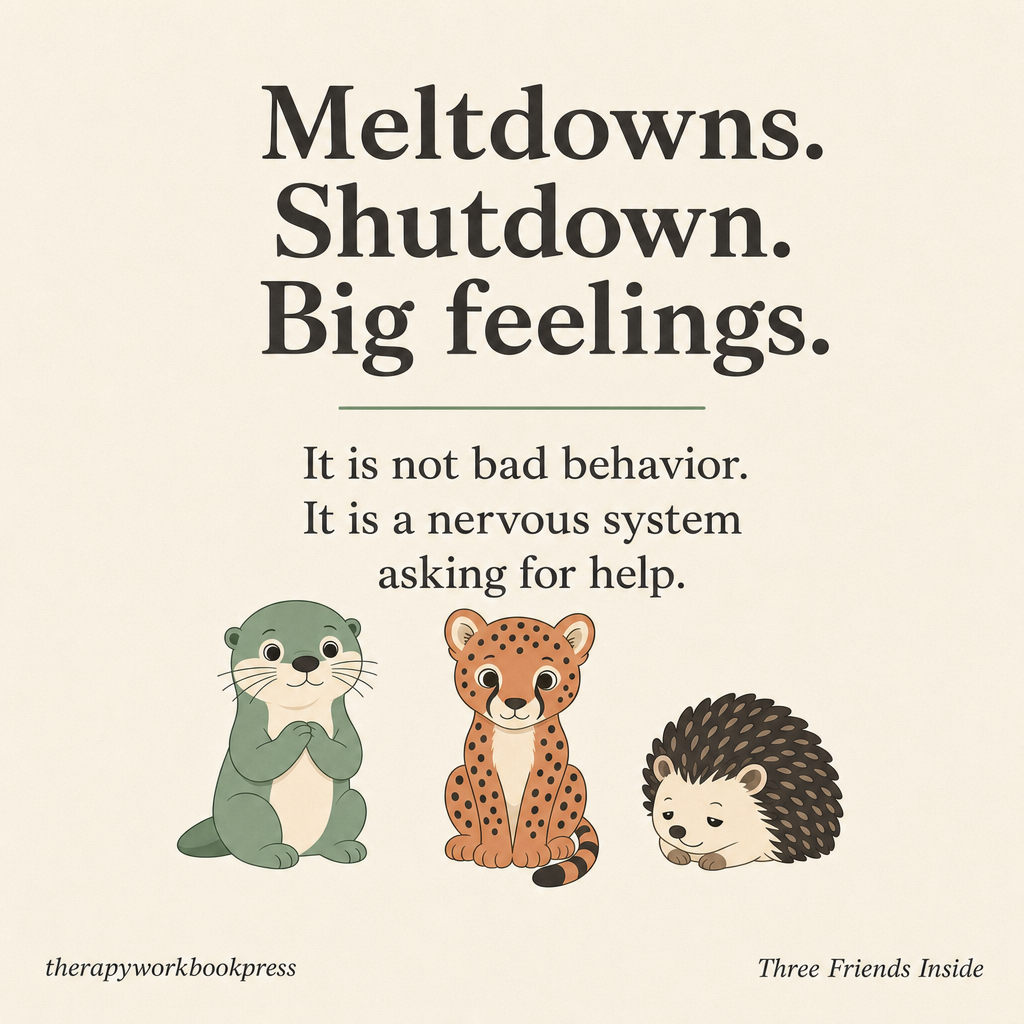
A child in a meltdown or a shutdown has lost easy access to the part of the brain where language lives. Asking them to explain, or to calm down, asks for the one thing that is offline. What a child can do — before they can talk about it — is notice what is happening in their body and point at it.
Three Friends Inside gives them something to point at.
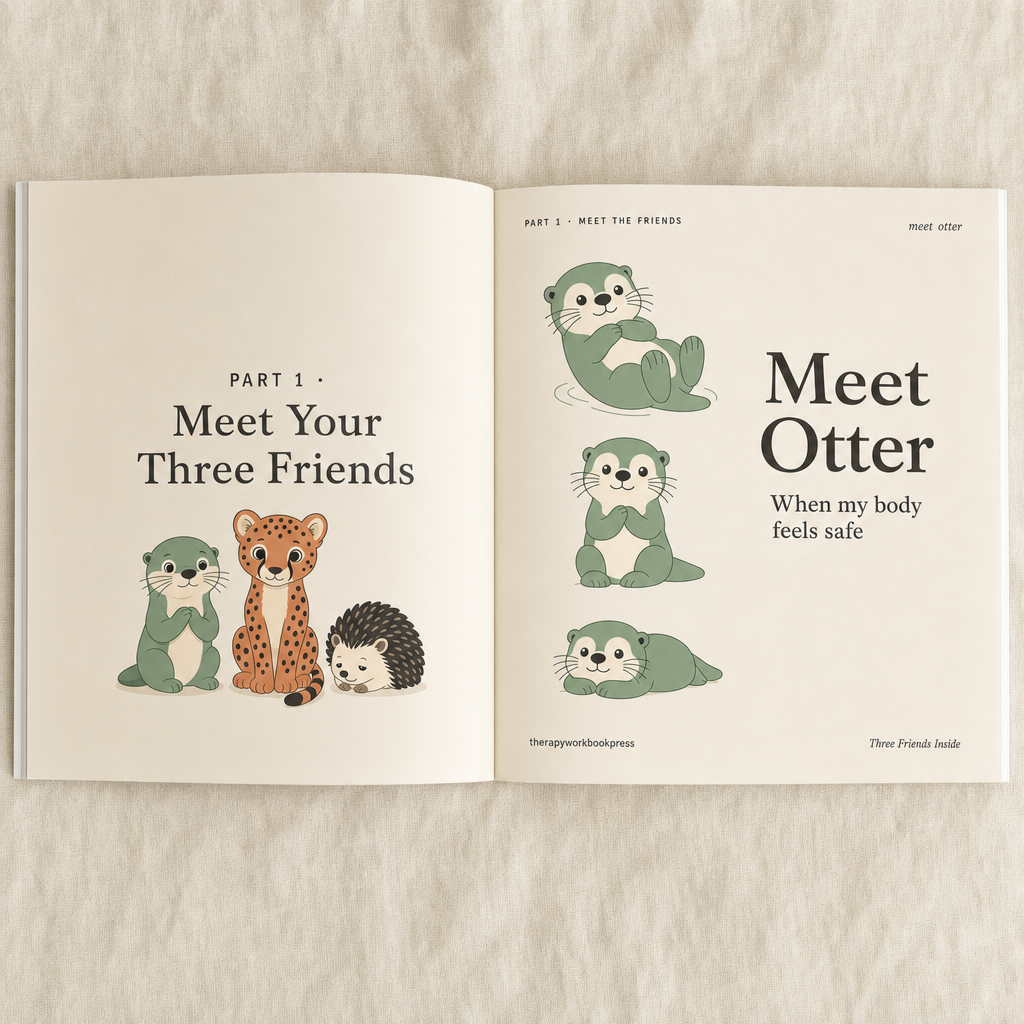
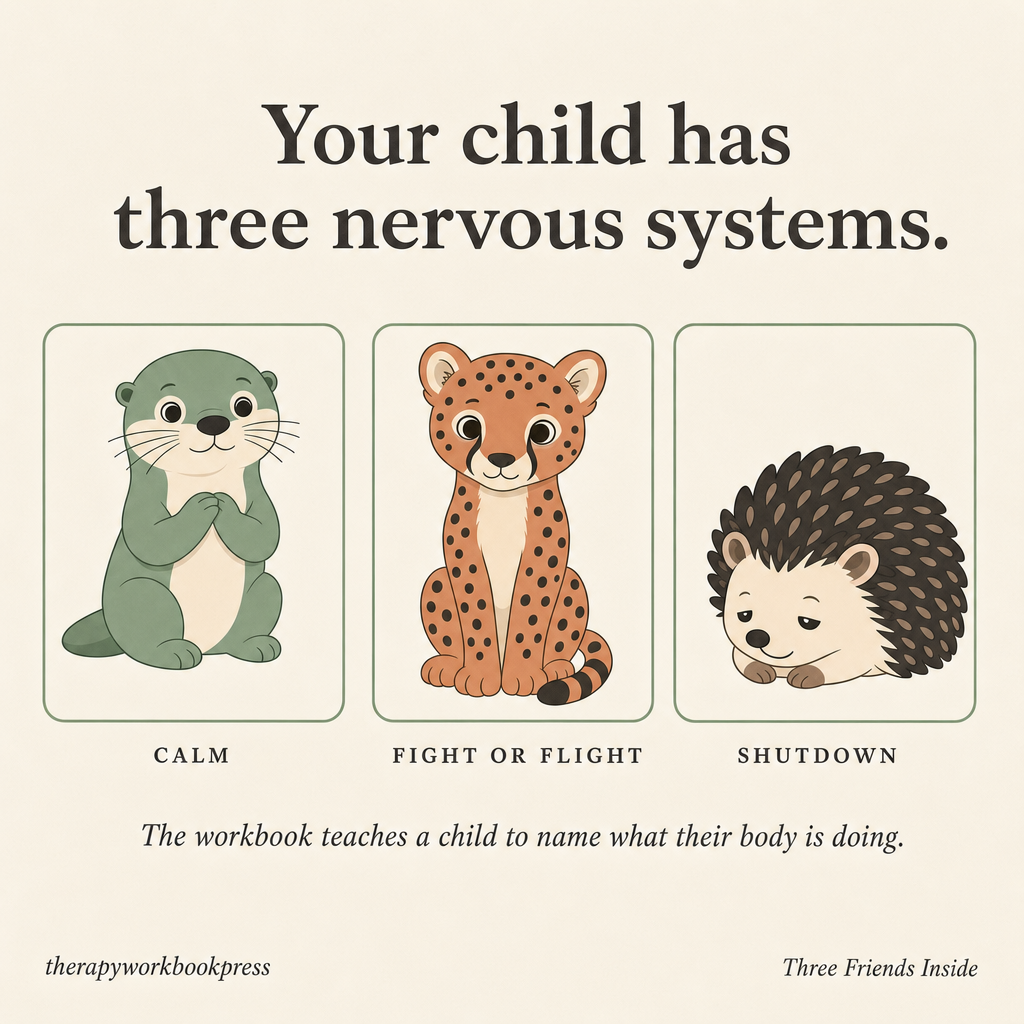
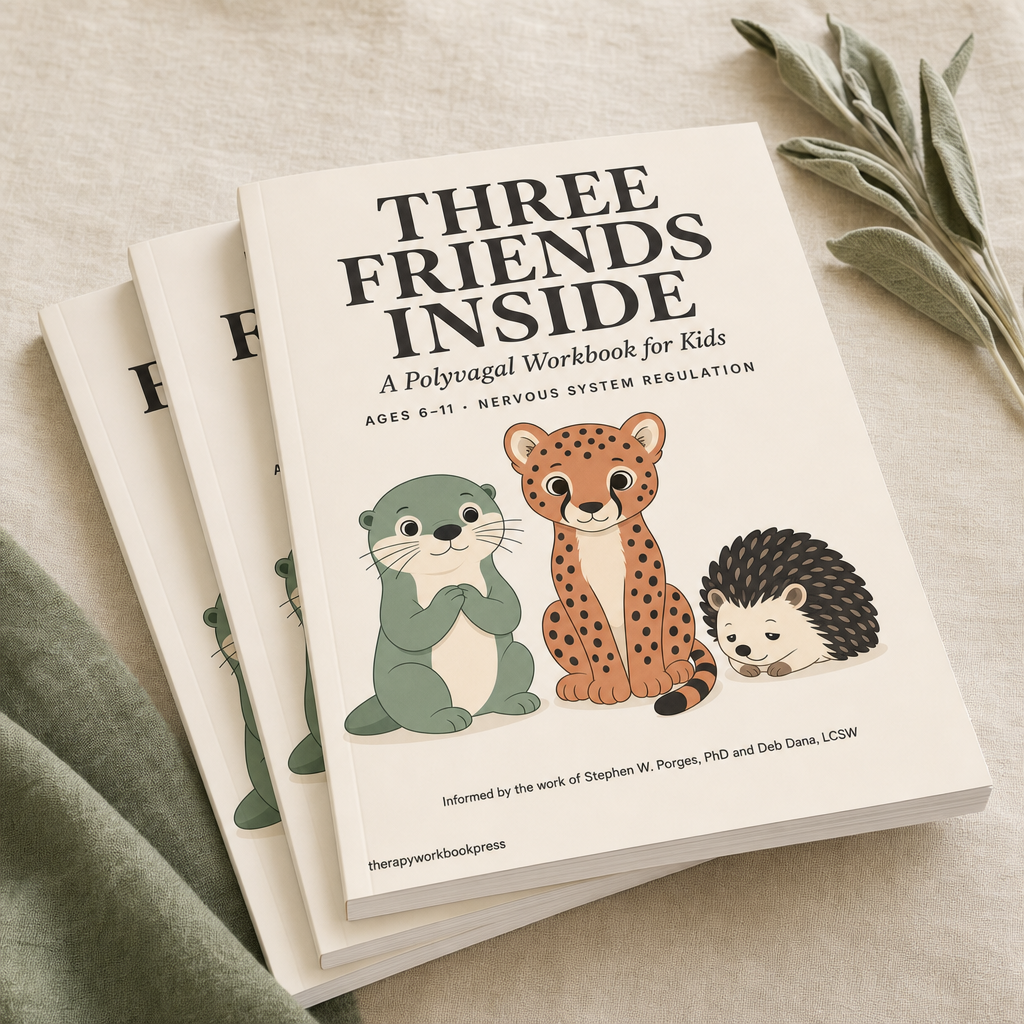
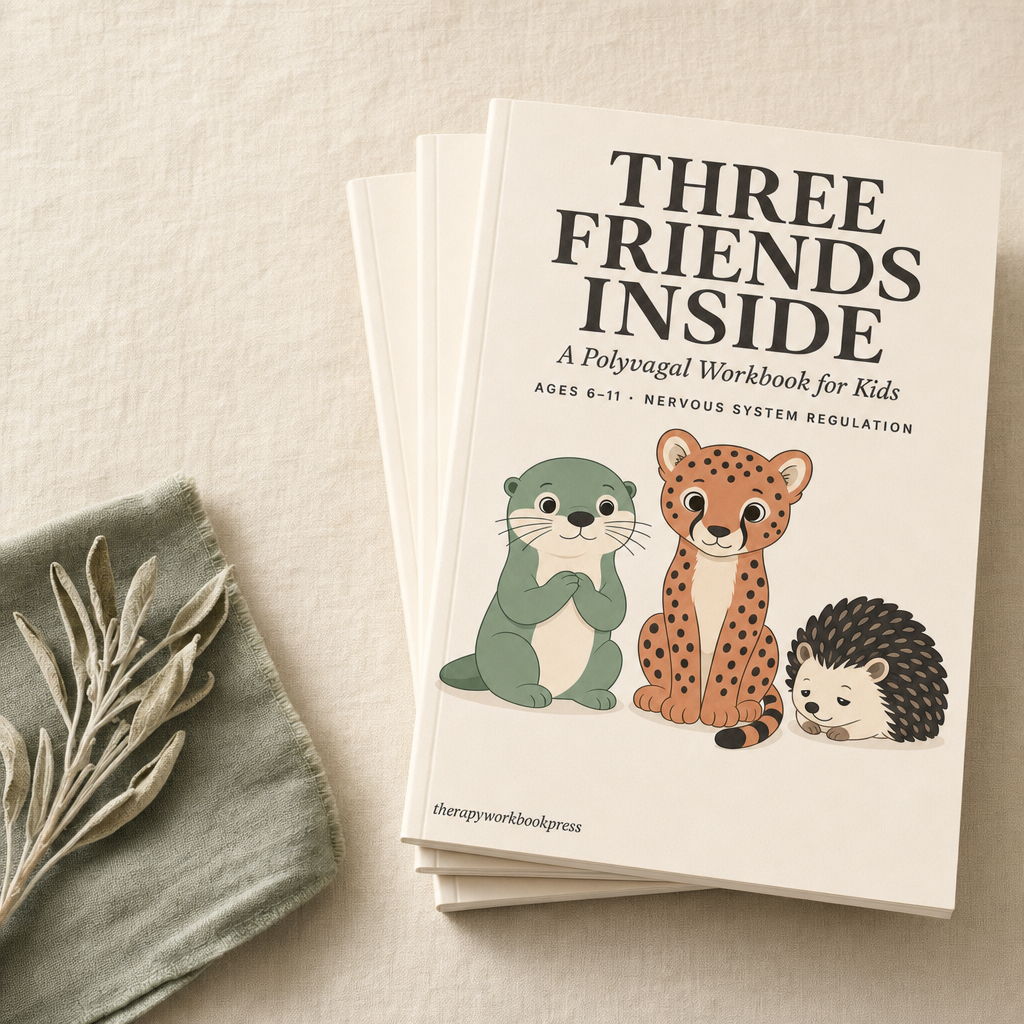
Three characters, one for each state:
- Otter — when my body feels safe
- Cheetah — when my body wants to move, fight, or run
- Hedgehog — when my body goes quiet and hides
A child who can say “my Cheetah is here” has already done the hardest part: they noticed. Every page in this workbook is built on that one move.
What you and your child actually do with it
37 printable pages. Five parts, plus four pages written for you.
- Part 1 — Meet Your Three Friends. Each state introduced as a character. No jargon, and no “good” or “bad” friend.
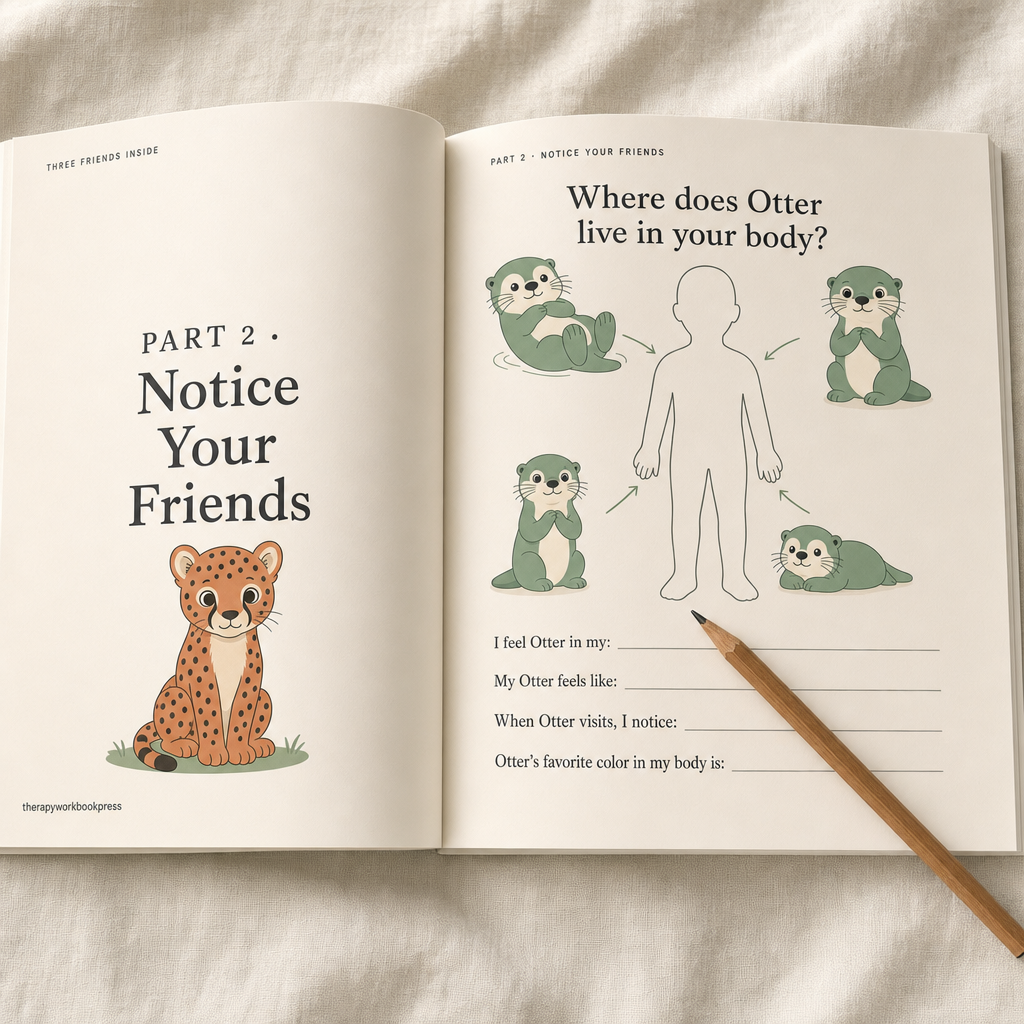
- Part 2 — Notice Your Friends. Body-mapping pages: where does Otter live? Where does Cheetah show up first? This is the skill the rest of the book rests on.
- Part 3 — The Window of Calm. Too big, too small, just right — a child-sized version of the Window of Tolerance.
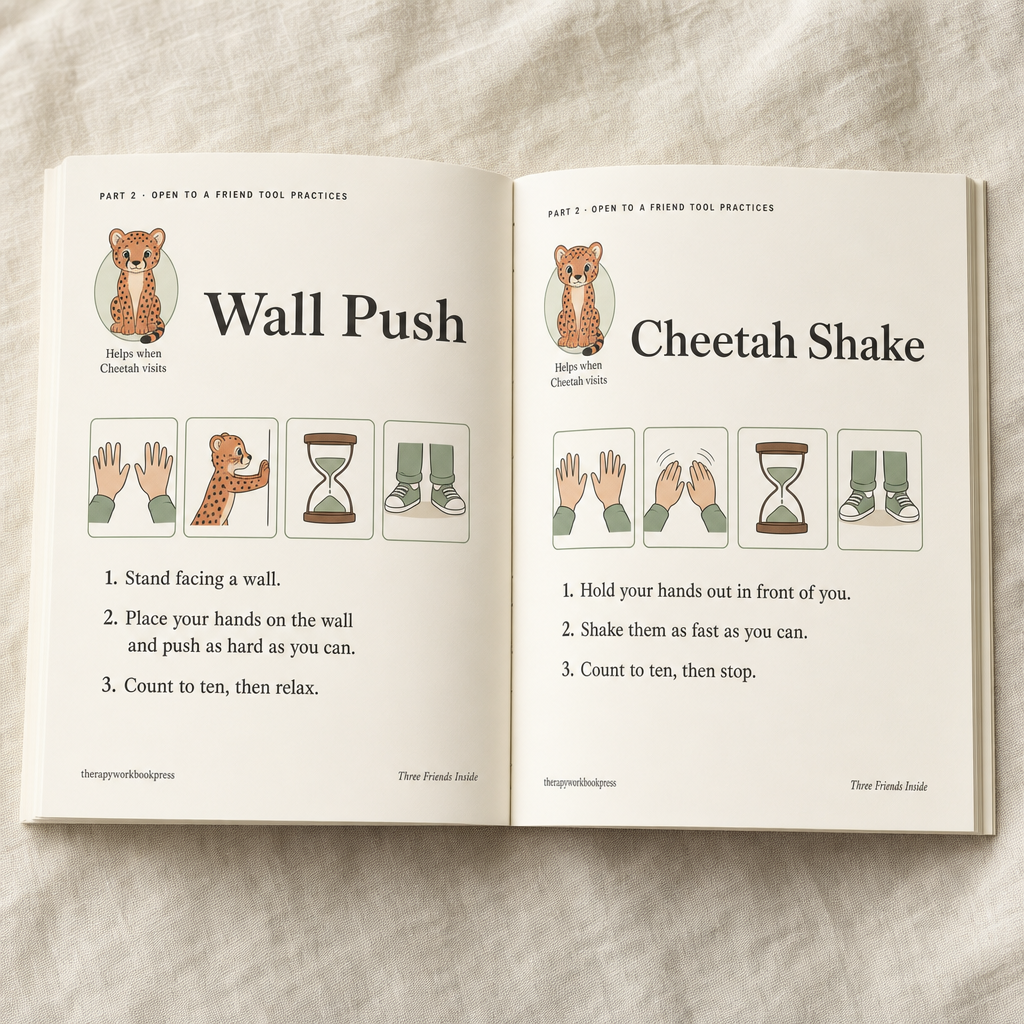
- Part 4 — Friend Tools. 18 practices, each matched to the friend it helps, each with a four-step picture sequence a child can follow without reading well. Wall Push, Cheetah Shake, Stomp Walk, Big Squeeze for Cheetah. Foot Press, Hum Low, Name 3, Curl and Uncurl for Hedgehog. Eye Hello, Shared Hum, Hand on Heart, Cozy Wrap for Otter.
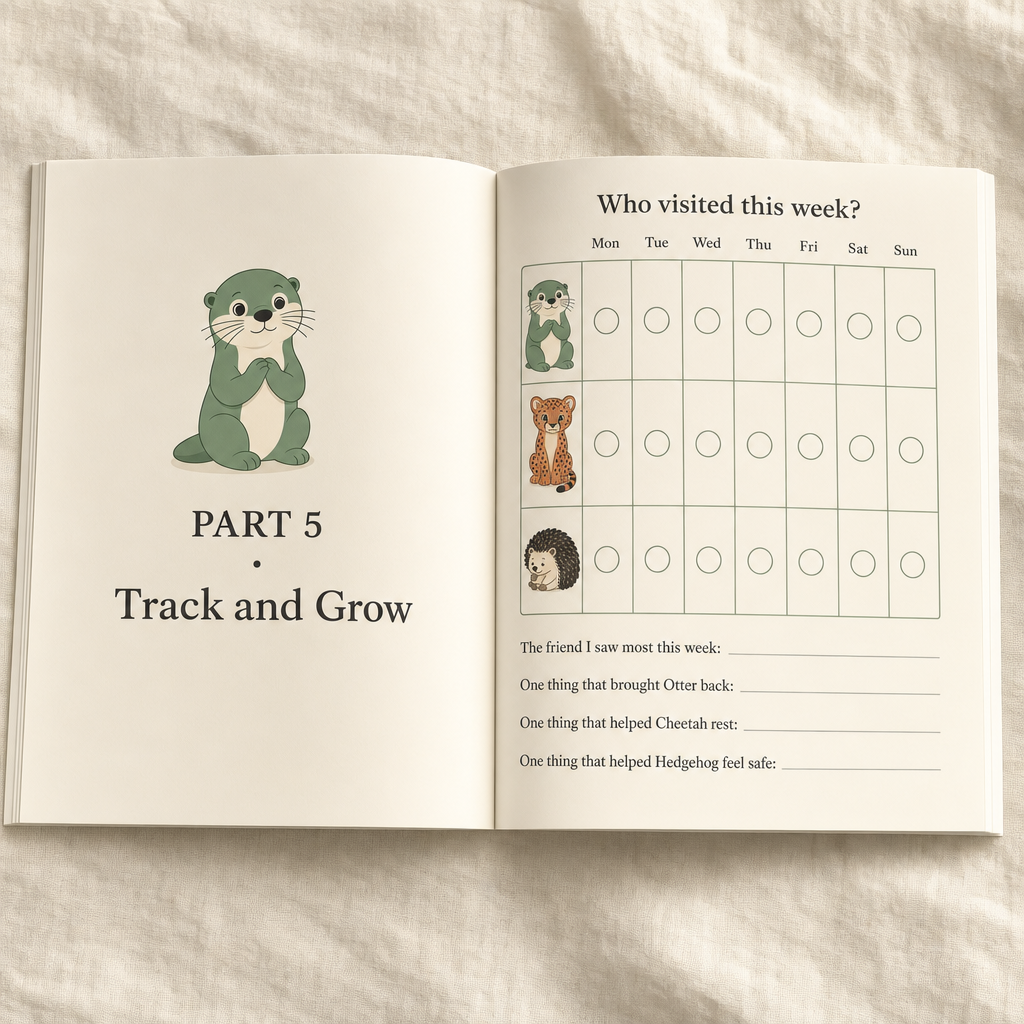
- Part 5 — Track and Grow. A weekly “Who visited this week?” chart, so your child starts to see their own pattern instead of being told about it.
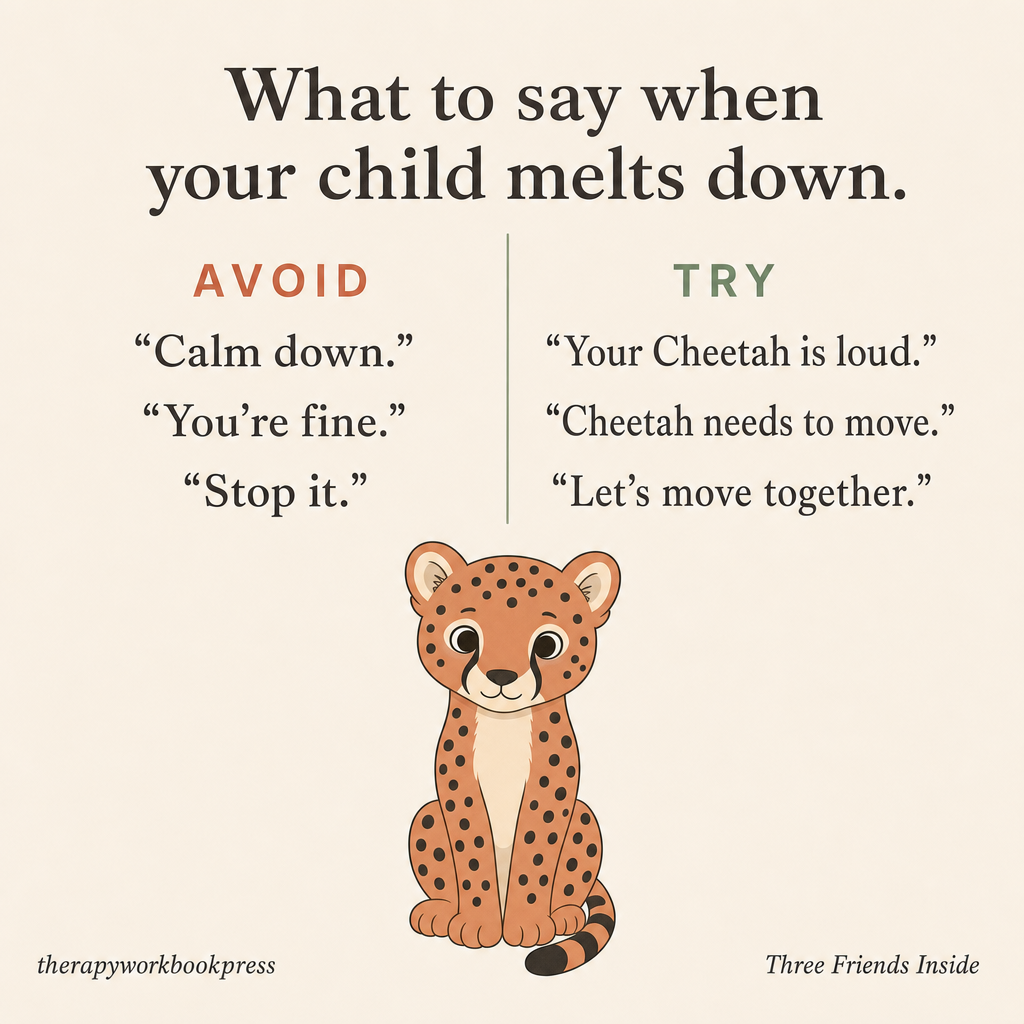
Grown-Up Notes — four pages, for you. What to say when each friend shows up, and what to stop saying:
Avoid: “Calm down.” “You’re fine.” “Stop it.”
Try: “Your Cheetah is loud right now. Cheetah needs to move. Let’s move together.”
The three on the left are the ones most of us reach for. They ask a child to override their body instead of working with it.
Format — please read this before you buy
- Instant digital download. The link is emailed to you immediately. No physical book is shipped.
- 37 pages. A4 and US Letter both included. Print the whole workbook, print single pages as you need them, or use it on a tablet.
- Print it as many times as you like, for every child in your home.
- Lifetime access and free future updates.
What this is not
This will not stop meltdowns. Nothing does, and anything promising that is selling you something. What it does is give your child language for what is happening while it is happening, and give you something to do besides wait it out. The thing to watch for is not a shorter meltdown. It is a faster return afterwards.
If what you want is a behaviour chart, a rewards system, or a script that ends a tantrum in two minutes, this is the wrong book and I would rather you knew that now.
Who it is for
Parents of children roughly 6–11 who melt down, shut down, hide, or “can’t explain what’s wrong.”
Therapists, school counsellors, OTs and LCSWs who want a child-friendly scaffold for session work and between-session homework — using it with your own clients is included at no extra cost.
Foster and adoptive families, and homeschoolers building emotional literacy into the week.
Pairs with Three Friends Coping Cards — the same three characters as 32 printable cards, for the moments when there is no time to open a workbook.
60 days. No shift, full refund. You keep the files.
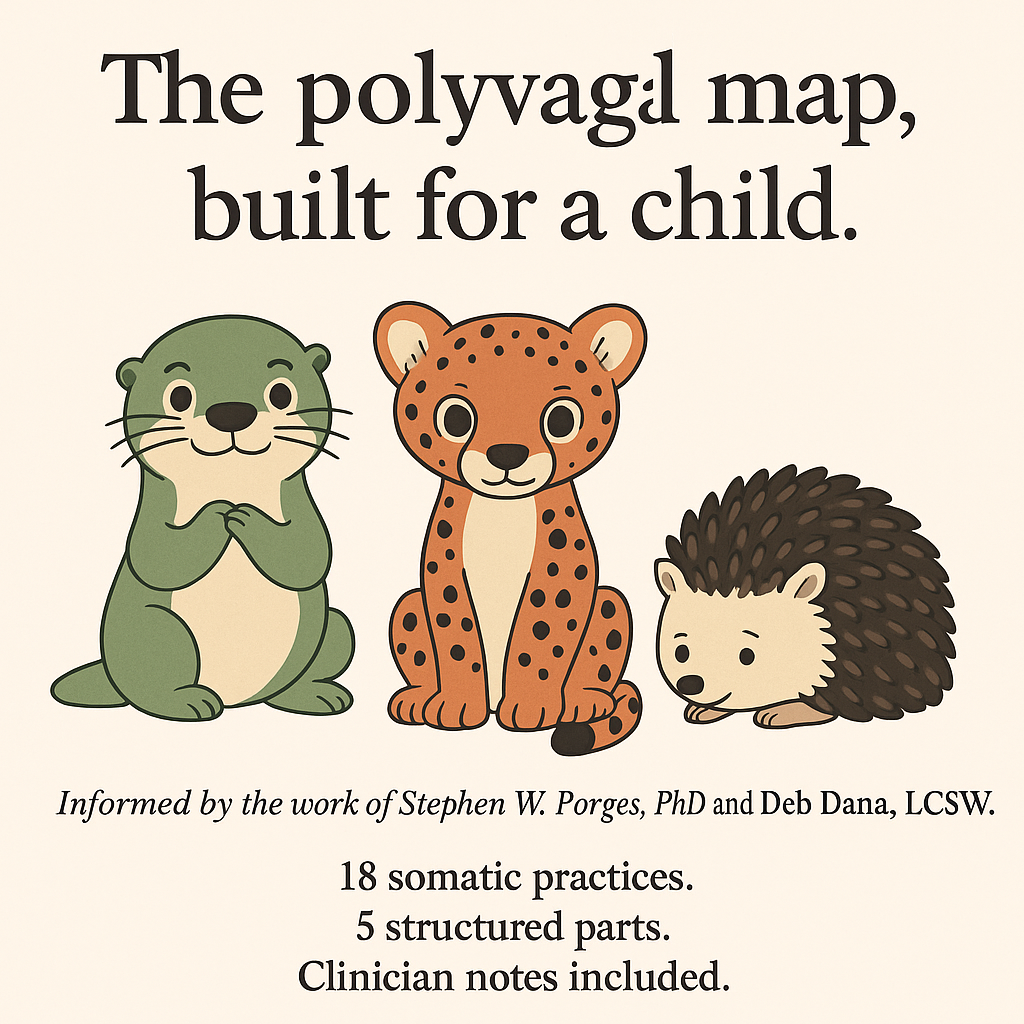
Informed by the work of Stephen W. Porges, PhD (Porges, S. W., 2011, The Polyvagal Theory, W. W. Norton) and Deb Dana, LCSW (Dana, D., 2018, The Polyvagal Theory in Therapy, W. W. Norton). The three characters are a child-facing translation of polyvagal-informed language, not a clinical assessment or a diagnosis. This workbook is educational and does not replace therapy or medical care.