













Three Friends Coping Cards — A Polyvagal-Informed Regulation Deck for Children (32 Cards)
$24.49$34.00
✨ INSTANT DIGITAL DOWNLOAD: A link will be sent to your email immediately. Safe to open on your phone now or save to your computer for later.
🚀 Lifetime Access + Free Future Updates: Buy once, own it forever. You’ll receive all future versions, new content, and updated resources for free, delivered straight to your inbox.
When a child is in a meltdown, you don't have time to read a book.
You need one card. One thing the body can do. Right now.
Three Friends Coping Cards is a 32-card printable deck that gives your child — and you — a shared language for big feelings, before the storm hits, during it, and after it has passed.
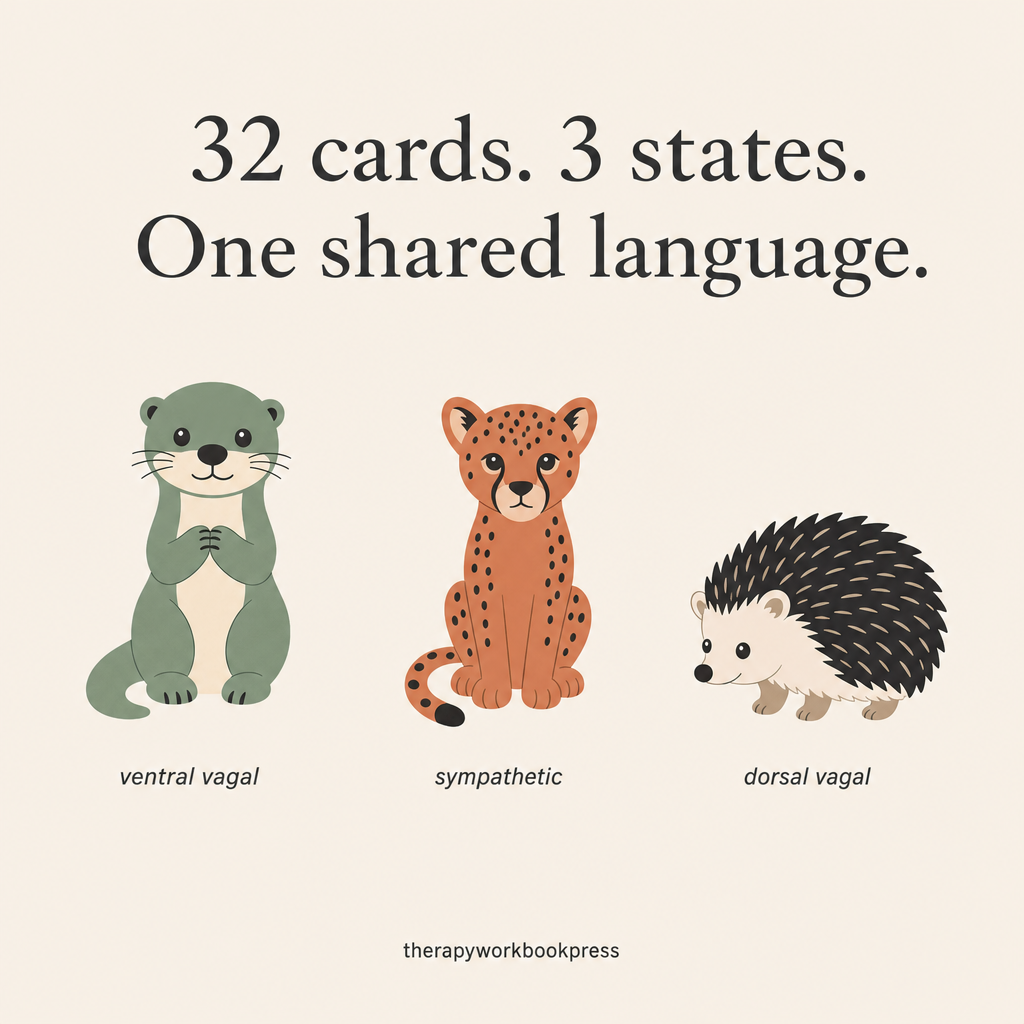
The deck is built around the three states of the autonomic nervous system, mapped onto three animal friends a child can actually remember.
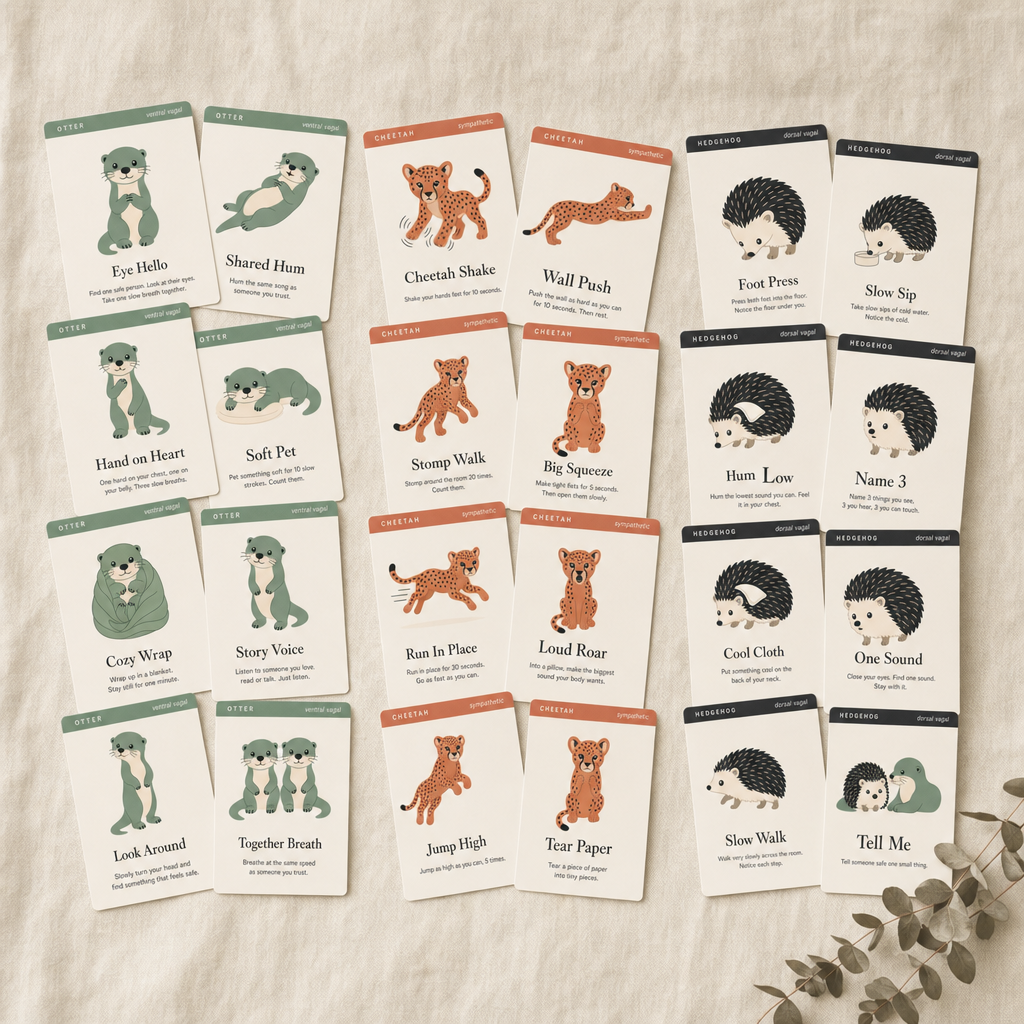
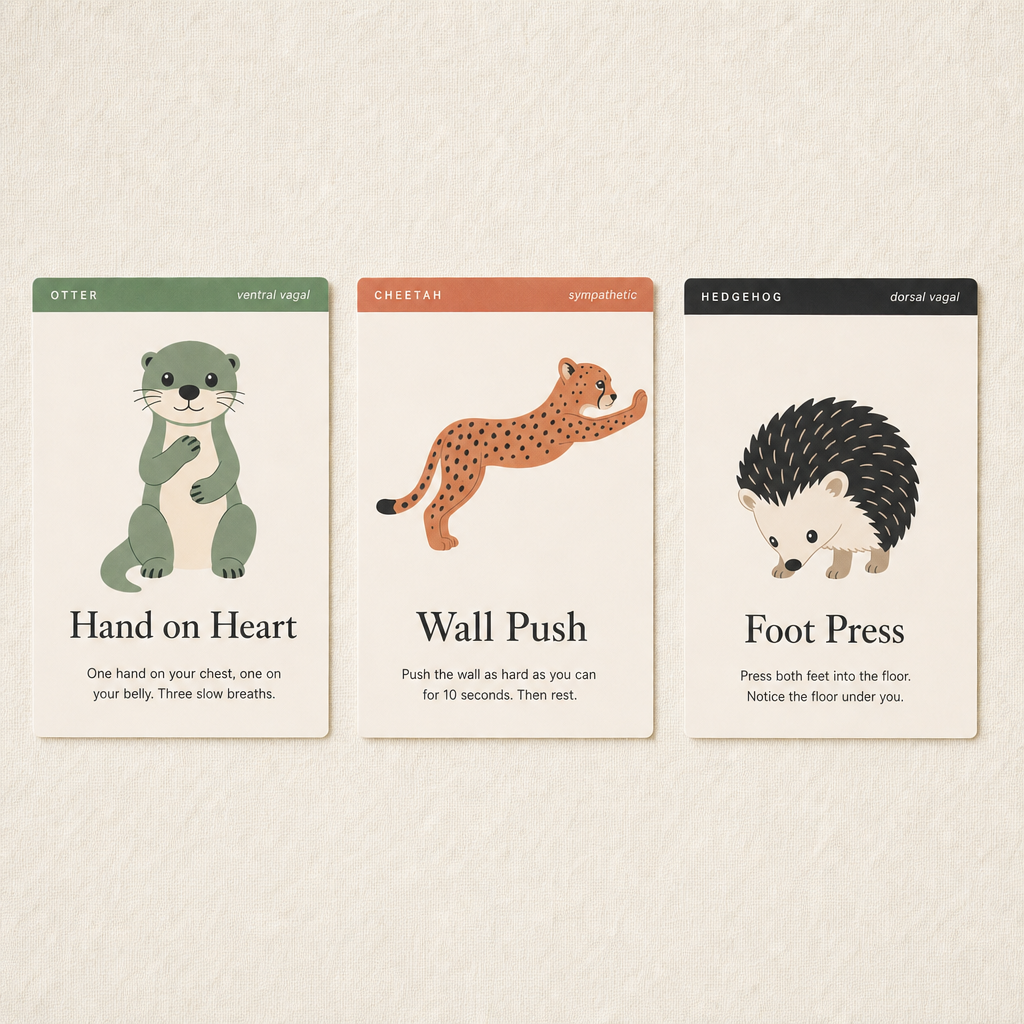
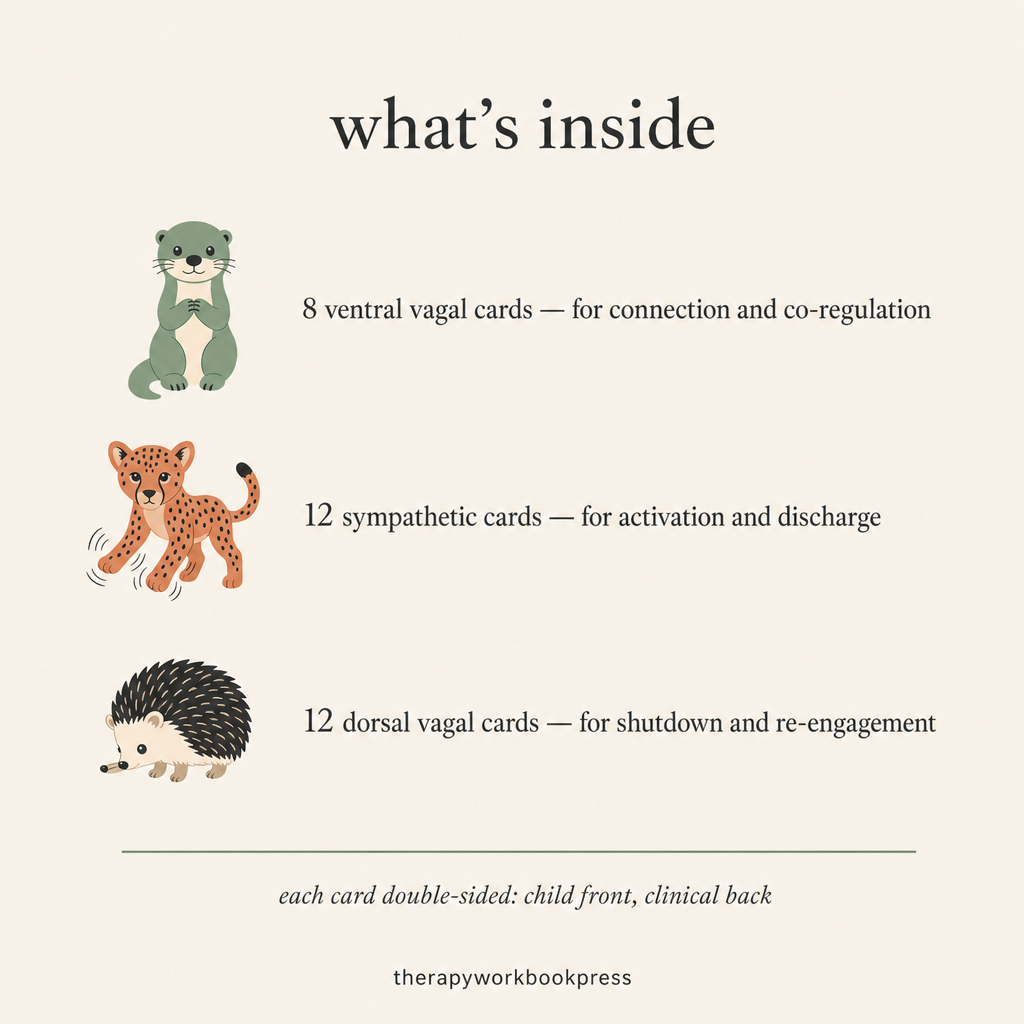
Otter — ventral vagal. The safe, connected, "I'm okay" state. Eight cards for staying close, settling into co-regulation, and building the felt sense of safety. Eye Hello. Shared Hum. Hand on Heart. Cozy Wrap.
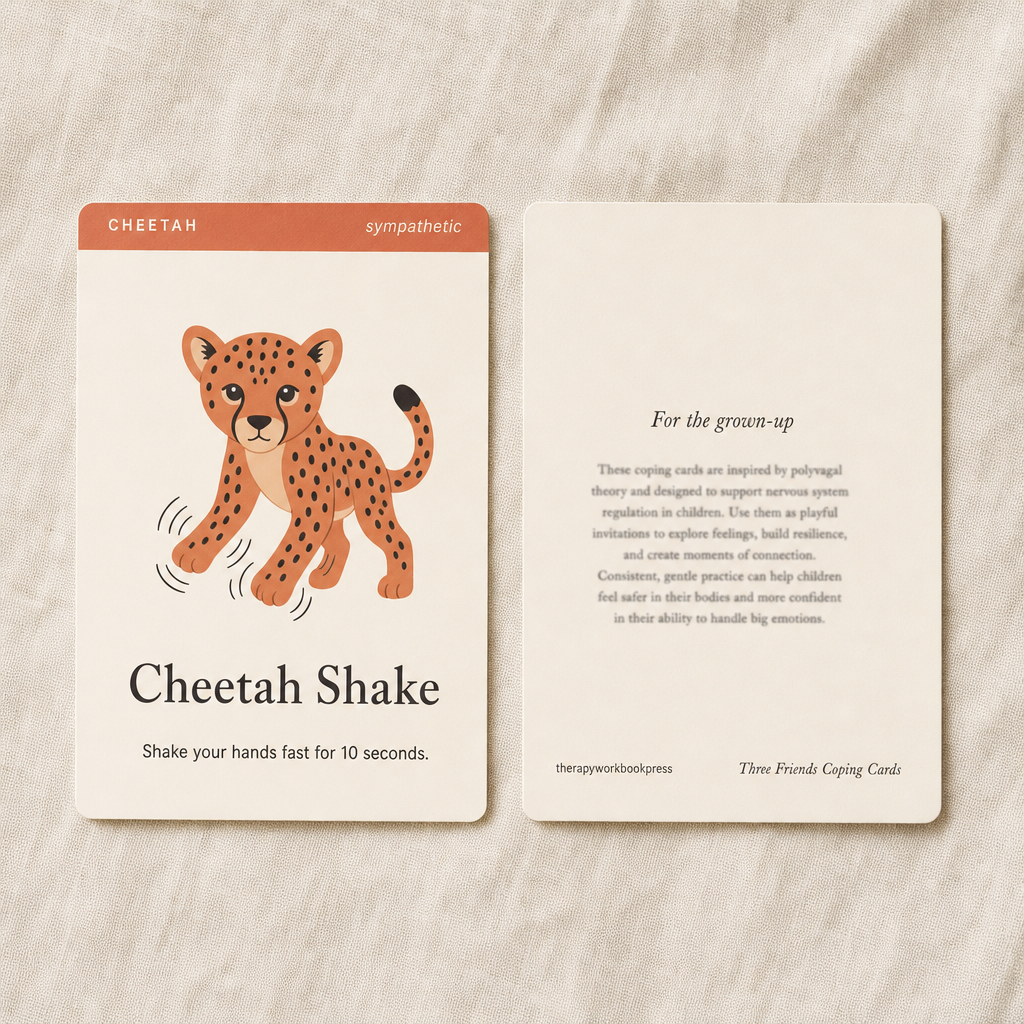
Cheetah — sympathetic. The fast, fight-or-flight, big-feelings state. Twelve cards for discharging activation through movement, sound, and proprioceptive pressure. Cheetah Shake. Wall Push. Stomp Walk. Loud Roar.
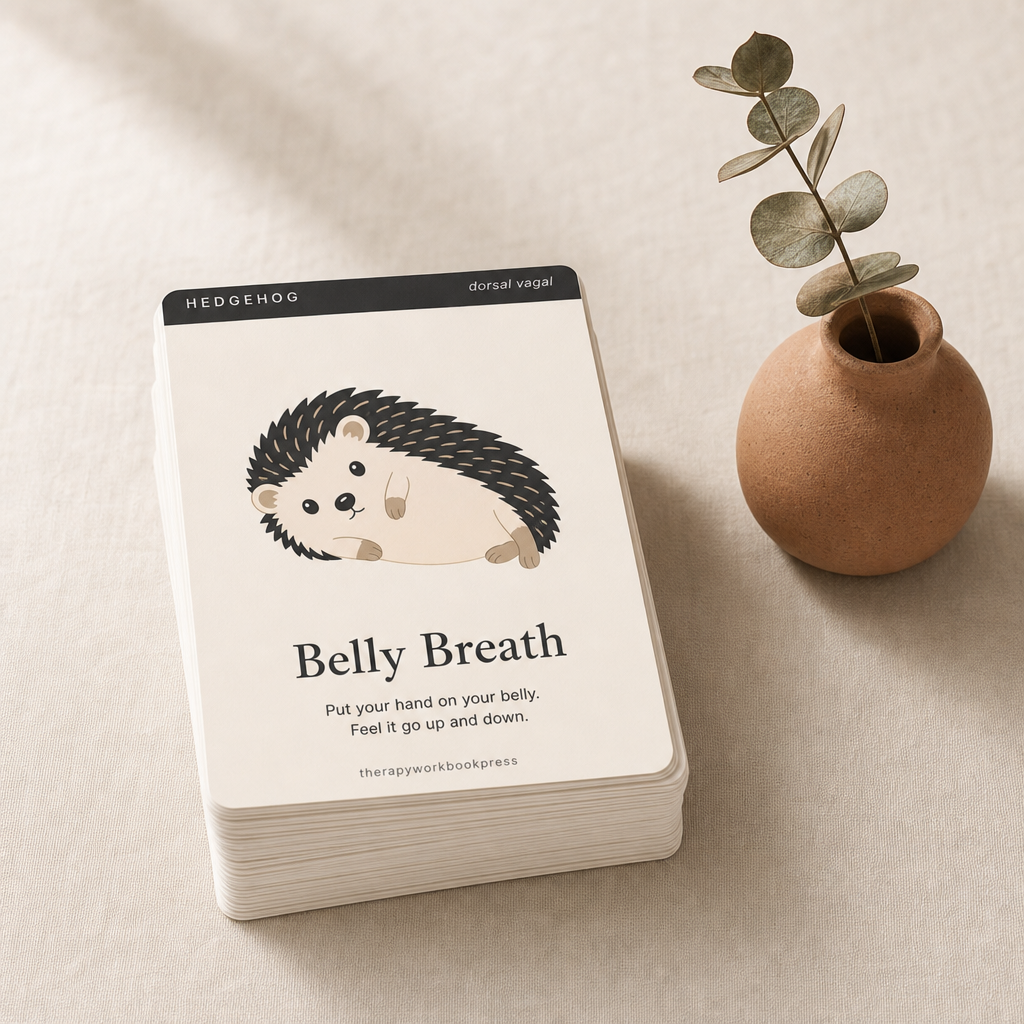
Hedgehog — dorsal vagal. The slow, quiet, shutdown state. Twelve cards for gentle re-engagement when the body has gone still. Foot Press. Slow Sip. One Sound. Warm Hands.
Why the map before the technique
Most children's coping tools jump straight to "try deep breathing." It doesn't work, because the child doesn't know what state they're in or what the breath is supposed to do.
The Three Friends deck teaches the autonomic map first: Right now my body is a Cheetah. Cheetahs need to move. This is what Cheetahs do. The map is the intervention. The card is the doorway.
Children remember animals. Animals don't shame. And there are more Cheetah and Hedgehog cards than Otter cards on purpose — because when a child is already in ventral vagal connection, they don't need a card. They need the card when activation is high or shutdown is deep.
Every card has two faces
The child side is one image and one instruction. No paragraphs. No reading required. A four-year-old can use it. A nine-year-old can use it. A child whose language has gone offline can use it.
The grown-up side is the clinical reason it works — short, citation-anchored notes drawn from Stephen Porges (Polyvagal Theory, 2011), Deb Dana (Polyvagal Theory in Therapy, 2018), Bessel van der Kolk (The Body Keeps the Score, 2014), and Peter Levine's somatic experiencing framework. So you know what's happening in your child's body. So a therapist can hand this to a family without rebuilding the mechanism every session.
Who this is for
Parents of children ages 4–11 who want a calm, non-shaming way to meet meltdowns and shutdowns. Caregivers raising children while also actively regulating their own nervous systems. Foster, adoptive, and kinship parents working with children who carry developmental trauma. Therapists, play therapists, child psychologists, school counselors, and LCSWs who need a printable, citation-backed handout to send home with families.
This is not an affirmation deck. It is a polyvagal-informed somatic intervention tool.
What you get
32 cards across the three polyvagal states. Each card double-sided: child-facing image and instruction on the front, clinical rationale with citation on the back. A4 landscape layout, four cards per sheet, designed for home printing on standard paper or cardstock — print, cut, and use, or laminate for repeated use. Citations sourced from the verified polyvagal canon (Porges, Dana, van der Kolk, Levine).
Format
Instant-download PDF, A4 landscape, 8 sheets (16 if printed double-sided). Download link delivered immediately after checkout. No physical product shipped.
A clinical note
This is a parenting and clinician tool grounded in the polyvagal literature, intended to support — not replace — therapy, psychiatric care, or school-based services. If your child experiences chronic dysregulation, please consult a licensed clinician.