


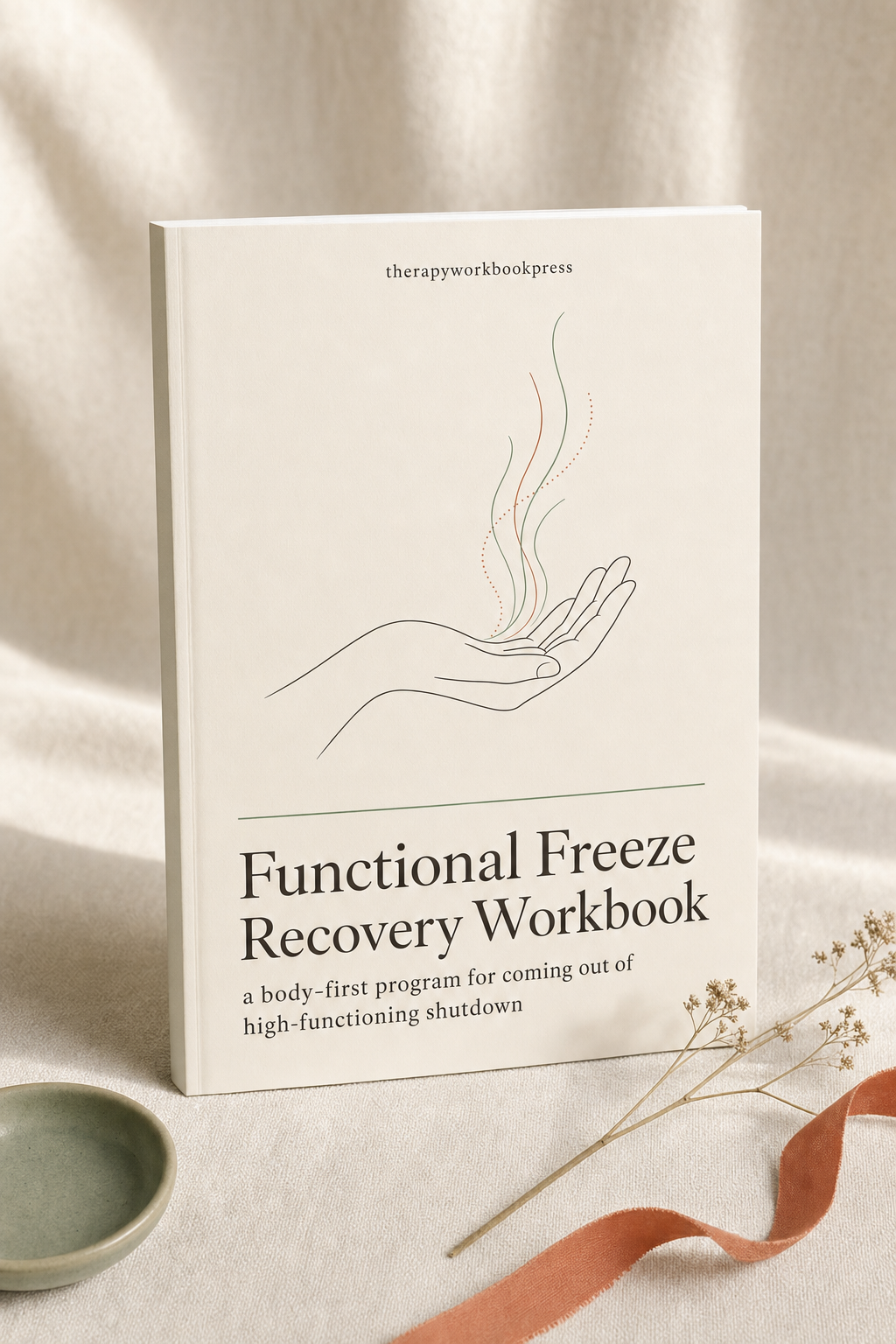






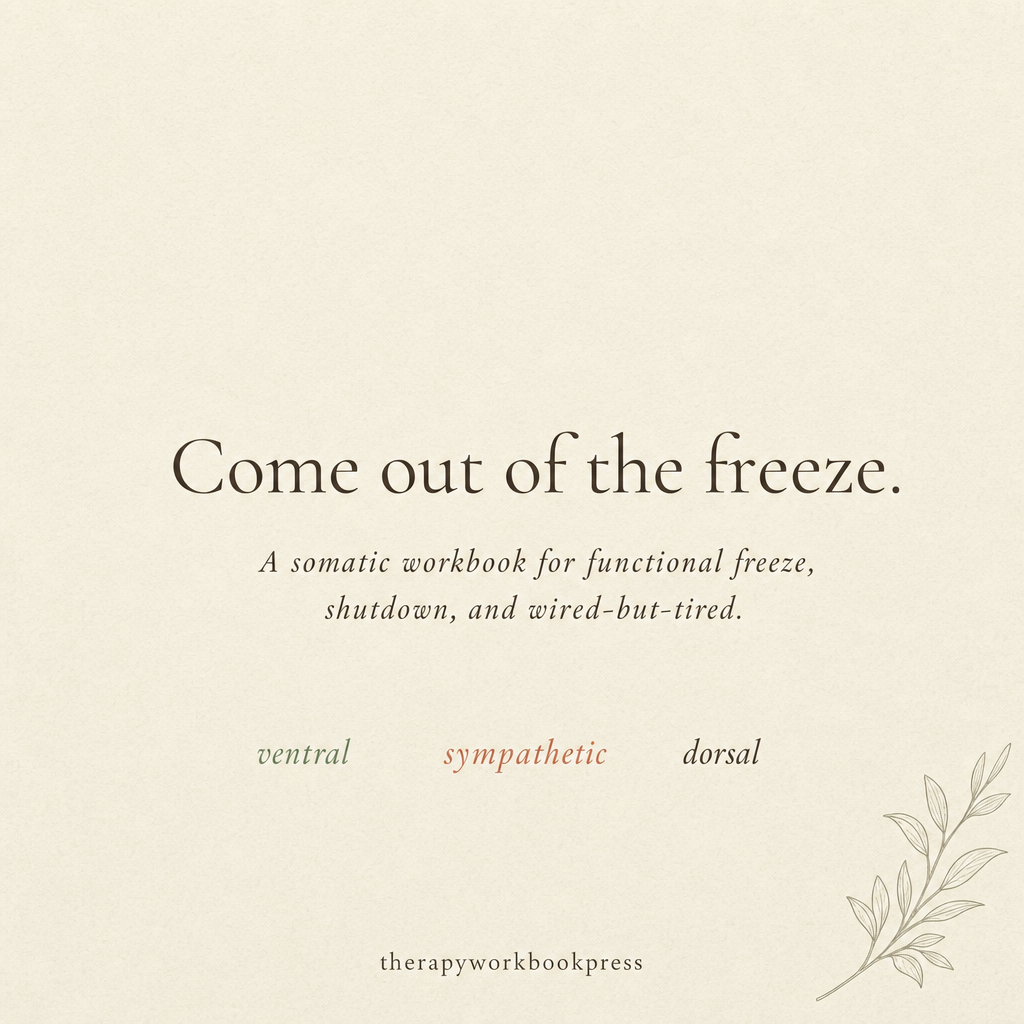











Functional Freeze Recovery Workbook: Somatic Tools to Come Out of Dorsal Vagal Shutdown (PDF)
$29.00$42.00
✨ INSTANT DIGITAL DOWNLOAD: A link will be sent to your email immediately. Safe to open on your phone now or save to your computer for later.
🚀 Lifetime Access + Free Future Updates: Buy once, own it forever. You’ll receive all future versions, new content, and updated resources for free, delivered straight to your inbox.
If rest doesn't fix it, you're not lazy — your nervous system may be stuck in a freeze it can't switch off. The map-first workbook for the exhausted, numb, can't-get-started state clinicians call functional freeze.
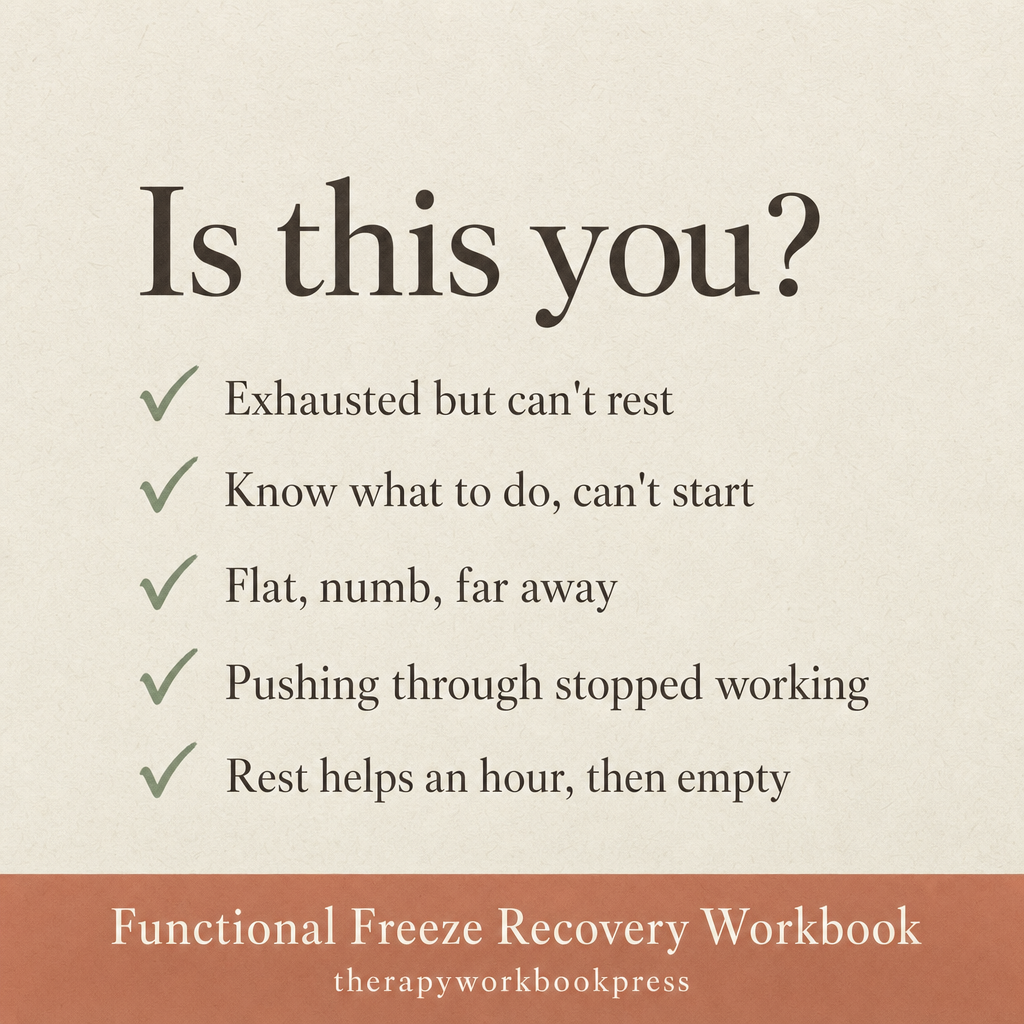
Functional freeze is the high-functioning version of shutdown. On the outside you're coping — showing up, getting the basics done. On the inside you're flat, numb, and running on empty, and the things that used to help (pushing harder, planning, journaling, more rest) don't move the needle. That isn't a motivation problem or a character flaw. It's a protective state — a dorsal-vagal "brake" your body applied long ago and never fully released. You can't think your way out of a body state; you have to work with the body. This workbook shows you how — gently, and in order.
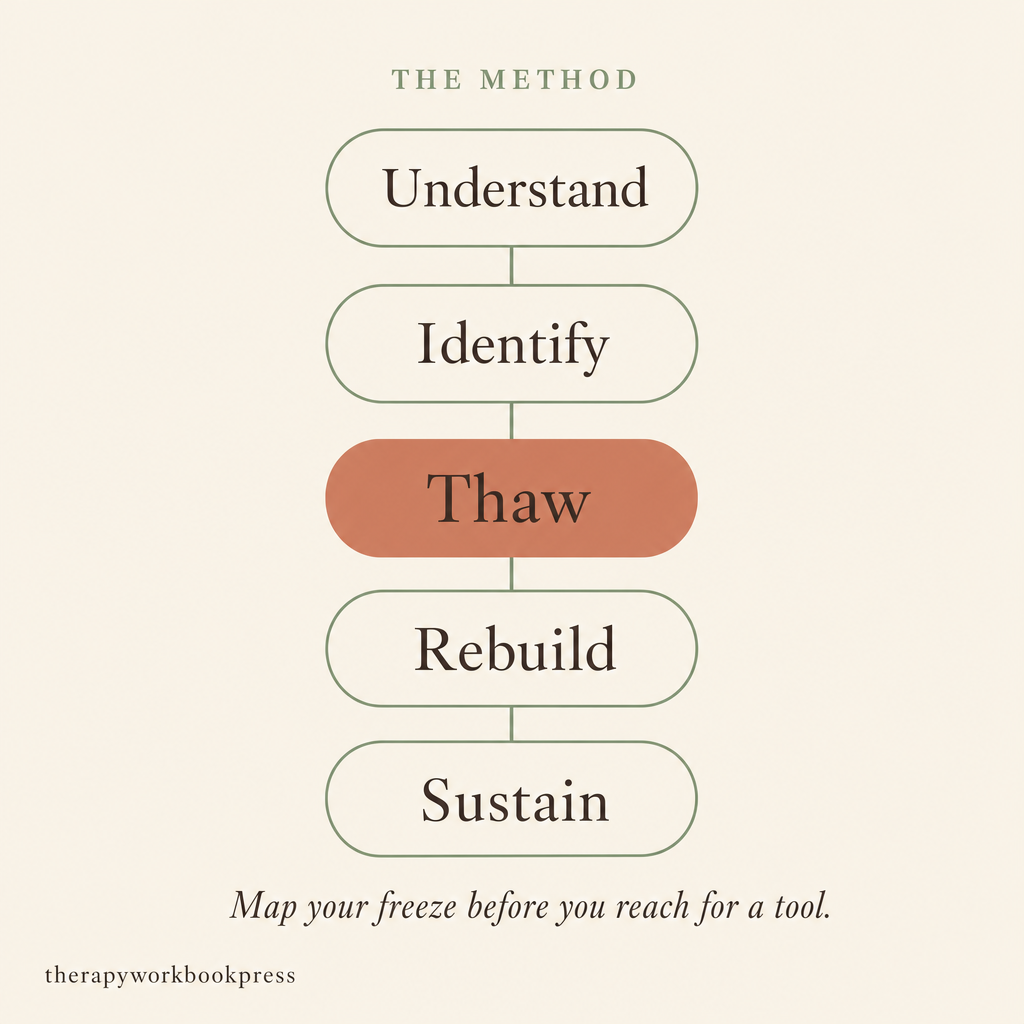
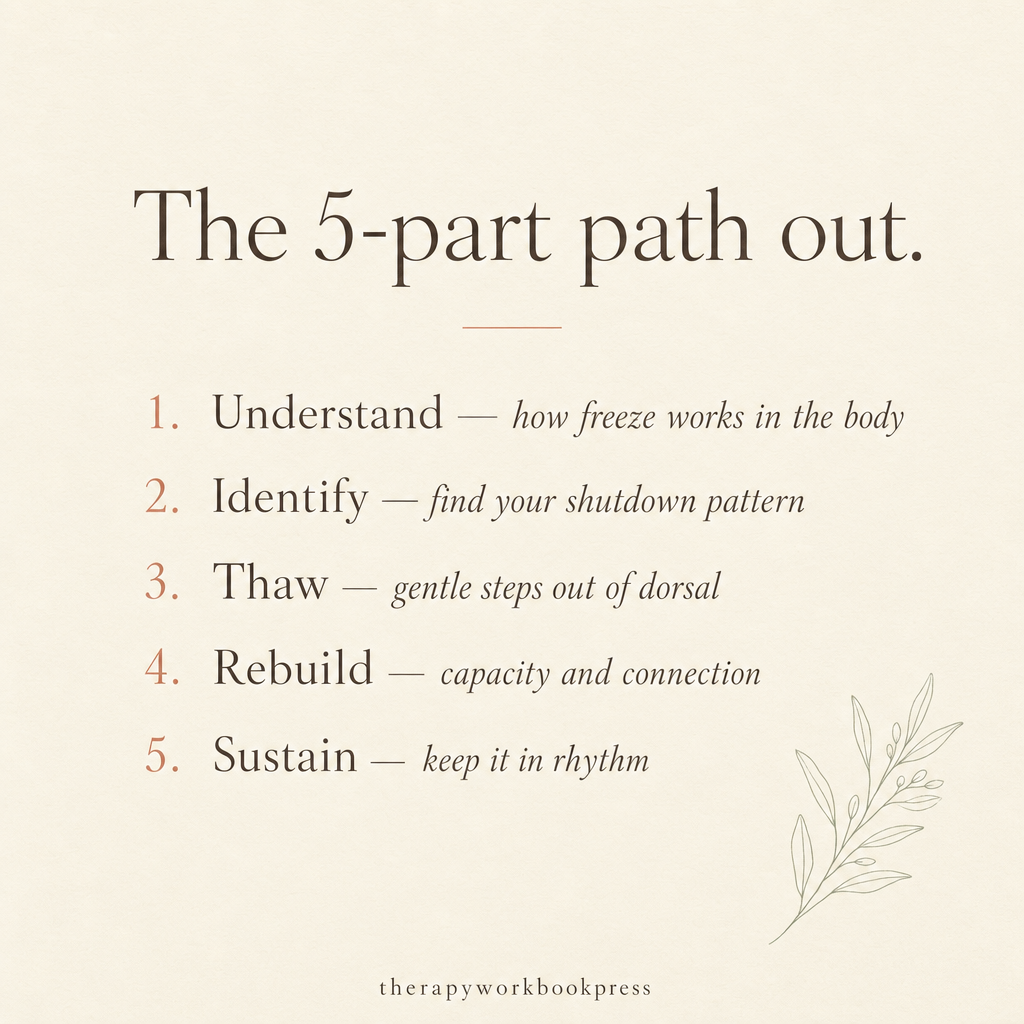
What's Inside (The 5-Part Framework):
PART 1 — Understand the State
What functional freeze actually is: the difference between acute freeze, full collapse, and the chronic "still-functioning" shutdown most people are living in.
The shutdown sequence: how the body slides from alarm into immobilisation, in plain language.
Freeze vs. depression vs. burnout vs. chronic fatigue: a clear comparison so you stop misnaming what's happening to you.
Why "just rest" backfires: what a frozen system needs that downtime alone can't give it.
PART 2 — Identify Your Pattern (the heart of the book — map before technique)
Functional Freeze Self-Assessment: recognise your own signature of shutdown across body, energy, mood, and behaviour.
Your Numbness Map: where you disconnect, what flattens you, and the moments you quietly go offline.
Triggers & Glimmers: the cues that pull you down — and the small ones that bring you back.
The Freeze–Fawn Overlap: how chronic appeasing and collapse feed each other (for the people-pleasers who also go numb).
Your Window of Tolerance — the floor: find the bottom edge where you drop into shutdown, so you can catch it earlier.
PART 3 — Thaw
Titration & pendulation: come out of freeze in doses your body can tolerate — without flipping into panic.
Completing the response: gentle ways to finish the protective impulses that got stuck.
Orienting & micro-movement: tiny, low-demand practices that signal safety and restore motion.
Why we don't start with cold plunges: which popular tools are wrong for a shutdown state, and what to do instead.
PART 4 — Rebuild
Interoceptive rehab: re-learning to feel sensation after long numbness.
Co-regulation: using safe connection to do what's hard to do alone.
The "can't start" protocol: structuring tiny re-entry into action and agency.
Building ventral capacity: lengthening the time you spend in your calm, online state.
PART 5 — Sustain
Your personal Thaw Plan: a one-page map of what actually works for you.
Early re-freeze warning signs: catch the slide back before it takes hold.
Tracking pages: notice change over weeks, not minutes.
When to bring in a professional: clear guidance on what this workbook is — and isn't.
Why This Is Different — Map Before Technique: Most shutdown advice hands you a breathing exercise and hopes for the best. This workbook makes you recognise your own freeze first, because a tool only works once you know which state you're in. The self-assessment is the centre of the book, not an afterthought.
Grounded in the Evidence: Built on the work of Stephen Porges and Deb Dana (polyvagal theory), Peter Levine (somatic renegotiation), Pete Walker (the freeze type), and Bessel van der Kolk — not affirmations or pop-psychology. Felt-state first; no overclaiming about mechanisms.
Ideal For:
Individuals: If you're tired-but-wired, exhausted-but-can't-rest, or stuck in "I know what to do, I just can't make myself do it" — this gives you a way in that doesn't rely on willpower.
Clinicians: A structured, printable companion for clients in dorsal shutdown — assign the assessment, then specific thaw pages, as between-session work. Using it with your own clients is included at no extra cost.
Format: Instant-download digital PDF. A4 and US Letter sizes included. Print it or use it on any tablet. 40 pages. No physical item is shipped.
This workbook is educational and is not a substitute for professional medical or mental-health care. If you're in crisis or working with significant trauma, please do so alongside a qualified professional.