


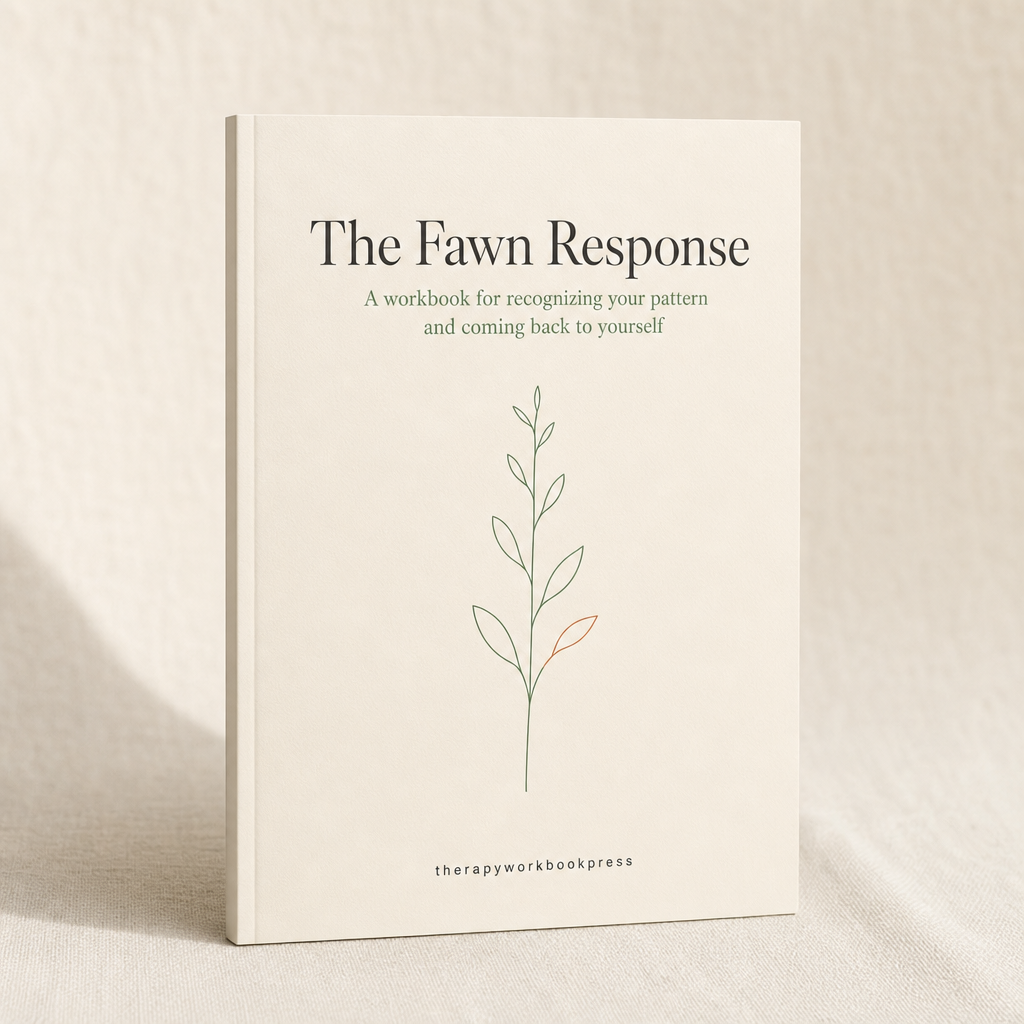












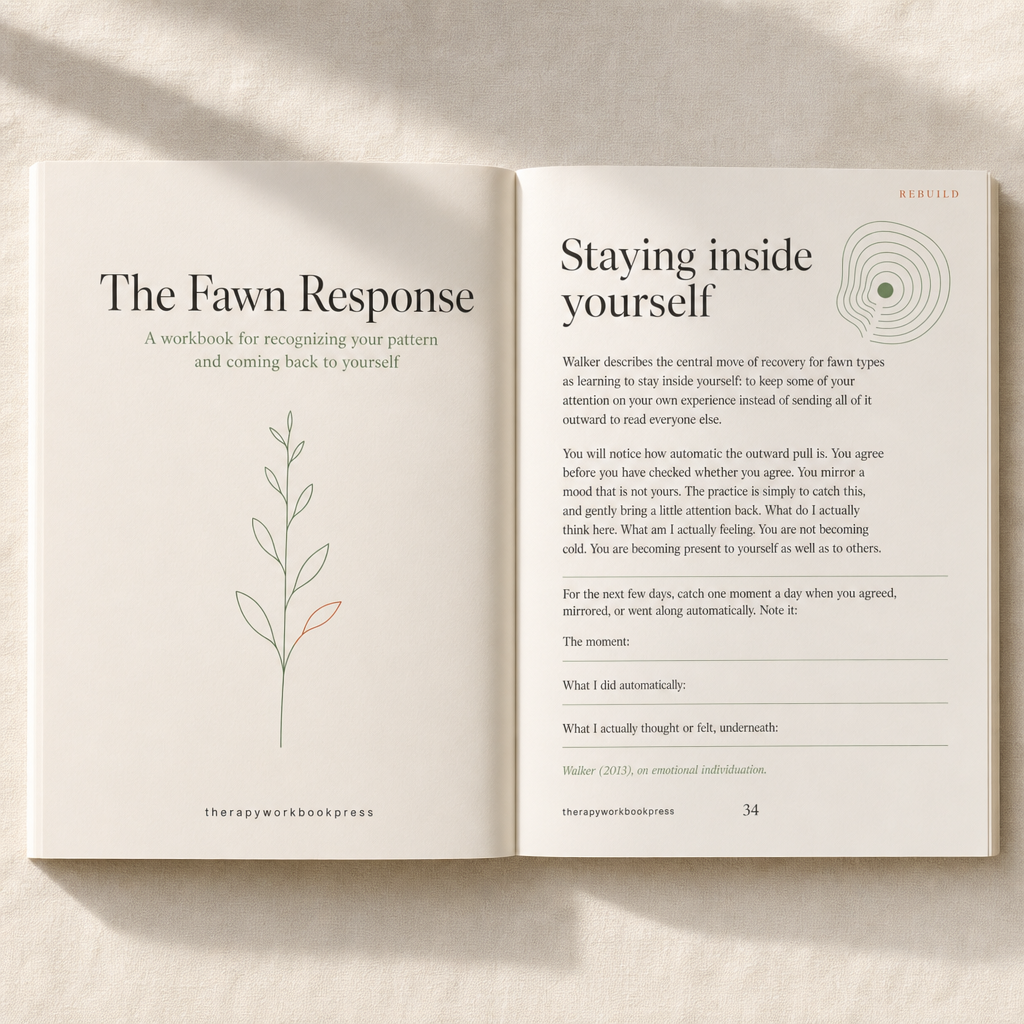

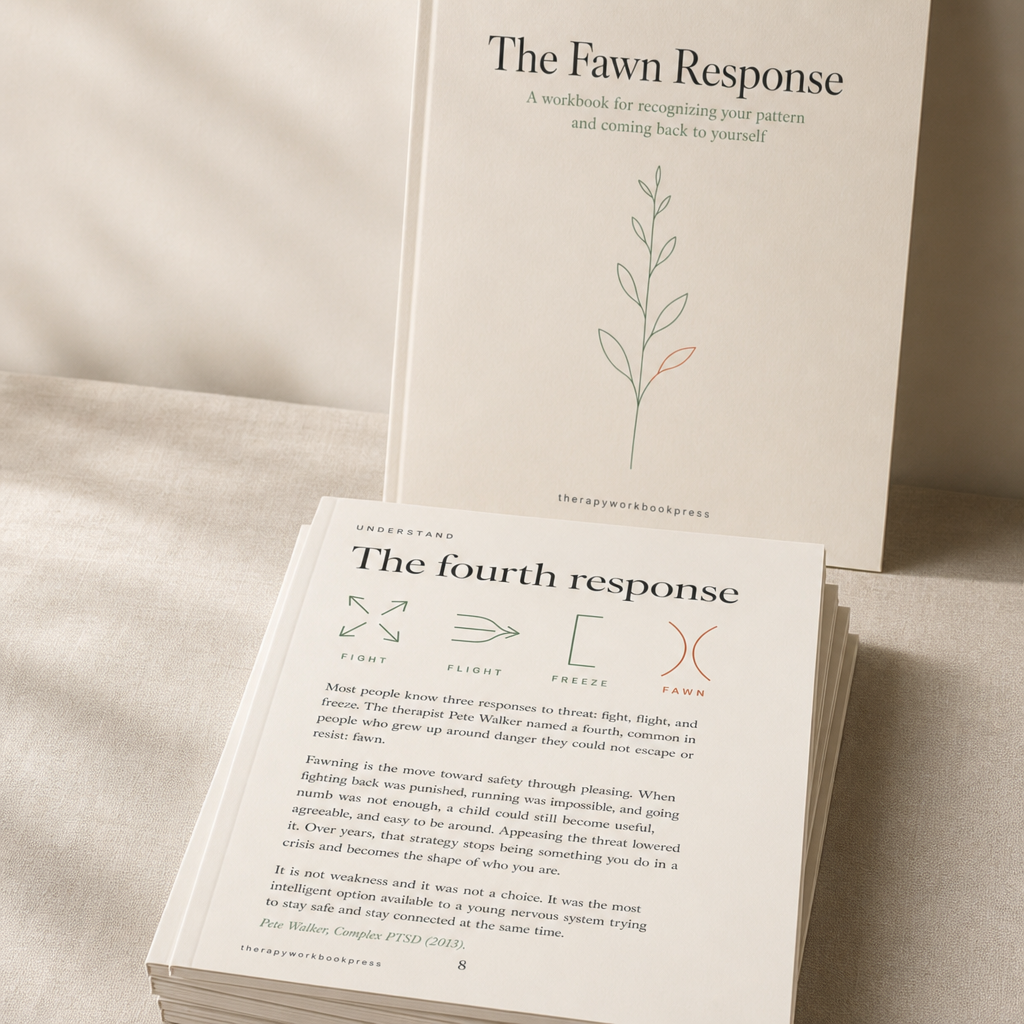

The Fawn Response Workbook: A Somatic Guide to Stop People-Pleasing, Set Boundaries & Reclaim Your Sense of Self (46 Pages)
$29.00$46.00
✨ INSTANT DIGITAL DOWNLOAD: A link will be sent to your email immediately. Safe to open on your phone now or save to your computer for later.
🚀 Lifetime Access + Free Future Updates: Buy once, own it forever. You’ll receive all future versions, new content, and updated resources for free, delivered straight to your inbox.
You're not difficult. You're not too much. You learned, a long time ago, to disappear. A 46-page somatic workbook for recognizing your fawn response — and finding the way back to yourself.
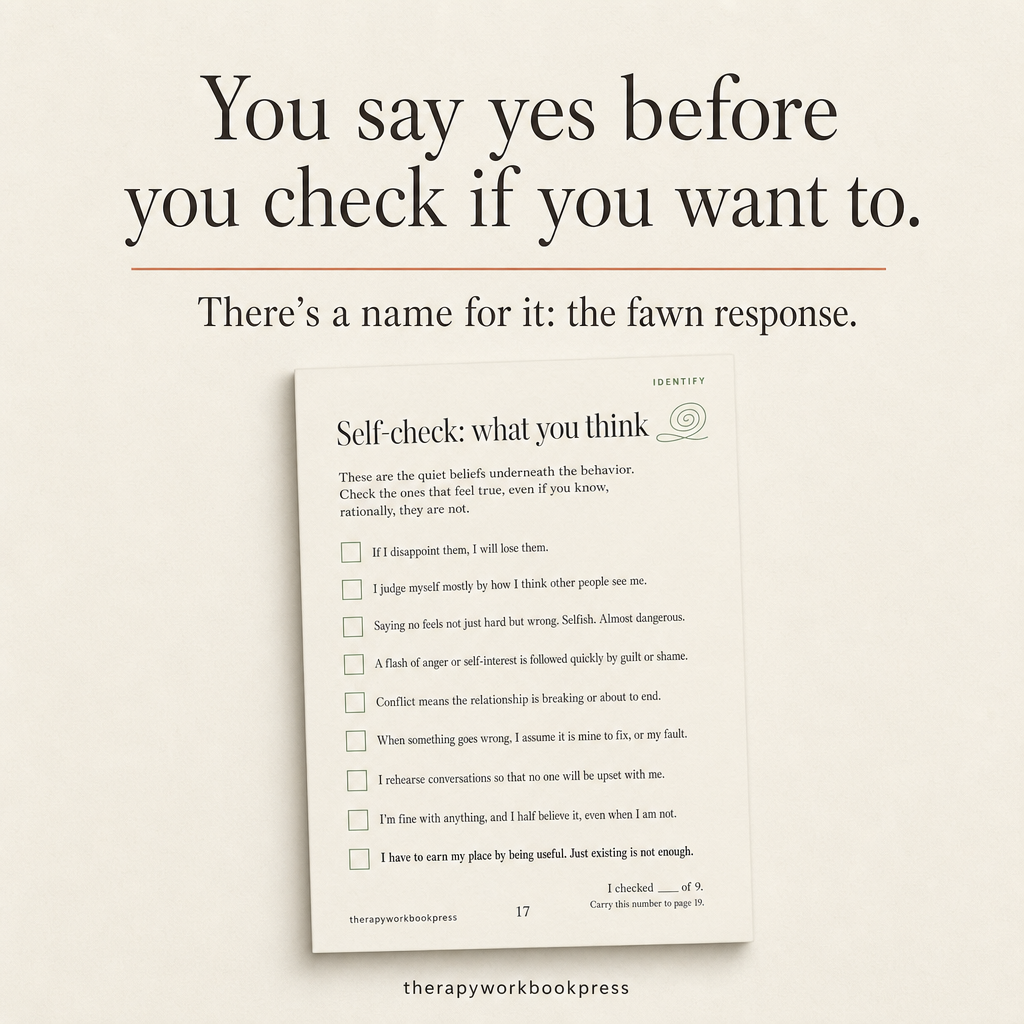
You say yes before you've checked whether you want to. You apologize for taking up space. You can read a room in seconds and have no idea what you actually want. From the outside you look agreeable, easy, low-maintenance — and inside there is static where a clear voice should be.
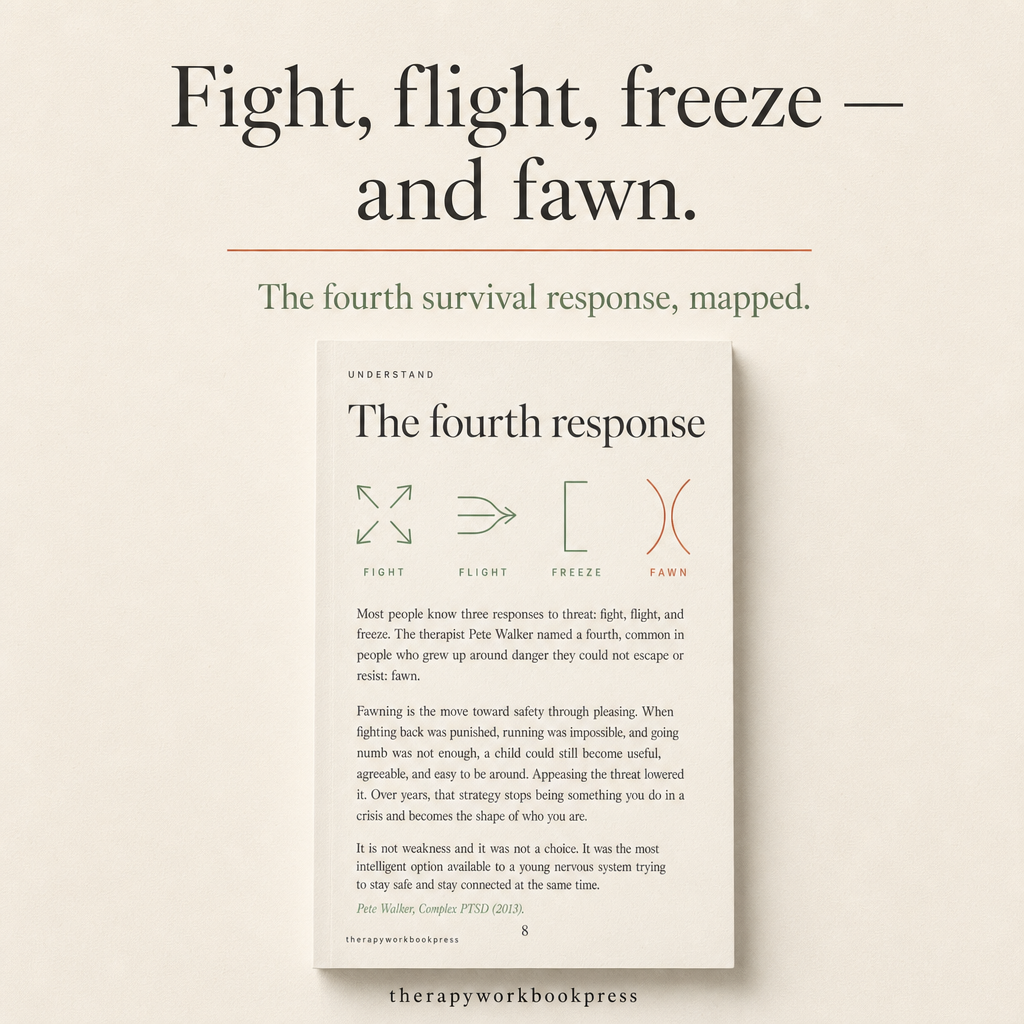
There is a name for this. The therapist Pete Walker called it the fawn response: the fourth survival response, alongside fight, flight, and freeze. It is the move toward safety through pleasing, learned by people who grew up around danger they could not escape or resist. It was never weakness, and it was never a choice. It was the most intelligent option a young nervous system had.
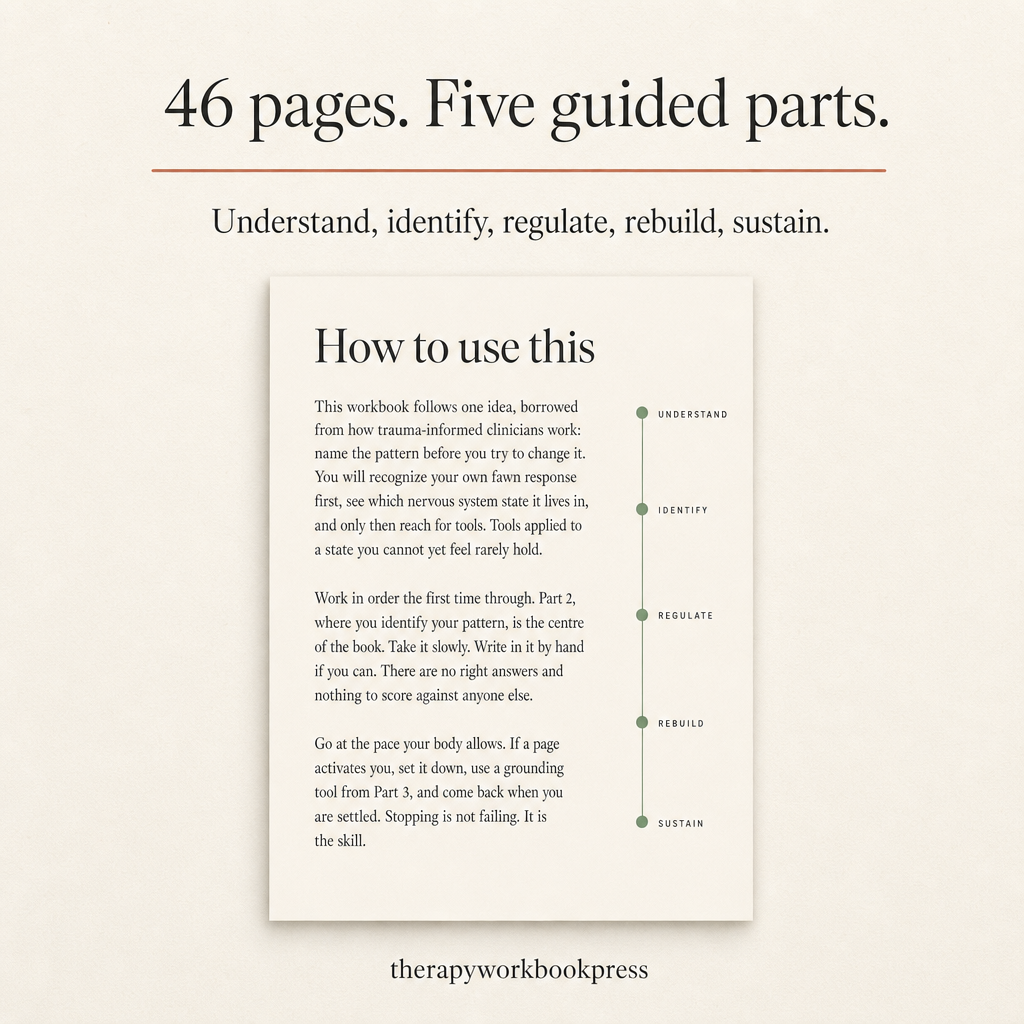
You cannot think your way out of a pattern your body runs automatically. So this workbook follows one idea, borrowed from how trauma-informed clinicians actually work: name the pattern before you try to change it. You recognize your own fawn response first, see which nervous-system state it lives in, and only then reach for tools. Tools applied to a state you cannot yet feel rarely hold.
The 5-Part Path (46 full-page spreads):
- One — Understand. What the fawn response is, how it forms, and the four ways it blends with fight, flight, and freeze.
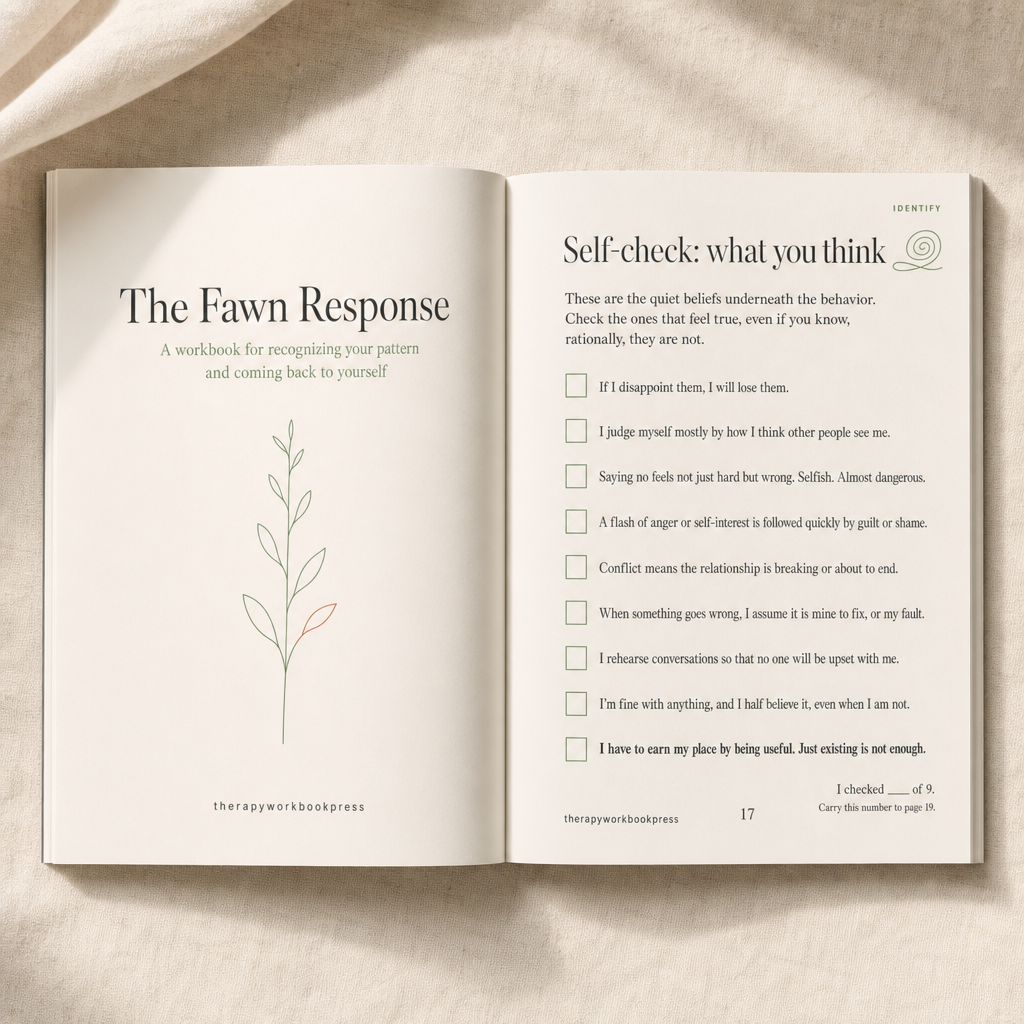
- Two — Identify. The heart of the book. Four guided self-checks — what you do, what your body does, what you think, and how you relate — so you find the pattern in your own life, not just read about it.
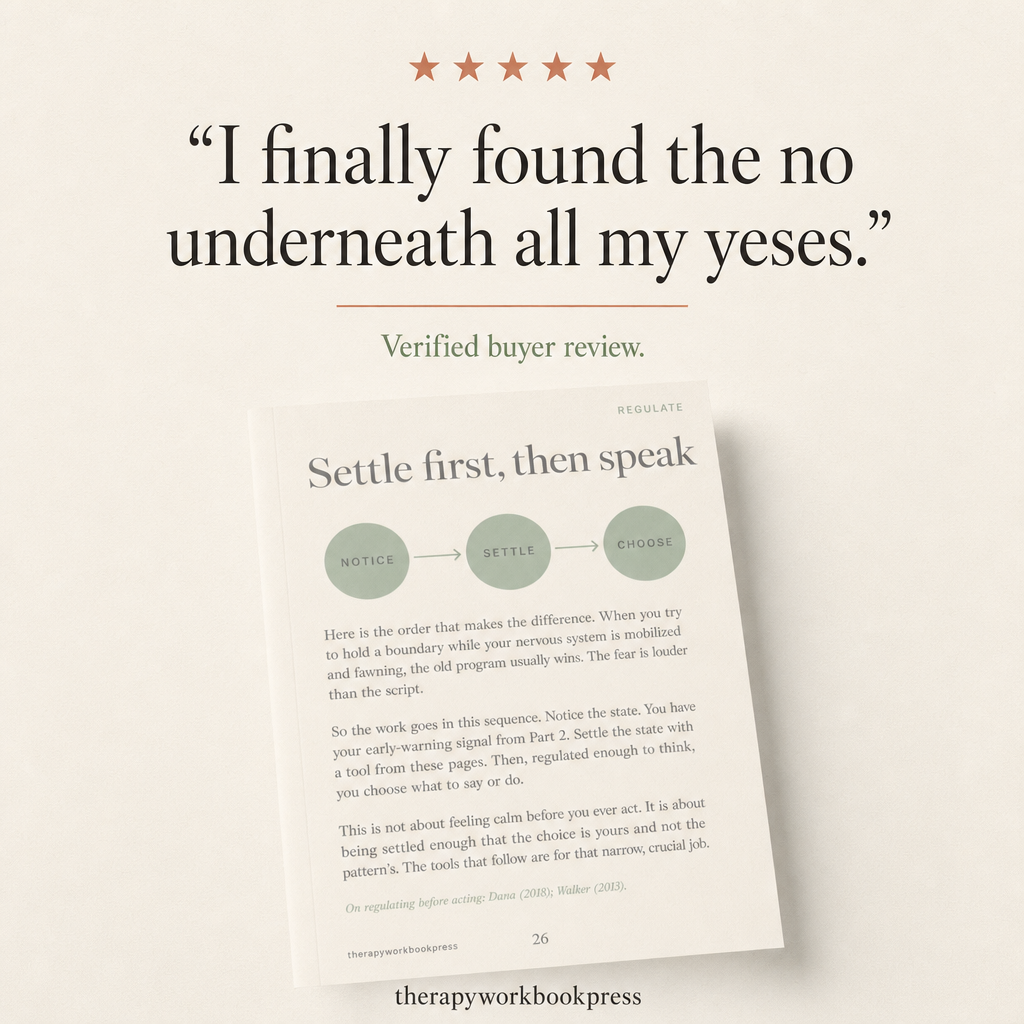
- Three — Regulate. Settle your nervous system enough to tolerate not pleasing: the long exhale, grounding, working with emotional flashbacks, and finding the "no" underneath the yes.
- Four — Rebuild. Recover your preferences, your boundaries, and your sense of self. Includes ready-to-borrow boundary scripts, a "small no" practice, and the eldest-daughter / parentification pattern.
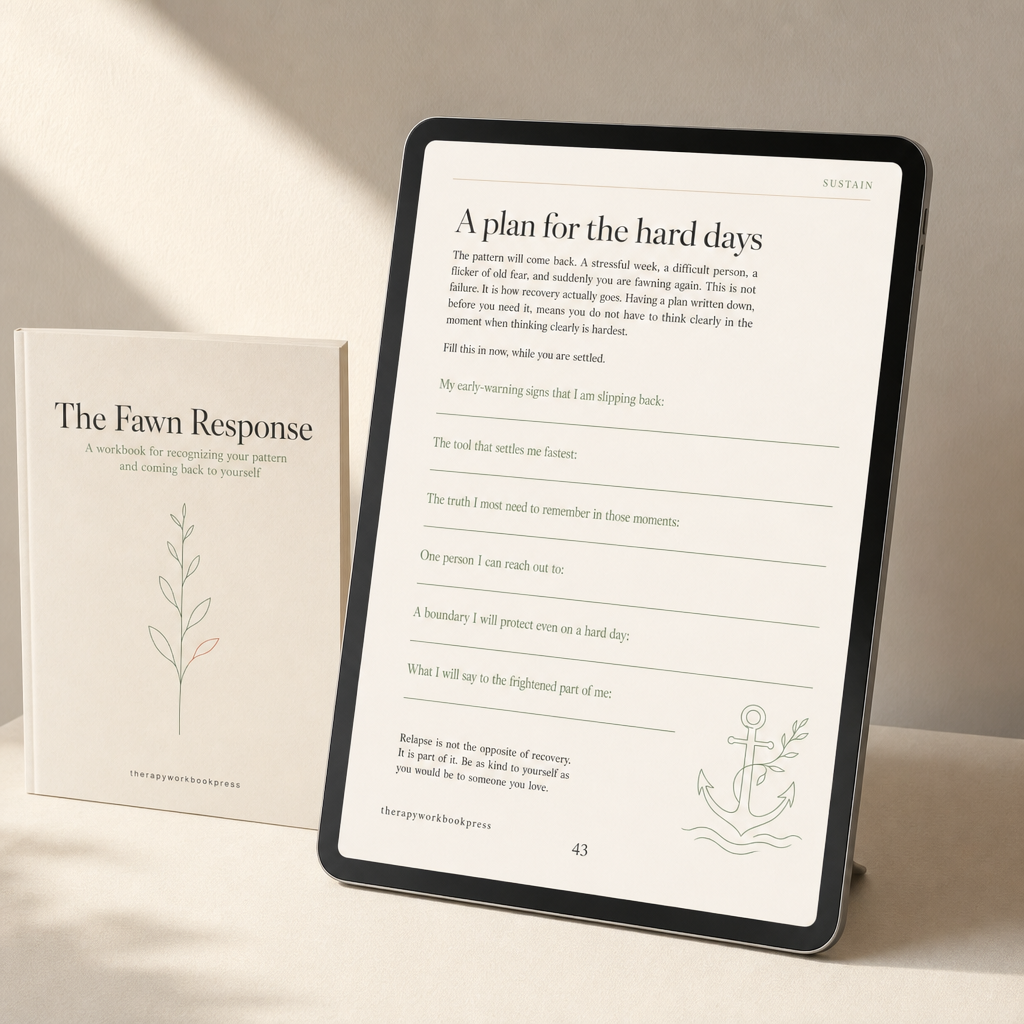
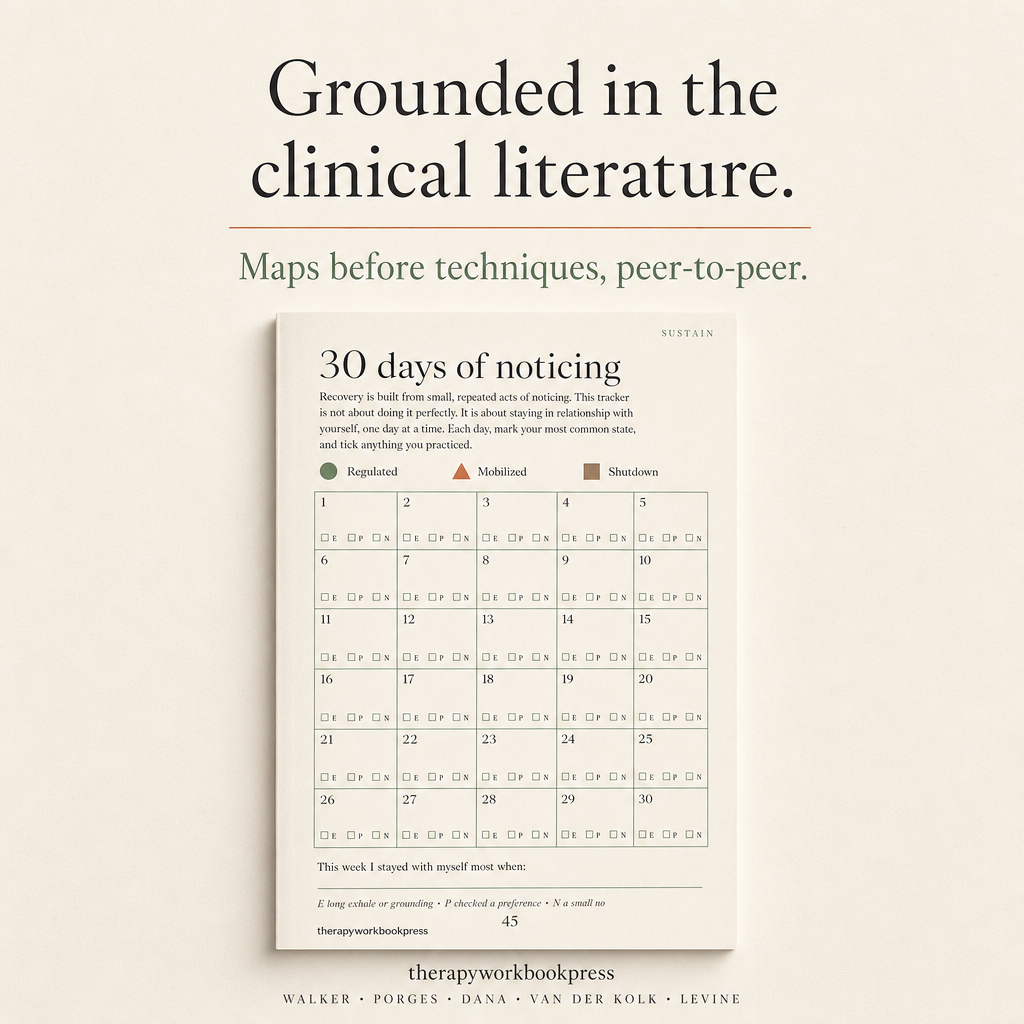
- Five — Sustain. A short daily practice, a plan for the days the pattern returns, clear signs of when to bring in a professional, and a 30-day tracker.
Why this one is different: Most workbooks tell you what fawning is. This one helps you find it in yourself — calmly, at your own pace, with maps before techniques. It is written peer-to-peer, with no affirmations, no hype, and no talking down. The warmth comes from accuracy and recognition, not reassurance.
Grounded in the clinical literature: Pete Walker (Complex PTSD), Stephen Porges (Polyvagal Theory), Deb Dana (Anchored), Bessel van der Kolk (The Body Keeps the Score), and Peter Levine (somatic experiencing).
Who it's for:
- The self-helper. You've done the reading and the therapy, you understand your patterns — and you're ready to actually feel your way out of them.
- The clinician. Print-ready psychoeducation, self-checks, and between-session homework for clients working on people-pleasing, boundaries, and CPTSD.
A note before you begin: This workbook is for education and self-reflection. It is not therapy, diagnosis, or treatment, and it is not a substitute for care from a qualified professional. Nothing in it is a verdict about who you are. You remain the authority on your own experience.
Format: Instant digital download (PDF), A4 & US Letter. 46 pages. Print it, or write on it from a tablet. For personal use.
Coming back to yourself is slow, and it is real. You are allowed to take up the space you spent so long making smaller.