
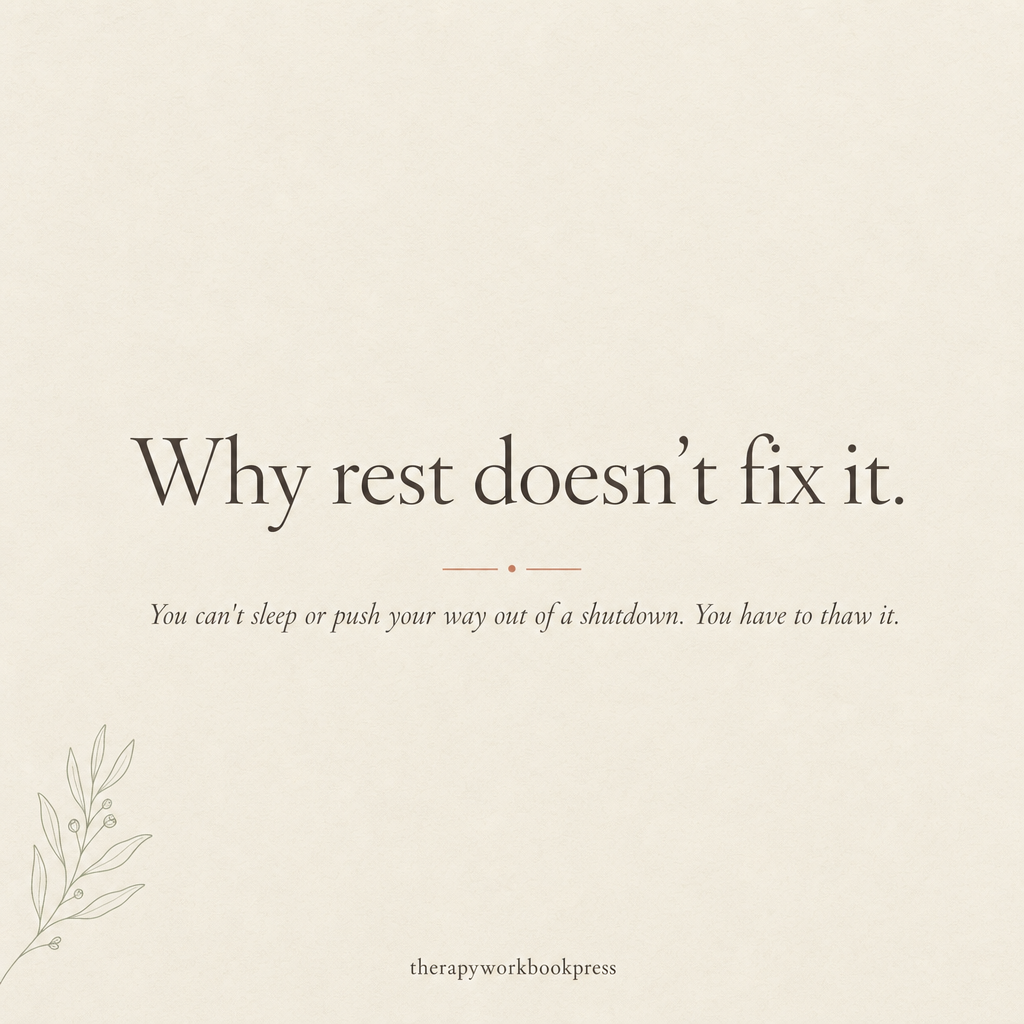
Everything got done. I was not there for any of it. It was not laziness.


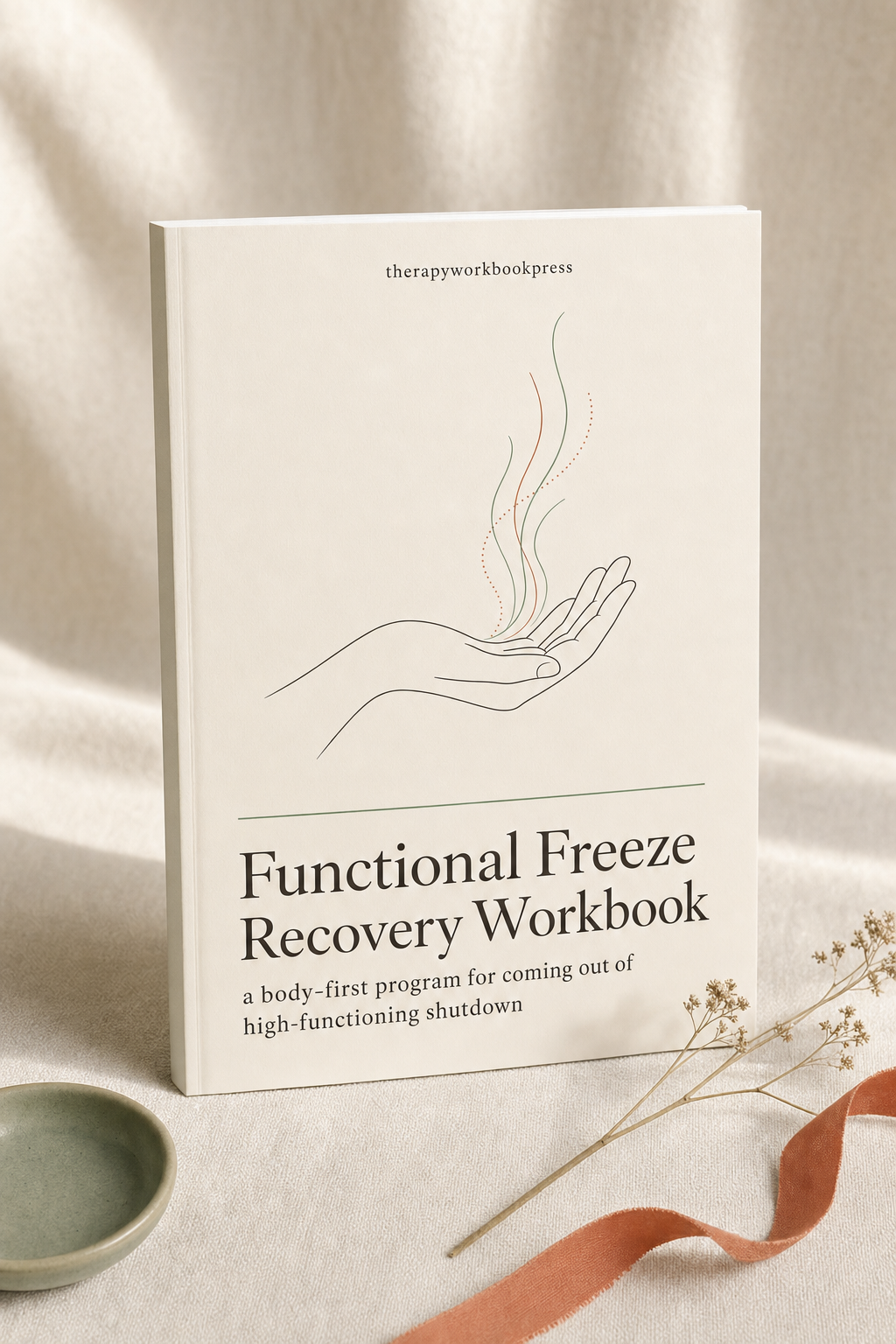


















Functional Freeze Recovery Workbook: Somatic Tools to Come Out of Freeze & Shutdown (PDF)
Everything got done. I was not there for any of it. It was not laziness.
$29.49$42.00
Instant PDF by email
60-day refund
Keep the files
From page 11 of the workbook
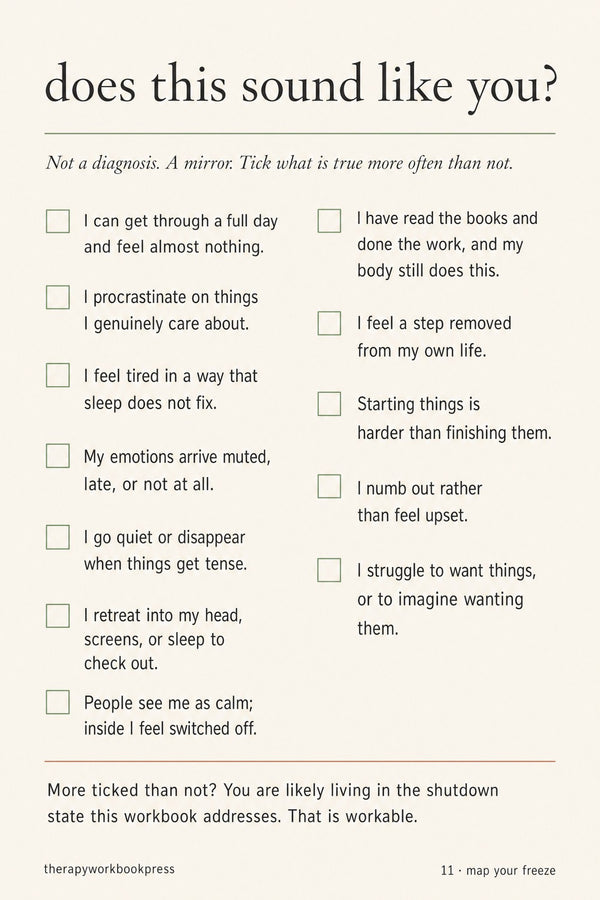
Nine more lines on page 11. Not a diagnosis. A mirror.
More than 800 orders since June 2026.
Small practices, in order. A 40-page PDF workbook: a 12-line mirror, four pages to map my own pattern, 11 small practices with four steps each, and trackers made to be repeated. A4 and US Letter.
Instant download
Sent to your inbox right after checkout
Lifetime updates
Every future edition, free
60-day guarantee
Full refund, no questions, keep the files
Sources named
Porges, Dana, Levine, Walker, Schauer and Elbert. References on page 40
Print or tablet
A4 and US Letter. Made to be written on
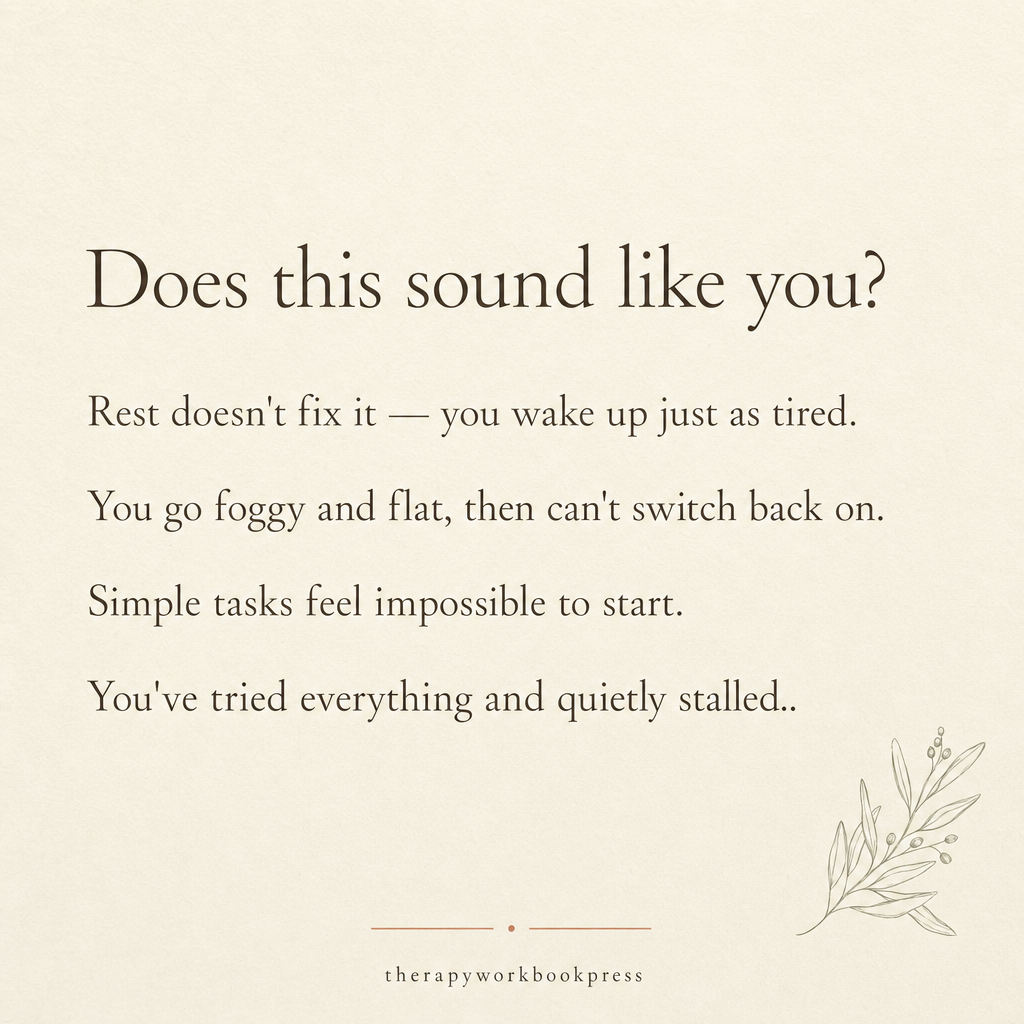
I rested and never felt rested.
The list was finished by four. I could not tell you one thing about the day.
From the outside, a life in good order. Inside, something had gone still.
Everyone told me to rest. I rested. It did nothing. I decided I was lazy.
It was not laziness. And rest was not the missing piece.
Why rest did nothing
Two ends. One kind of advice.
The loud end
Uproar
racing, alert, panicky
calm down, slow down, rest: written for this end
The quiet end
Shutdown
numb, flat, heavy, slowed
more rest did nothing for me here
The advice was fine. It was written for the other end.
Uproar and shutdown are Schauer and Elbert's terms (2010).
There is a loud end and a quiet end.
Two trauma researchers, Maggie Schauer and Thomas Elbert, describe the body's defense responses as a sequence with two ends (Schauer and Elbert, 2010). They call the loud end uproar. They call the quiet end shutdown. The workbook's words for it: numb, flat, heavy, slowed.
Most of the advice I had been given was written for the loud end. Slow down. Calm down. Rest. When I read the description of the quiet end, I recognized my days.
For the quiet end, Deb Dana's guidance runs the other way: a gentle return of energy, in small amounts (Dana, 2018). Peter Levine's word for the small amounts is titration. One drop, then a rest.
So the way back was not more rest. It was up, slowly.
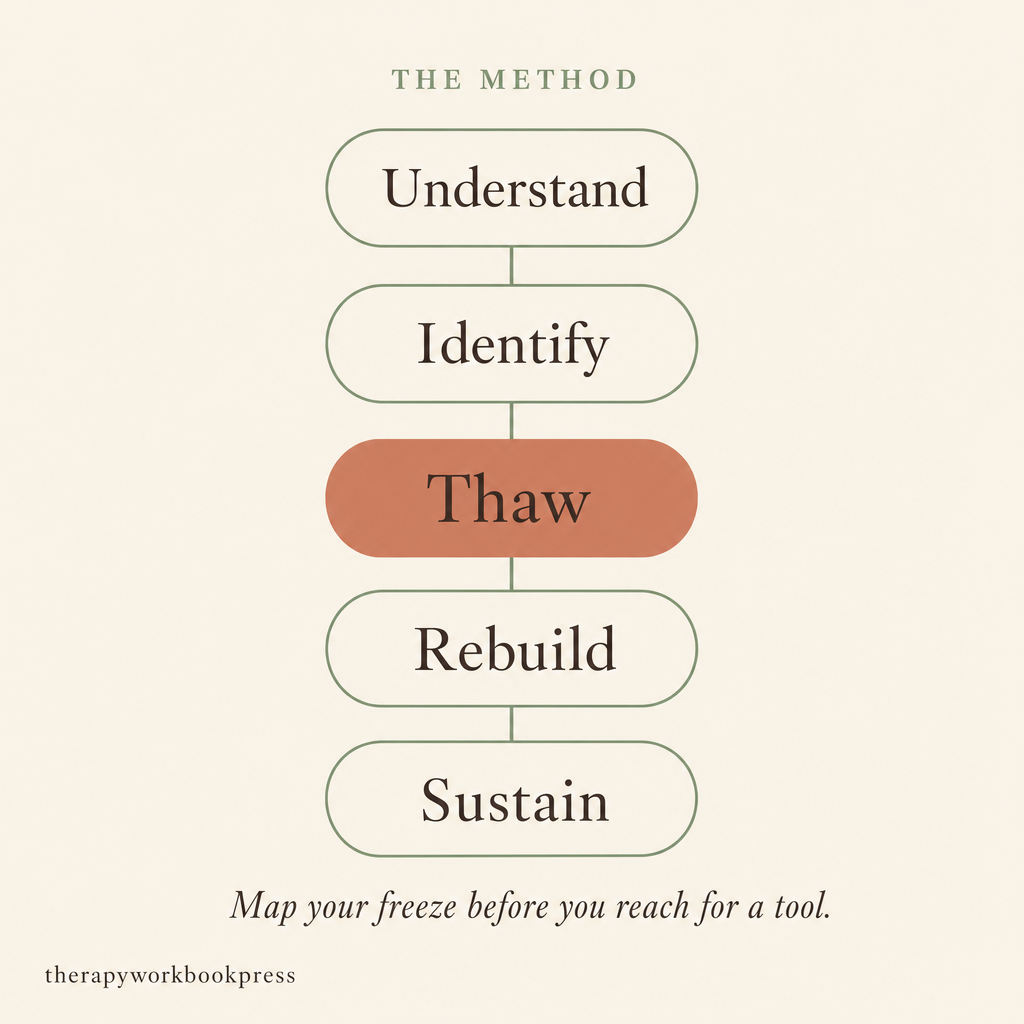
A mirror, a map, then small practices in order.
Part Two opens with a mirror on page 11: 12 lines to tick. Then four pages to map my own pattern. Then 11 small practices, in an order that matters. Each one has four steps and a line to track it.
The first evening
- Open the workbook to page 11. Tick what is true more often than not.
- Turn to page 16. It gives the one rule for everything after: do less than I think I should, and rest counts as part of the work.
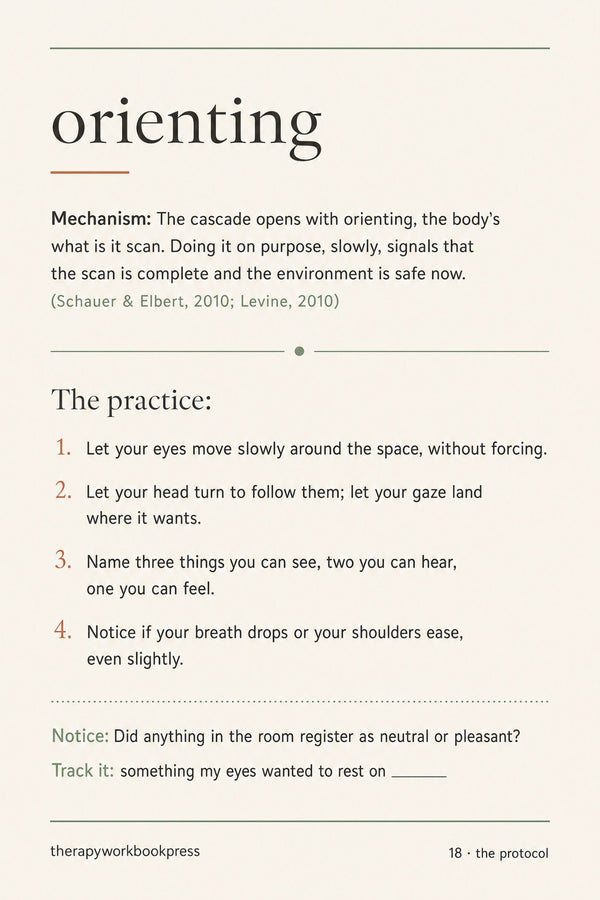
- Go to page 18, orienting. Let my eyes move slowly around the room. Name three things I can see, two I can hear, one I can feel.
- Fill in the "Track it" line.
That is one evening. The workbook asks me to read Parts One and Two first, then work Part Three slowly. In its words: slower is faster here.
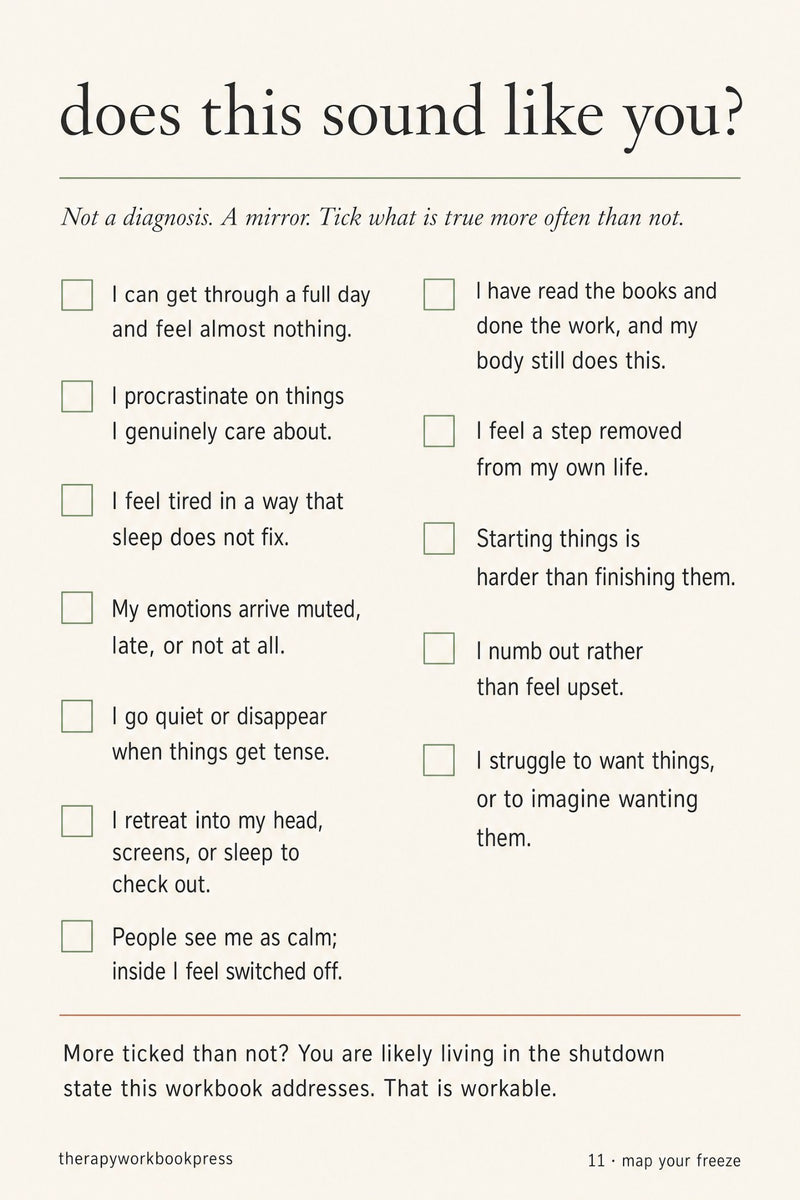
Page 11, the 12-line mirror
What is in the workbook
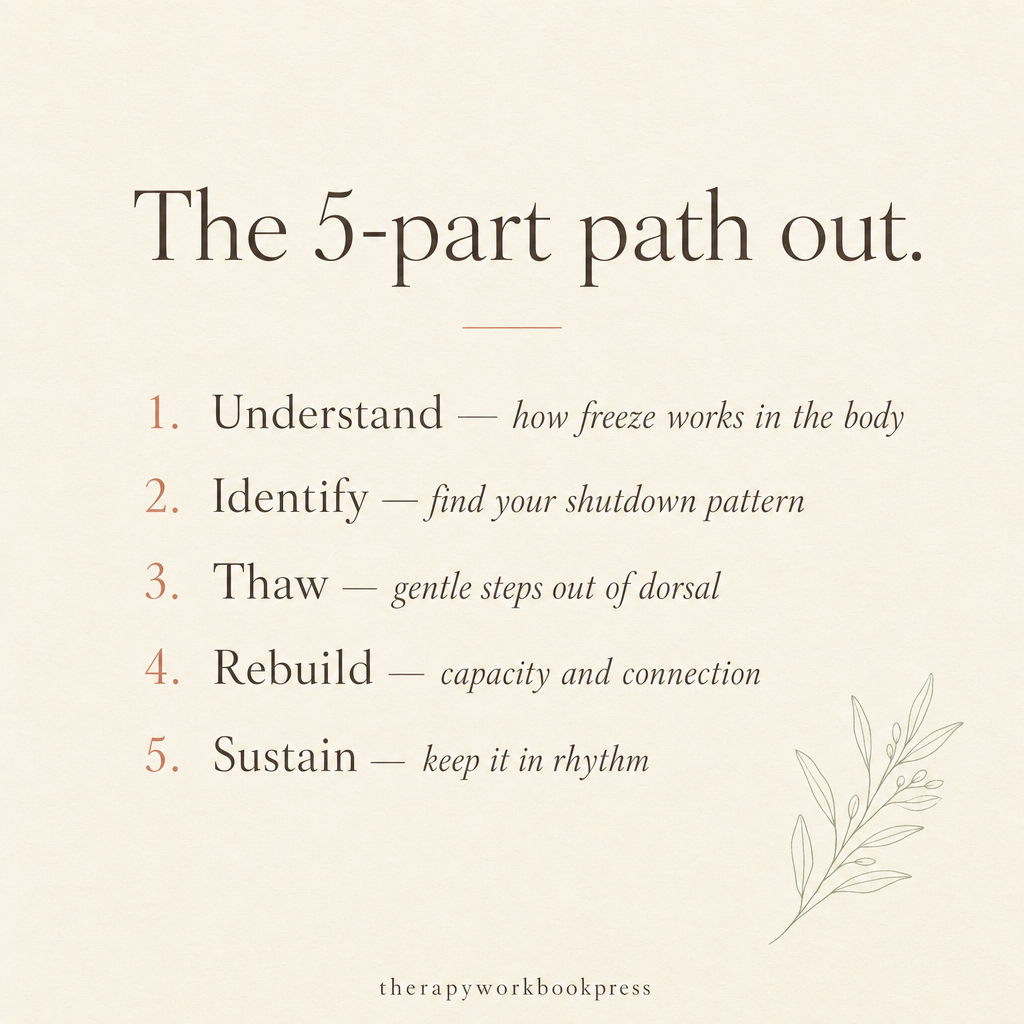
40 pages. Five parts. A4 and US Letter.
Pages
01
Understand the statepages 4 to 10
What this state is, in plain words, and why it is not laziness.
Three states on one ladder. The six-step defense cascade. Uproar and shutdown. The high-functioning mask.
How it differs from depression, and when to bring in a professional.
02
Map your freezepages 11 to 15
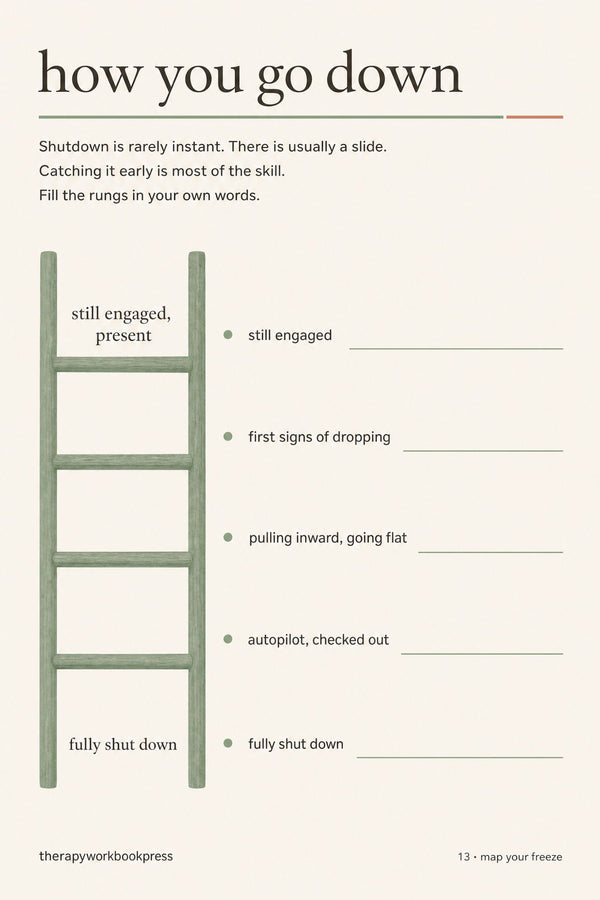
A 12-line mirror, then four pages to map my own pattern.
My freeze signature in body, thinking, actions and relationships. How I go down, rung by rung. My window. My glimmers.
03
The protocolpages 16 to 28
11 small practices, in order. Four steps and a "Track it" line on each.
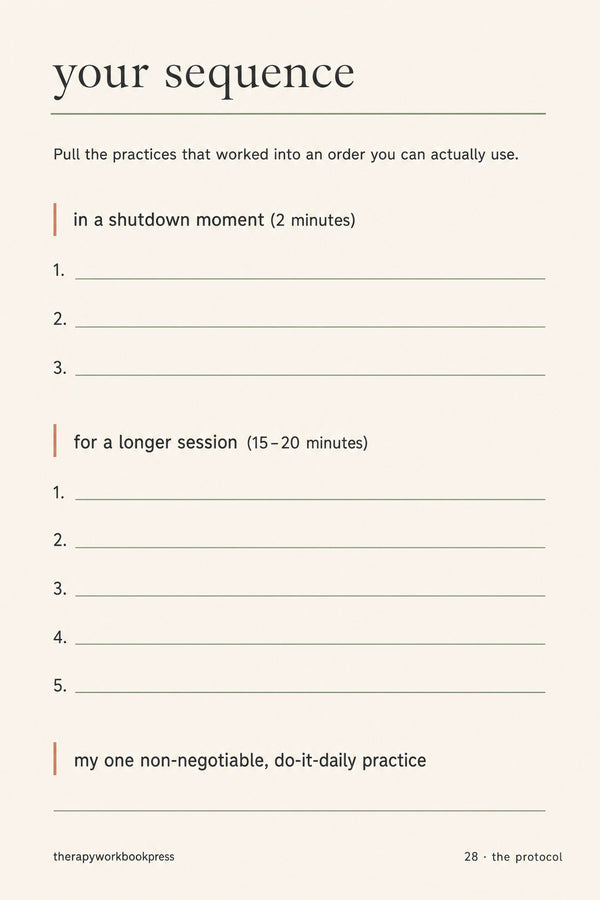
Then a page on borrowing a steadier system, and a page to build my own 2-minute and 15 to 20 minute sequences.
04
The freeze typepages 29 to 33
The deeper pattern, in Pete Walker's terms.
The inner critic. The pull to disappear into screens or sleep. What surfaces as the numbness lifts. The kinder voice.
05
Track and integratepages 34 to 38
Pages made to be repeated. A missed day is data, not failure.
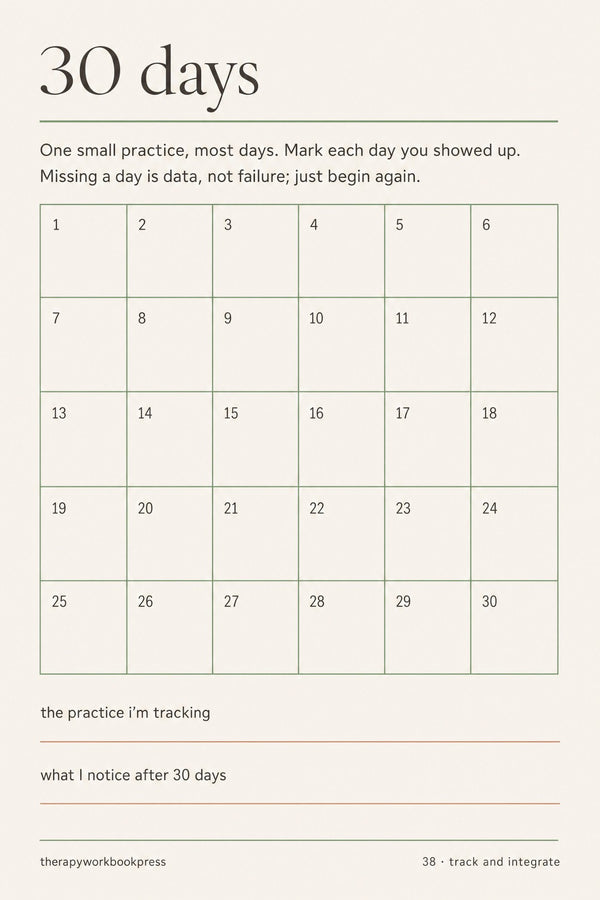
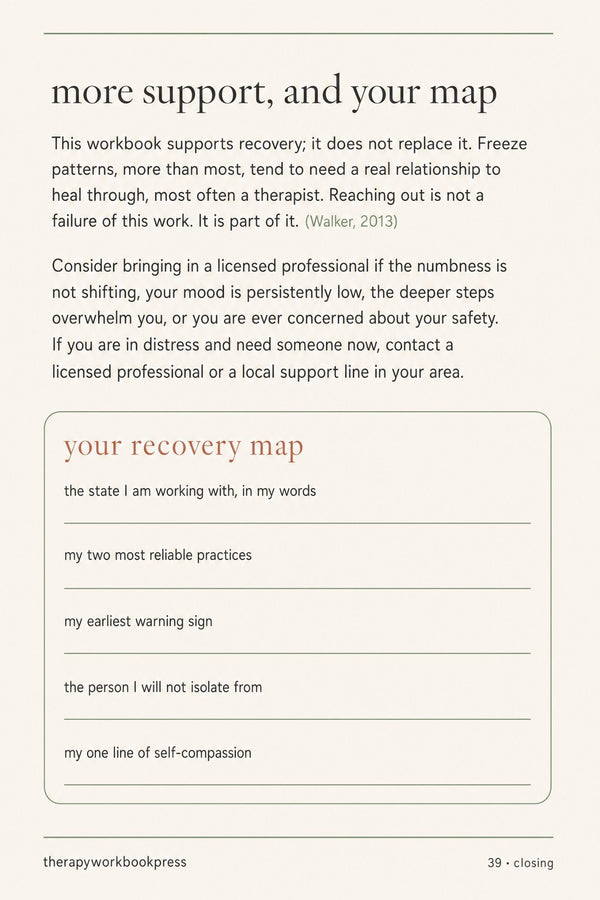
A daily log. A weekly state map. A trigger, response, practice table. A 30-day tracker. A recovery map on page 39.
+
Referencespage 40
8 references, printed in the workbook.
The 11 practices in Part 3, in order:
- Titration and pendulation16
- Up, not down17
- Orienting18
- The felt sense19
- Find an island of safety20
- The smallest drop21
- Voice, hum, gaze22
- Shake, push, reach23
- Stillness without fear24
- The body's release25
- Settle, then reconnect26
Three of these pages carry a safety note. With a heavy history, those steps are best done with a therapist, and the pages say so.
List price$42.00
The workbook$29.49
Instant PDF by email. 60-day refund. Keep the files.
One payment. No subscription. Every future edition, free.
Real pages from the workbook
More than 800 orders since June 2026.
Where it comes from, and what it is not
The workbook names its sources on page 2 and prints 8 references on page 40: Porges, Dana, Levine, Walker, Schauer and Elbert.
The defense cascade is a model. The biology behind polyvagal theory is disputed among researchers. So I use the pages as a map for noticing, not as a diagnosis. The workbook says the same: it is not a diagnostic tool.
It does not treat anything. It is small practices, an order to do them in, and pages to track what happens.
Who it is for
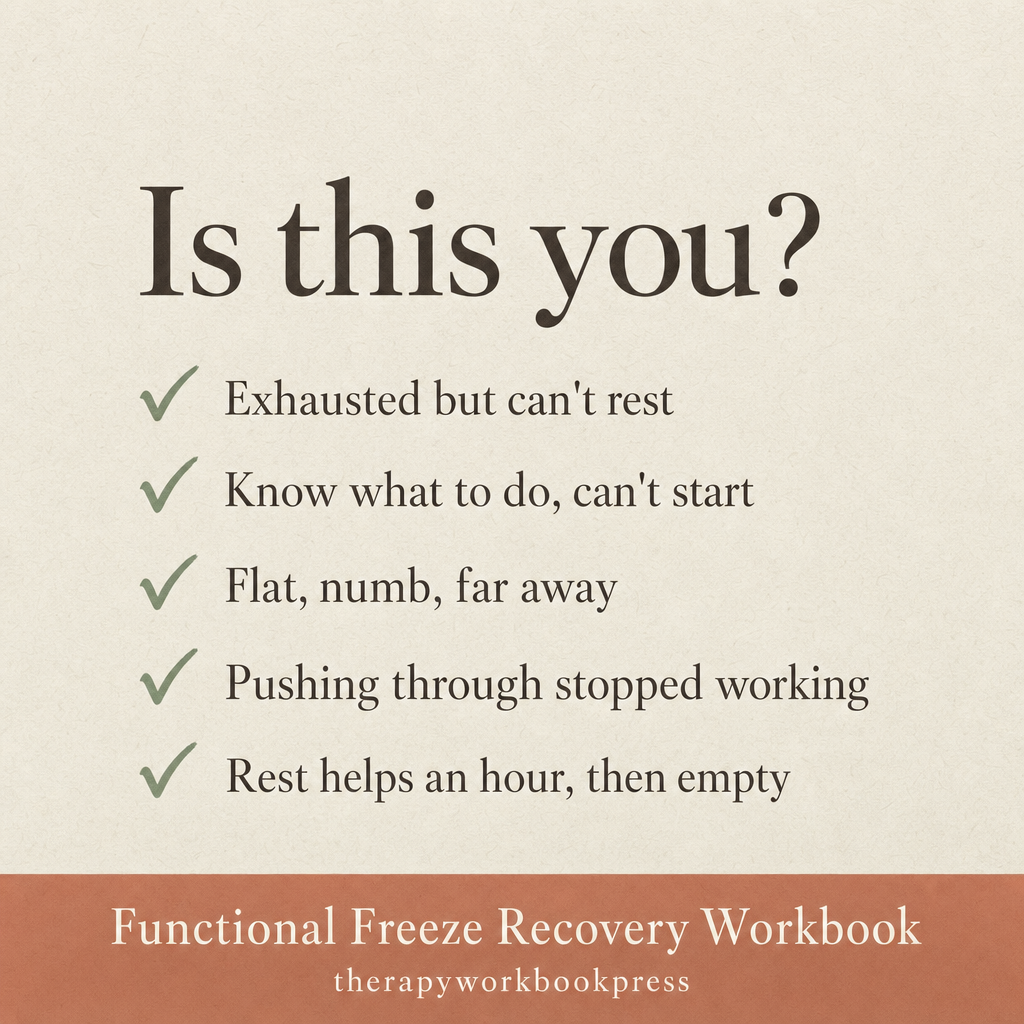
- Those of us who get everything done and feel almost none of it.
- People who rested and did not feel rested.
- People who have read the books and done the work, and the body still does this.
- People in therapy who want small pages for the days between sessions.
Who this is not for
Anyone looking for one exercise that fixes everything by Friday. These are small practices, repeated.
Anyone whose low mood is persistent or heavy. That is a reason to see a licensed professional first. The workbook says so on page 9.
Anyone in crisis today. Please contact a clinician or your local emergency number first.
Anyone who wants a printed book in the mail. This is a PDF.
The mirror on page 11 is not a diagnosis.
Questions before you buy
I already rest a lot. It does not help.
It did not help me either. Part 3 goes the other way: small amounts of movement, attention and contact, each followed by a rest.
I have no energy for a workbook.
It was written for that. The first rule, on page 16, is to do less than you think you should. One practice is four short steps. Page 28 has room for a 2-minute version for shutdown moments.
Is this laziness, or depression?
The workbook does not diagnose. Page 9 explains how this state differs from laziness and from depression. If low mood is persistent or heavy, see a licensed professional first.
Will it stir things up?
It can. Page 32 says feeling often returns as the numbness lifts, and that it is not always pleasant at first. That is why the doses are small, and why three pages carry a safety note.
I have read the books already.
So had I. One of the 12 lines on page 11 is: "I have read the books and done the work, and my body still does this." This is a workbook to write in, not a book to read once.
How much time does it take?
One practice is four steps. Page 28 has you build a 2-minute sequence for shutdown moments and a 15 to 20 minute one for longer sessions. The 30-day page asks for one small practice, most days.
Is this a printed book? Can I use a tablet?
It is a PDF, sent by email right after checkout. Nothing is posted. It comes in A4 and US Letter. It is made to be written on: print the pages you want, or write on it in a tablet app.
Is this therapy?
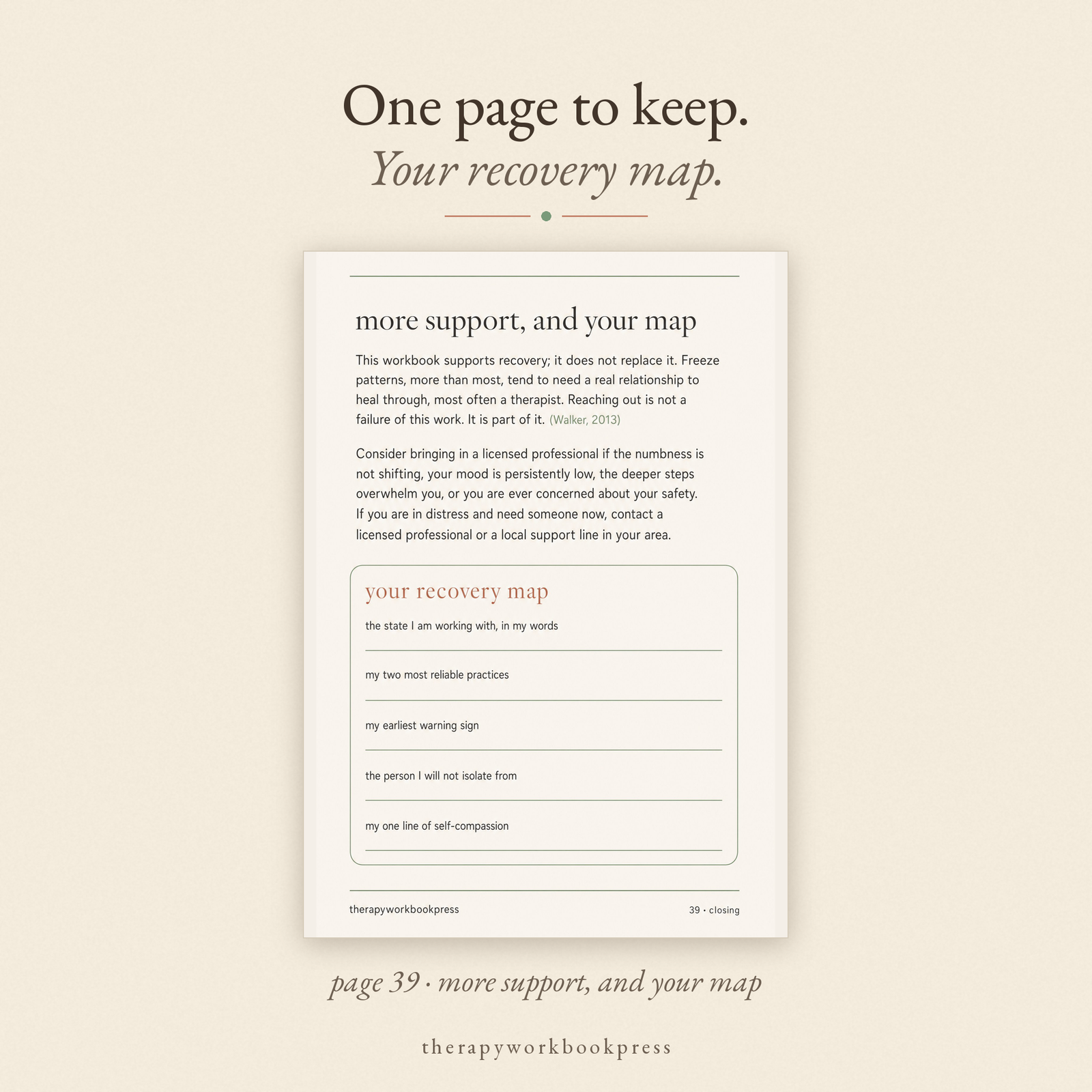
No. It is education and practice pages. The workbook says freeze patterns often need a real relationship, most often a therapist, and that reaching out is part of the work.
I am a therapist. Can I use it with clients?
Yes, with your own clients. For a clinic or a group, email us about a license.
What if it is not right for me?
Email us within 60 days for a full refund. You keep the files.
How you get it
- Check out with card, Apple Pay, PayPal or Klarna.
- Your download link arrives by email right after payment.
- Open the PDF on any device, or print the pages you want.
The 60-day keep-the-files guarantee
Tick the mirror on page 11. Try the first practice. Use the workbook for 60 days. If it is not right for you, one email gets a full refund. You keep the files. No forms, nothing to send back.
$29.49 List price $42.00
Instant PDF by email. 60-day refund. Keep the files.
One page and one small practice. It can be tonight.
This workbook is education. It is not therapy, diagnosis or medical advice, and it does not replace care from a licensed professional. With a significant trauma history, use it alongside a qualified therapist. If a practice feels overwhelming, pause and reach out to a licensed professional or a local support line.