






















Sleep & Shutdown Workbook: 52-Page Nervous System Plan for Insomnia, 3am Waking & Non-Restorative Sleep (PDF)
$29.00
✨ INSTANT DIGITAL DOWNLOAD: A link will be sent to your email immediately. Safe to open on your phone now or save to your computer for later.
🚀 Lifetime Access + Free Future Updates: Buy once, own it forever. You’ll receive all future versions, new content, and updated resources for free, delivered straight to your inbox.
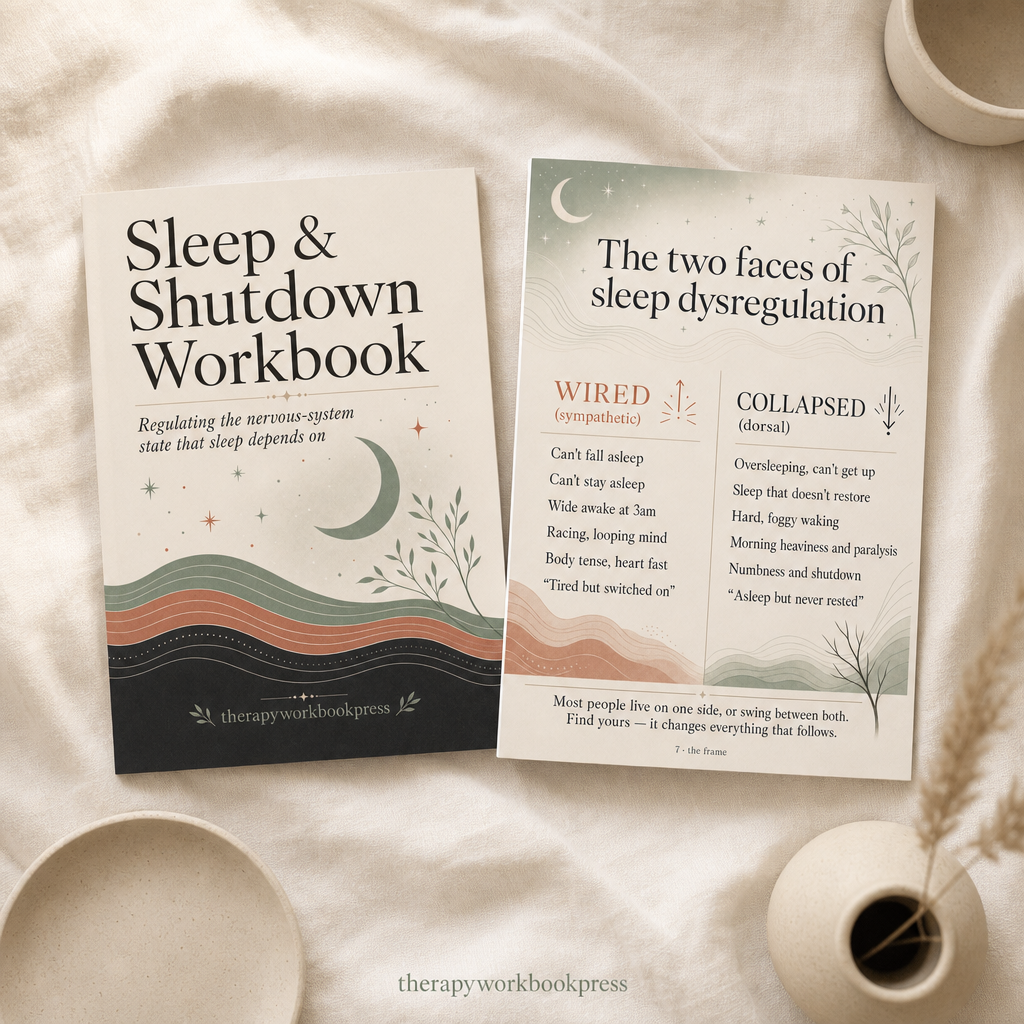
Regulating the nervous-system state that sleep depends on.
You're exhausted by mid-afternoon and wide awake at 3am. You've tried the magnesium, the wind-down routine, the sleep apps — and your body still won't let you rest. Or it lets you sleep, and you wake up just as tired.
When sleep stops responding to sleep advice, the problem usually isn't sleep. It's the state your nervous system is stuck in.
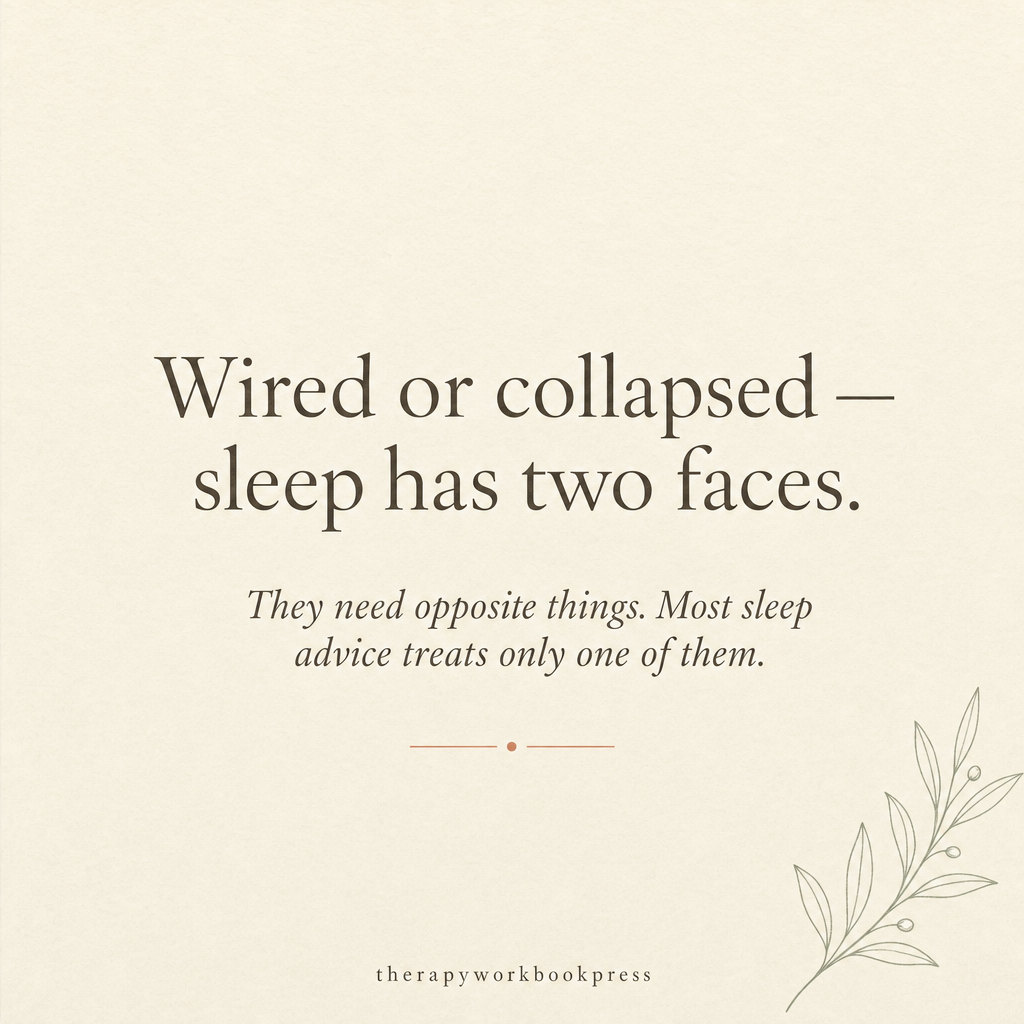
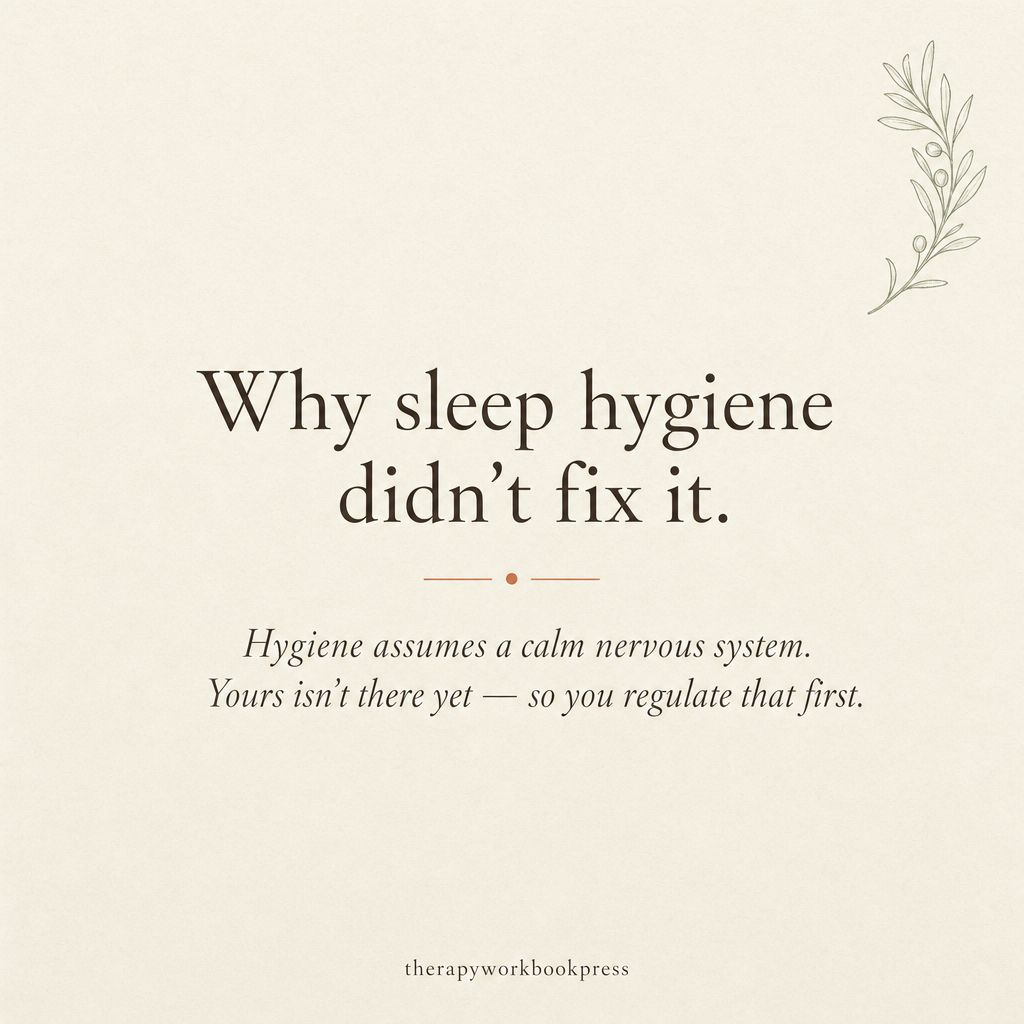
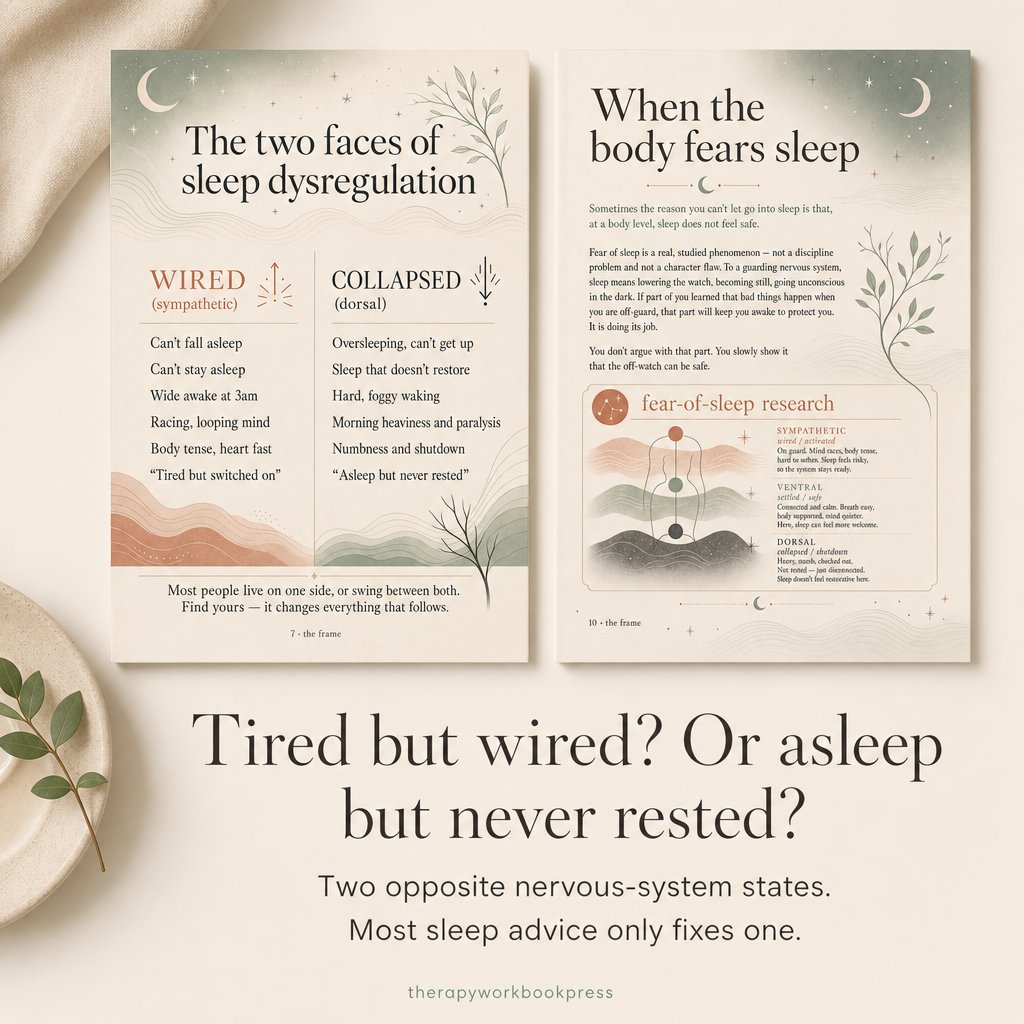
Two opposite states wreck rest, and they need opposite responses. A wired system — racing, tense, alert at 3am — is running on too much alarm. A collapsed system — heavy, foggy, sleeping for hours but never restored — has dropped into shutdown. Generic sleep hygiene treats everyone as wired. That's why, for so many people, none of it has held.
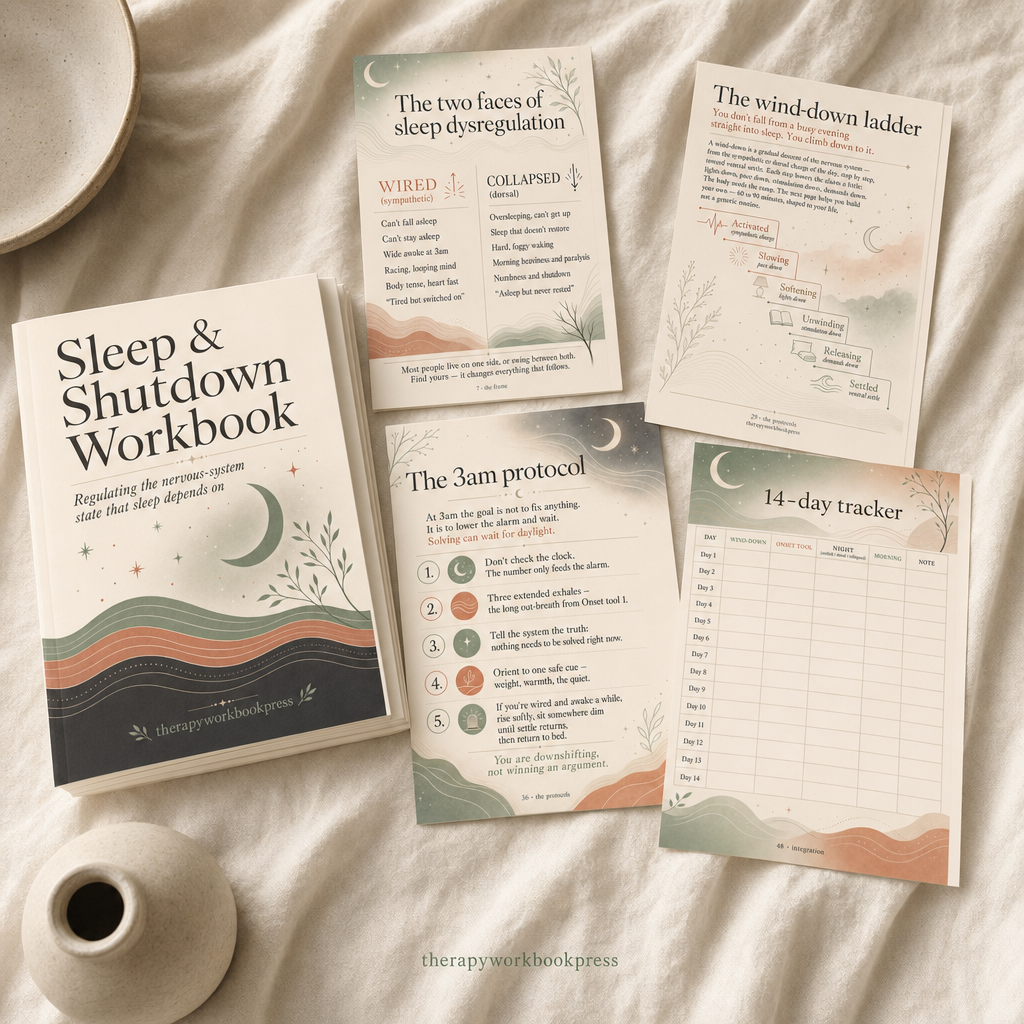
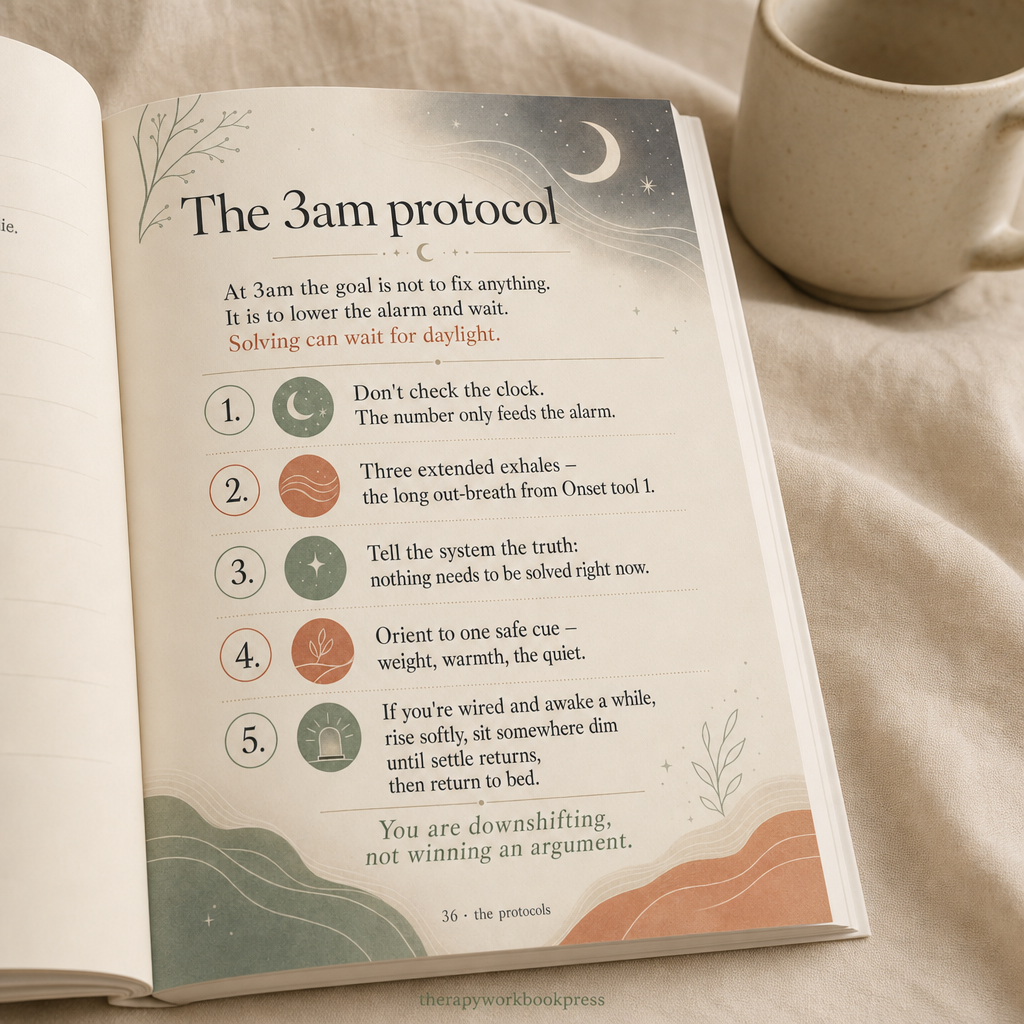
The Sleep & Shutdown Workbook starts where other sleep guides skip: it helps you identify which state actually runs your nights before it hands you a single technique. Over one week you build a sleep-state profile, then match it to the tools that fit — extended-exhale breathwork, a 3am protocol, a morning-collapse protocol, gentle sleep-window work, nightmare tools, and more.
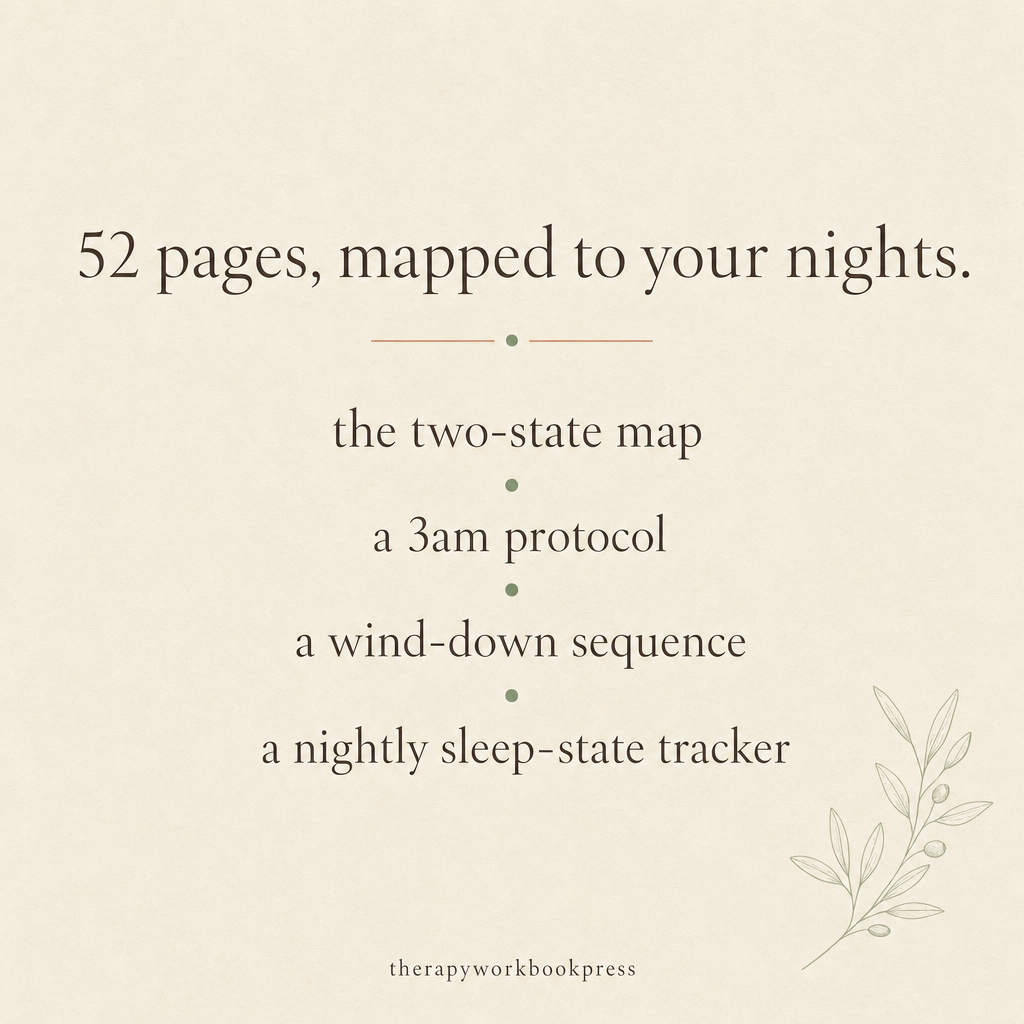
52 pages. Map first, technique second. Built on real clinical science, with citations on the page — no affirmations, no overclaiming. Instant PDF, print-ready A4 & US Letter, or fill it in on any device. Yours to keep and reprint.
Which face is yours?
Most sleep advice fails because it treats every sleepless night the same. Yours has a shape.
Wired (sympathetic): Can't fall asleep · Can't stay asleep · Wide awake at 3am · Racing, looping mind · Body tense, heart fast · "Tired but switched on"
Collapsed (dorsal): Oversleeping, can't get up · Sleep that doesn't restore · Hard, foggy waking · Morning heaviness and paralysis · Numbness and shutdown · "Asleep but never rested"
Most people live on one side — or swing between both. Knowing which is yours changes everything that follows.
Why nothing has worked yet
For most people who can't sleep, the sleep machinery isn't broken — the off-switch is being held down by an alarm. The racing mind at 2am isn't the cause; it's the sound the alarm makes. You're not trying to fix a faulty sleeper. You're convincing an over-mobilised system that the watch can end.
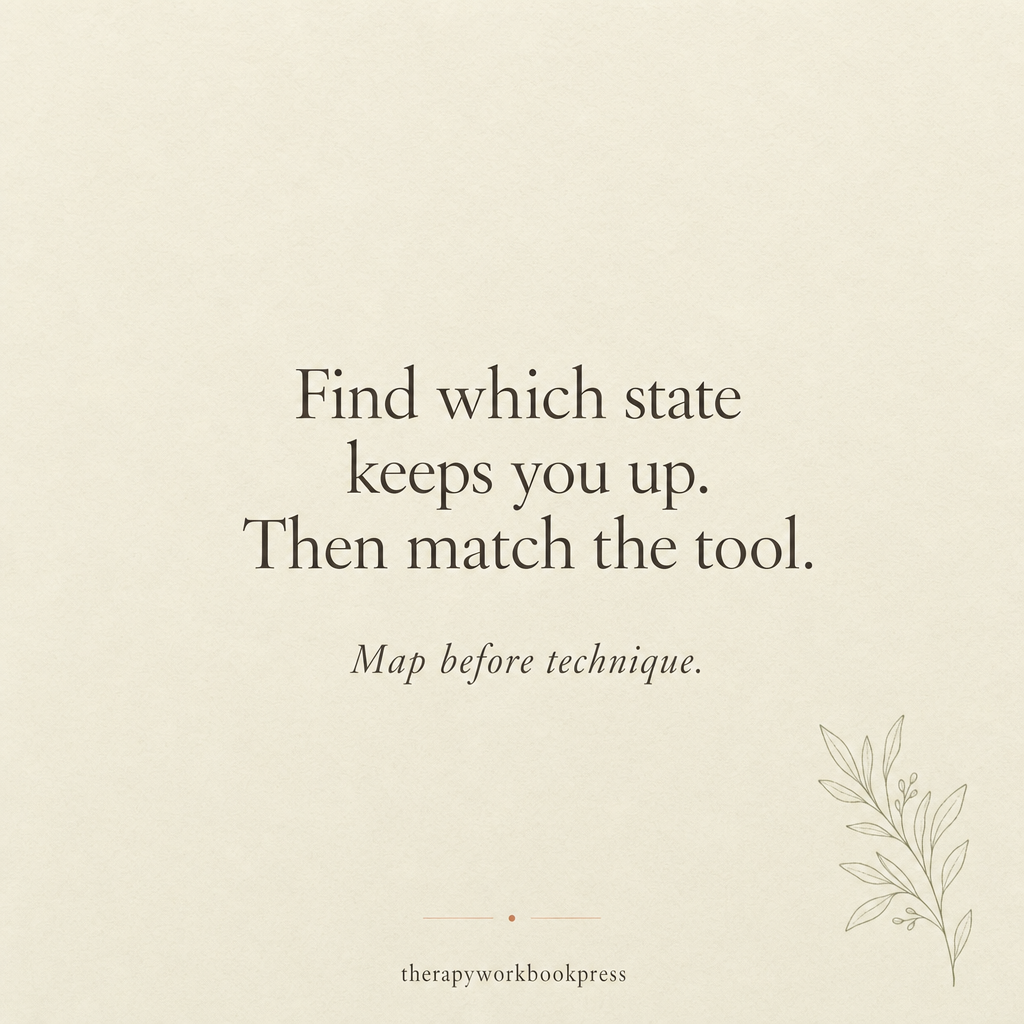
Map before technique
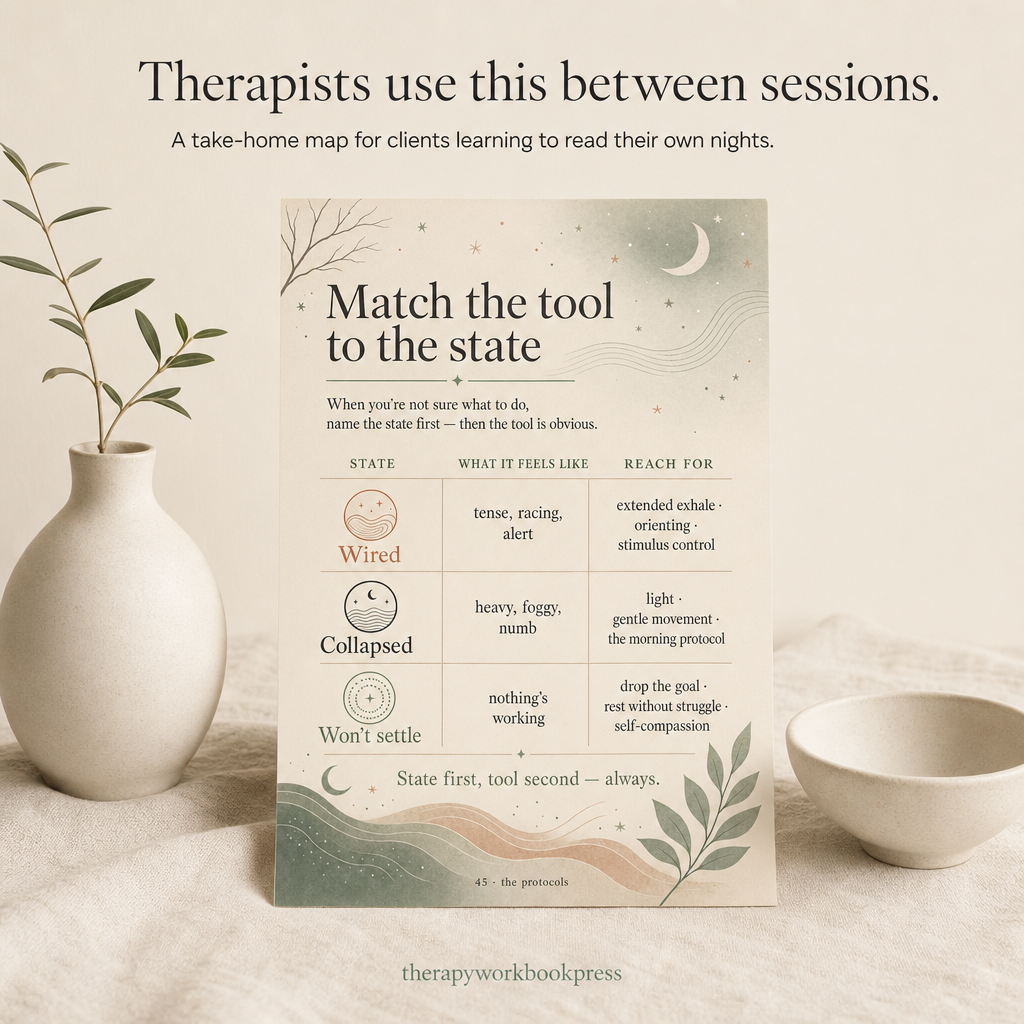
This is the part other sleep books skip. You spend the first half understanding your own nights — which state your body is in, and when — before you reach for a single tool. By the end of Part 2 you have a sleep-state profile that tells you exactly which tools in Part 3 are yours. State first, tool second — always.
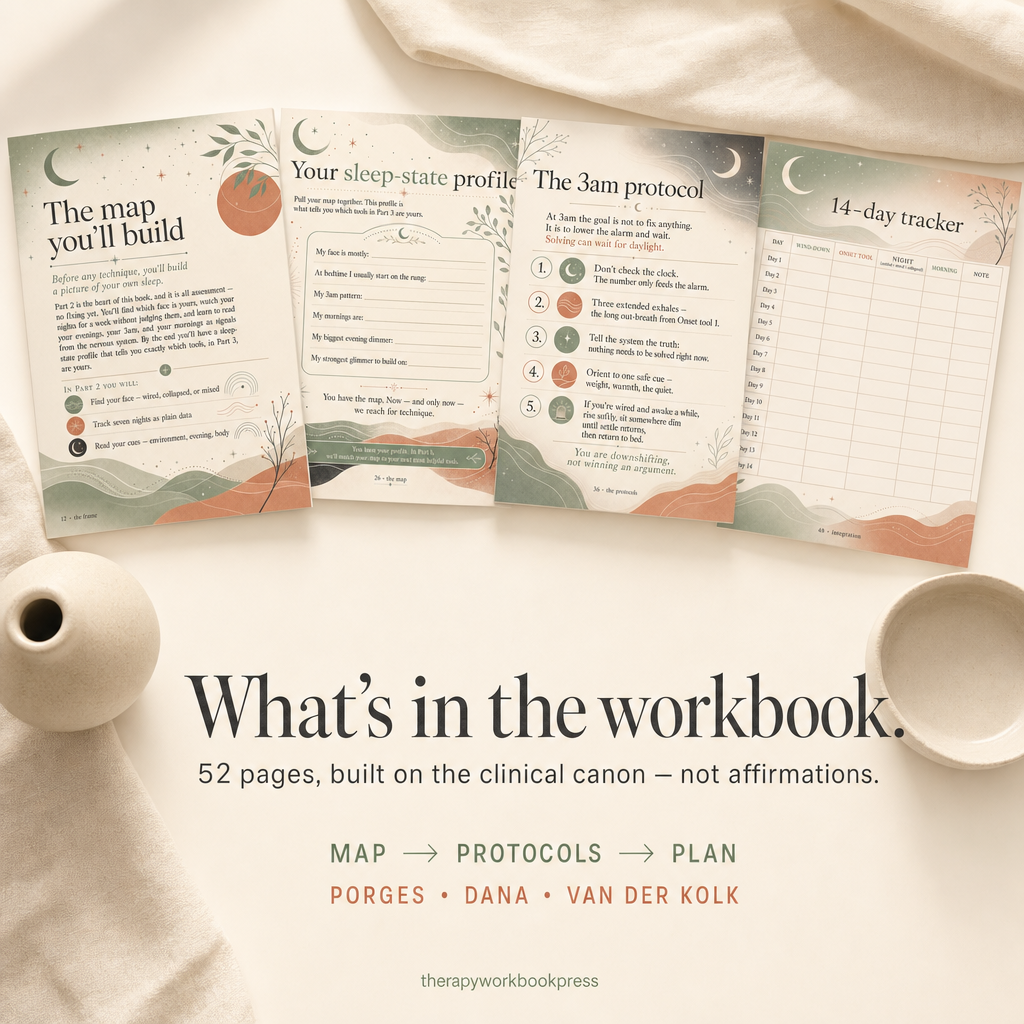
What's inside — 52 pages, four parts
The Frame. Why sleep is a state your body allows, not a thing you do; the hyperarousal model of insomnia; the shutdown-sleep loop; fear of sleep; nightmares and the body.
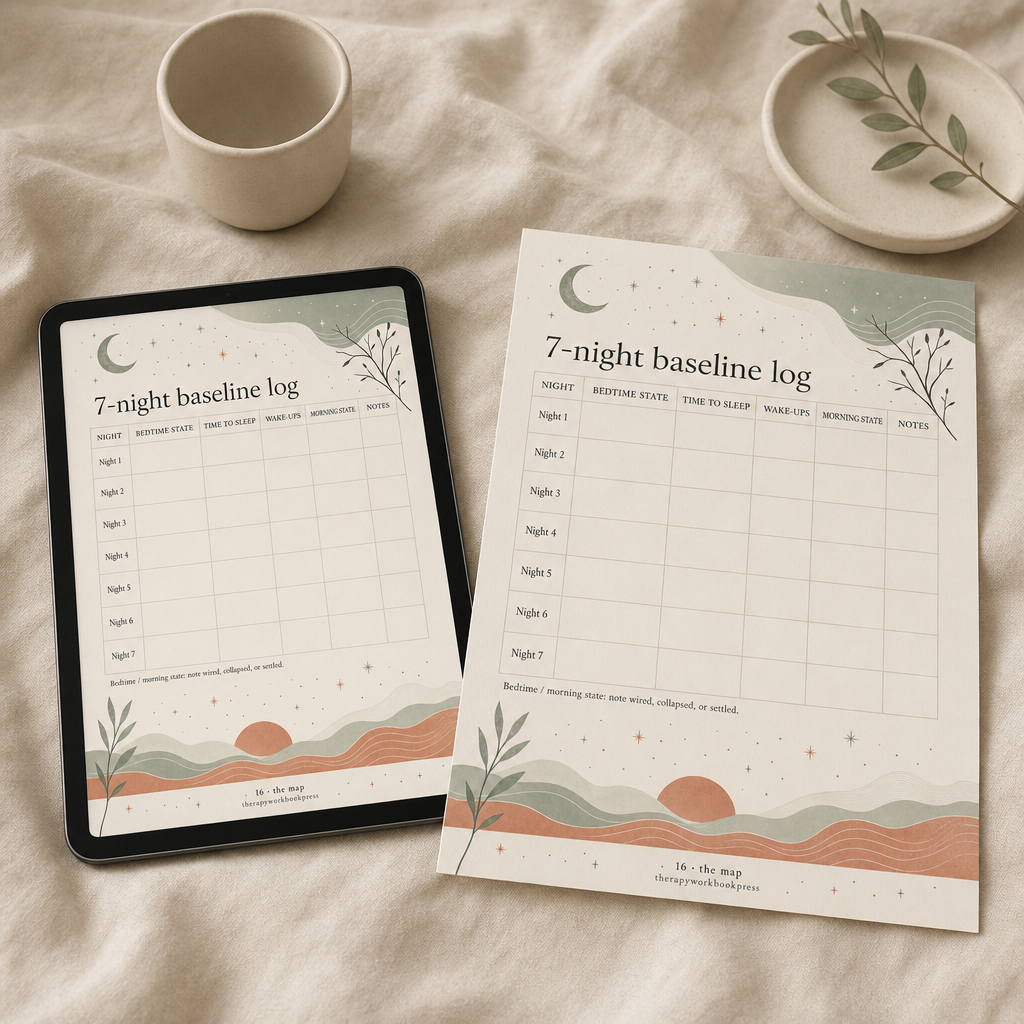
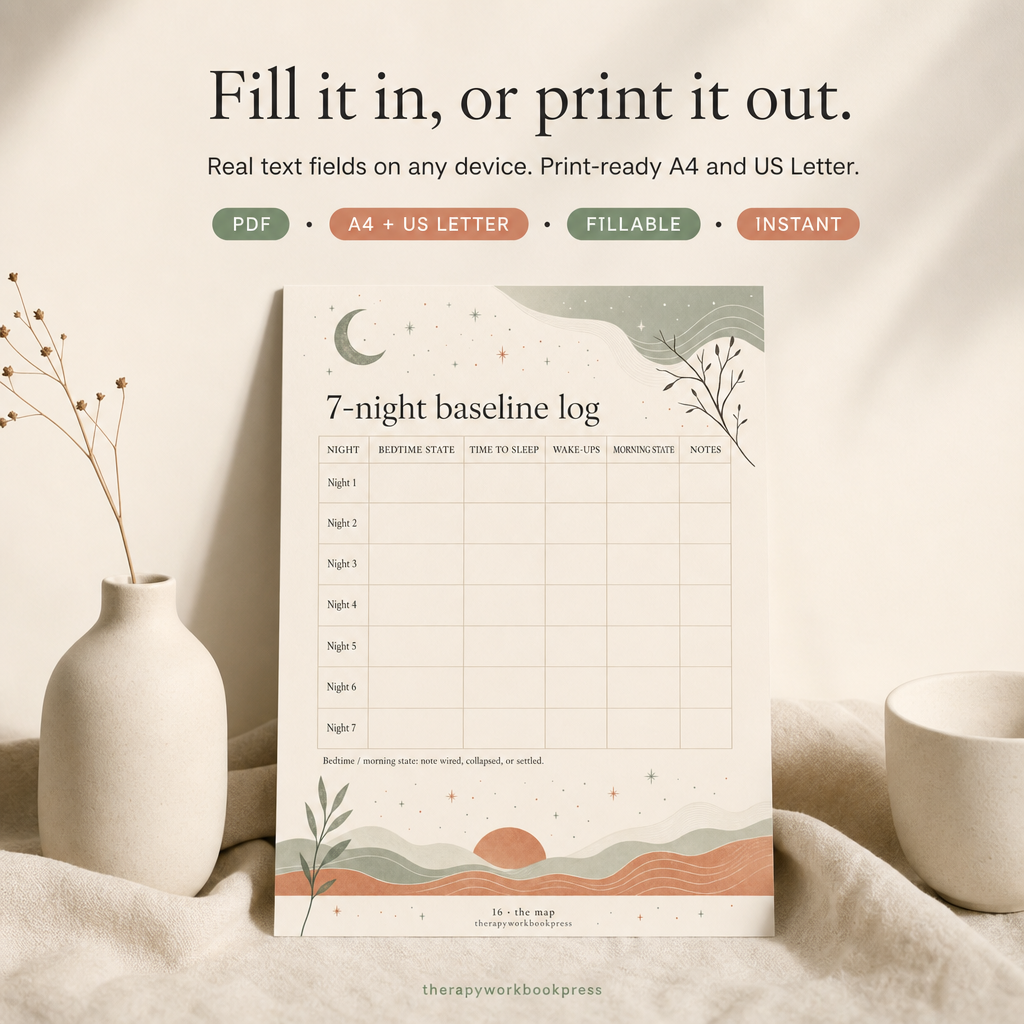
The Map (the heart of the book — all assessment). The which-face self-test, your autonomic sleep signature, a 7-night baseline log, bedtime / 3am / morning maps, your sleep-defeating patterns, glimmers and triggers, a neuroception audit of your bedroom, and your sleep-state profile.
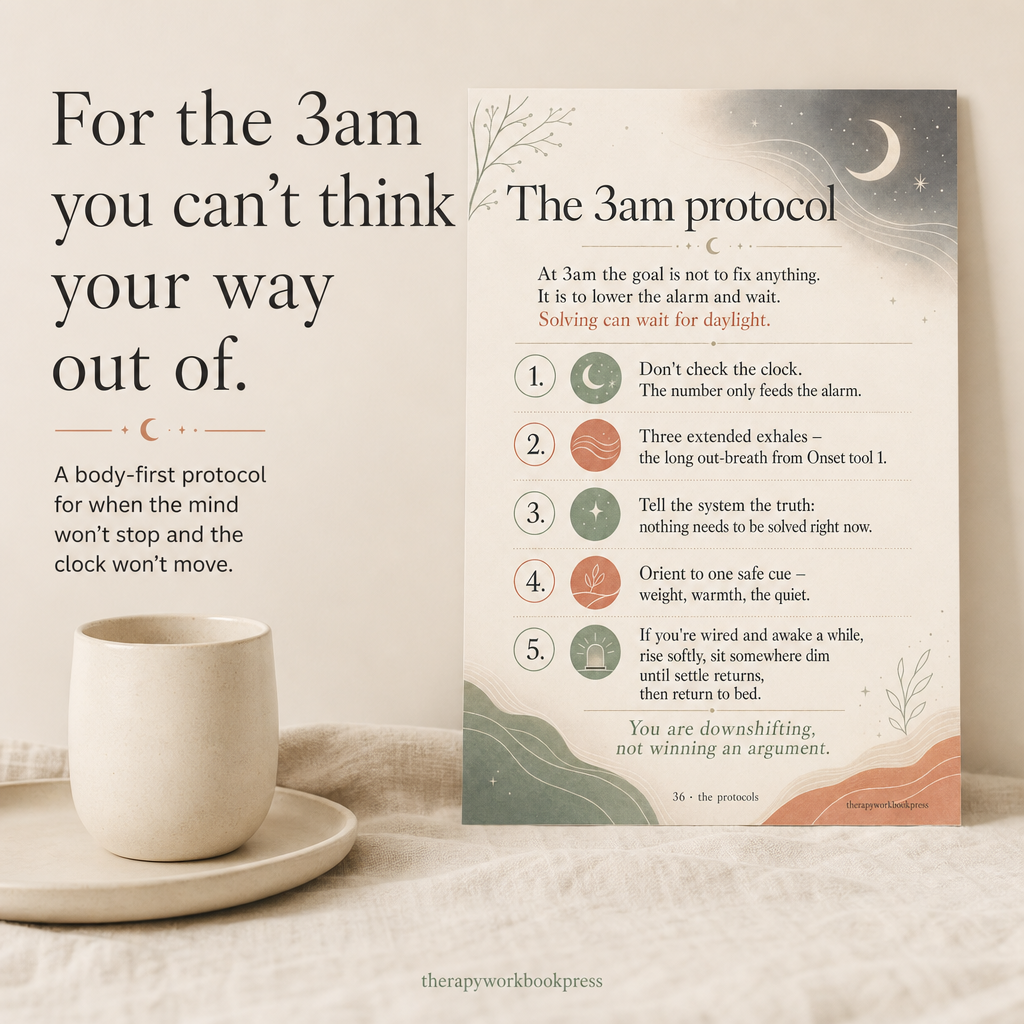
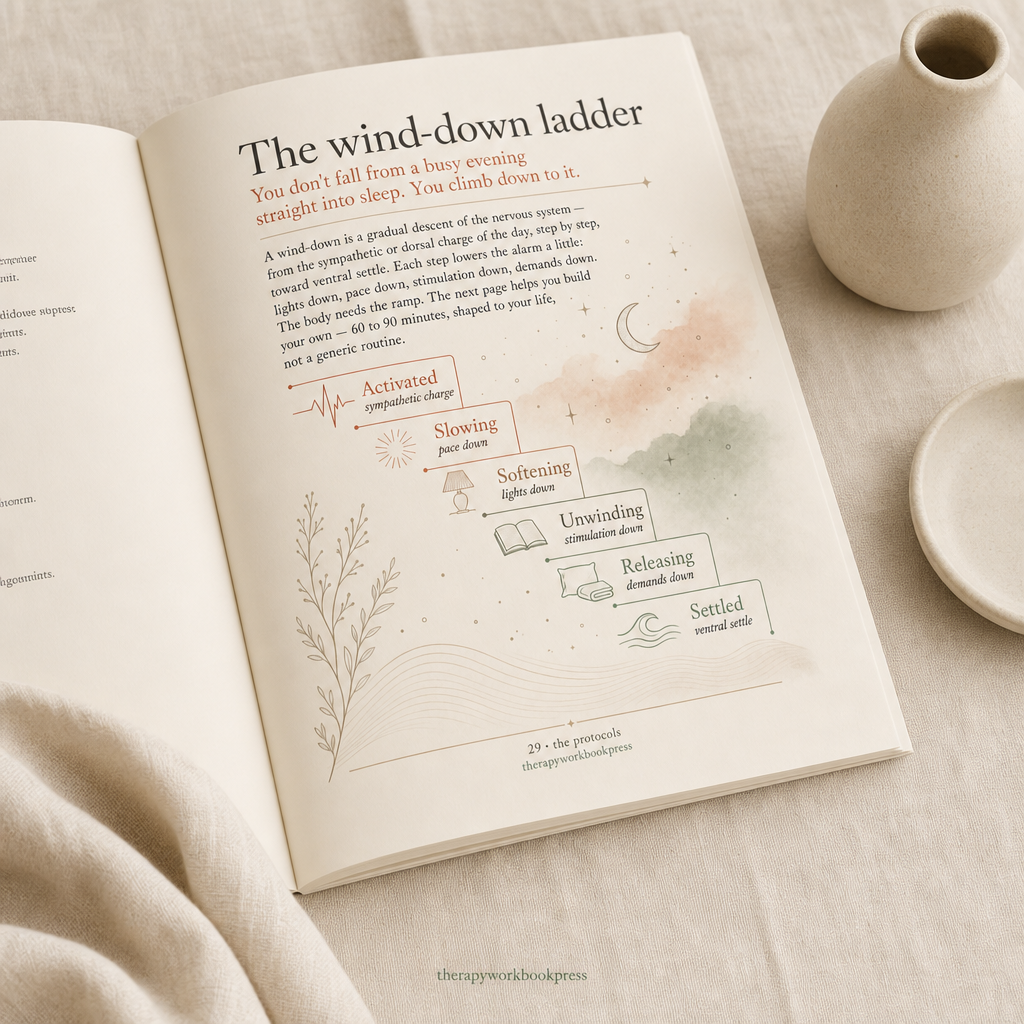
The Protocols (matched to your map). Daytime ventral-building, a build-your-own wind-down ladder, three onset tools (extended-exhale breathwork, orienting in the dark, somatic settling), body-first stimulus control, gentle sleep-window consolidation, the 3am protocol, racing-mind-at-night, the morning-collapse protocol, hypersomnia and non-restorative sleep, two nightmare tools, and co-regulation — plus a "match the tool to the state" reference table.
Integration. A 14-day regulation plan and tracker, weekly reflection, a re-assessment to measure change, and a maintenance and early-warning plan.
Built on real science, not pop-neuroscience
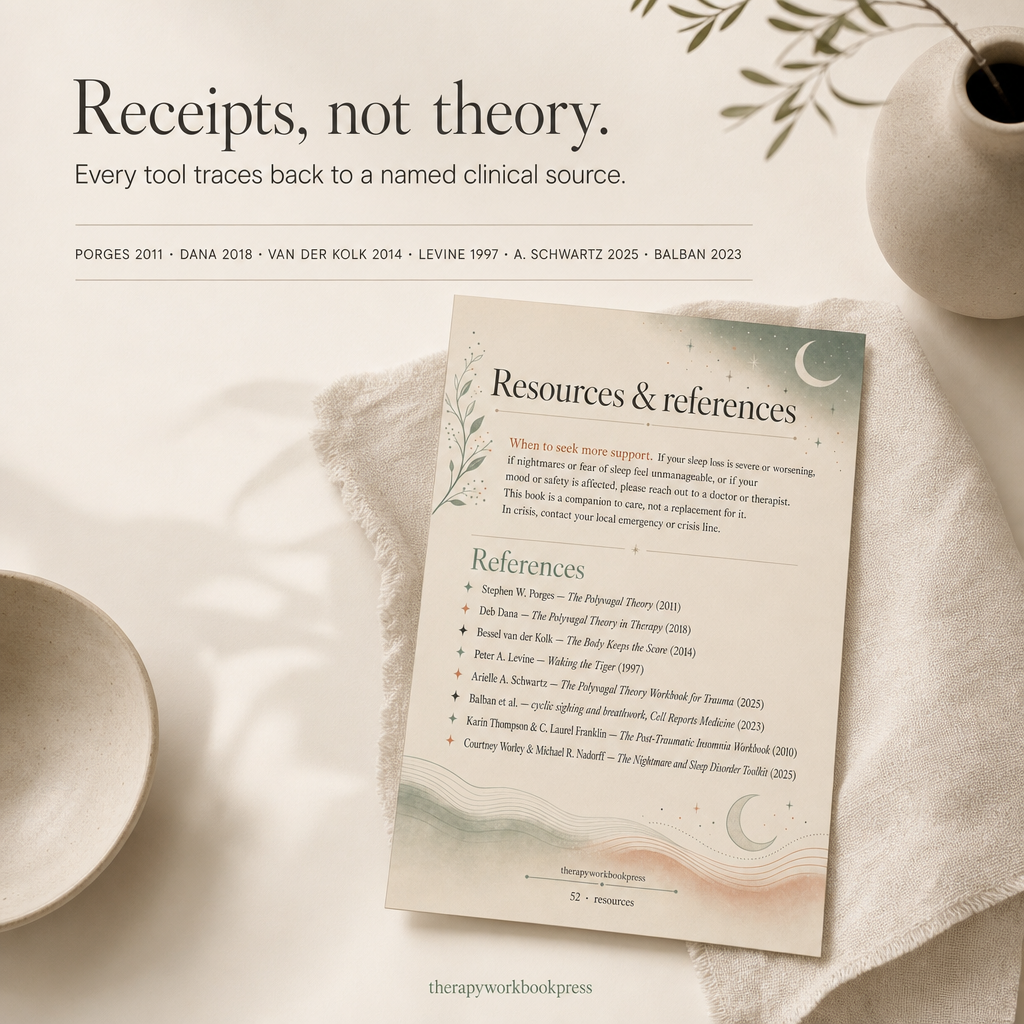
Grounded in the clinical literature on the nervous system and sleep — Stephen Porges, Deb Dana, Bessel van der Kolk, Peter Levine, and Arielle A. Schwartz — with the physiological-sigh research of Balban and colleagues and two evidence-based clinical sleep workbooks behind the tools. Real citations on the page. Where the research is strong, we say so. Where it isn't, we don't overclaim. No affirmations. No miracle promises.
Instant access, yours to keep
A digital PDF, delivered the moment you check out. Print it in A4 or US Letter, or fill it in directly on any device — the writing spaces are real text fields. Reprint it as often as you need. One file, yours forever.
Who this is for — and who it's not for
For you if your sleep hasn't responded to the usual fixes and you suspect the problem runs deeper than habits — the wired, the collapsed, and the people who swing between both.
This is an educational, self-guided tool, not therapy or a substitute for it. If your sleep loss is severe, or your safety or mood is affected, please reach out to a doctor or therapist. The book is a companion to care, not a replacement for it.
Questions
Is this just sleep hygiene tips? No. You identify the state driving your nights, then use tools matched to that state — the opposite of one-size-fits-all advice.
I sleep plenty but never feel rested. Is this for me? Yes — that's the collapsed/dorsal side, and most sleep books don't name it.
Do I need to know polyvagal theory? No. It's written to be followed with zero background.
Printable or digital? Both. Print-ready A4 and US Letter, or fillable text fields on any device.
How long does it take? Go at your own pace — one page, one practice, one night at a time. The first structured stretch is a 7-night baseline and a 14-day plan.